
US shutdown leaves TSA officers unpaid
Spring break queues hit Houston Hobby, airport security becomes a time tax when payroll is political
Images
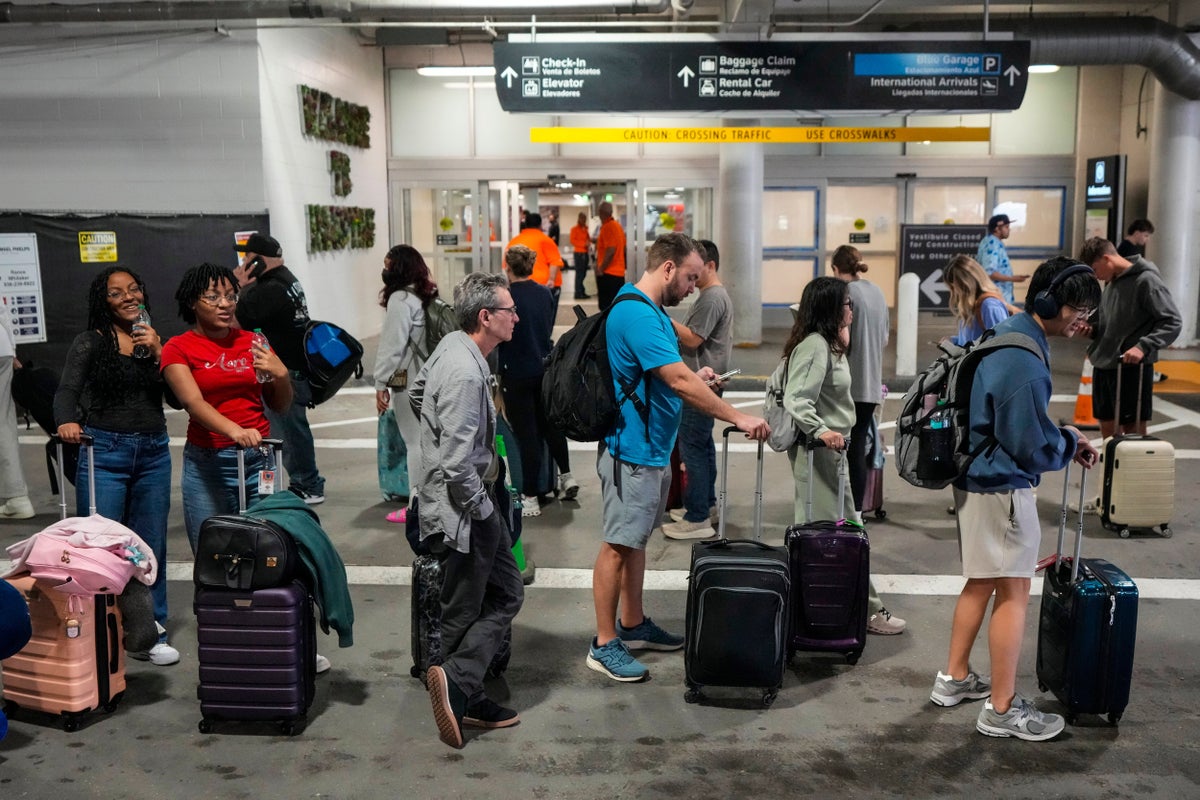 Long airport lines highlight concerns about unpaid security officers in the shutdown
independent.co.uk
Long airport lines highlight concerns about unpaid security officers in the shutdown
independent.co.uk
A partial US government shutdown that began on 14 February is now showing up as a three-hour queue. At Houston’s William P. Hobby Airport, security lines stretched for much of Sunday and Monday as Transportation Security Administration (TSA) officers worked without pay, according to the Associated Press. Similar delays hit New Orleans and Atlanta, with New Orleans peaking at a 77-minute wait.
The immediate mechanism is simple: when pay stops, attendance becomes optional. TSA screeners can legally be required to work during a shutdown, but they cannot be forced to ignore rent, fuel and childcare bills. The TSA union’s bargaining-unit leader, Johnny Jones, told AP that officers will miss their first full paycheck this weekend and that many are still recovering from the last major shutdown, the 43-day stoppage that ended only months ago. As the shutdown persists, the agency’s staffing plan is replaced by household cashflow decisions—second jobs, missed shifts, and attrition—and the “price” of air travel is reintroduced as time.
Because TSA screening is a nationwide monopoly function at most commercial airports, there is no spare capacity market to absorb the shock. Airports can open additional lanes only if they have trained federal screeners; airlines can’t hire their own staff to clear passengers through the checkpoint; passengers cannot pay for more screeners to show up. The result is rationing by queue length: a family that can arrive at 4am gets through; a worker who cannot misses a flight. When DHS spokesperson Lauren Bis blamed “political stunts” for the chaos and Airlines for America’s CEO called it “unacceptable” for officers to receive $0, both were describing the same fact: the system’s performance depends on Congress moving money, not on operational feedback.
The shutdown itself is not about aviation security but about immigration enforcement. AP reports that Democrats have resisted funding the Department of Homeland Security unless restrictions are placed on federal immigration operations, while Republicans have blocked a “clean” funding bill offered by Democrats. In practice, the dispute turns unrelated services—airport screening, disaster response, border operations—into bargaining chips. The costs are dispersed across millions of travelers and thousands of workers; the leverage is concentrated in a few committee rooms.
By Monday afternoon, lines at Houston Hobby and New Orleans had eased, AP reports, but the underlying constraint remains: the longer pay is delayed, the more the TSA’s staffing model becomes a morale and liquidity problem.
At Houston Hobby, the longest line was not caused by a new security threat or a broken scanner but by a missed paycheck.