
Australia grants humanitarian visas to five Iranian women footballers
Anthem protest at Asian Cup triggers protection request and police relocation, sport travel becomes an asylum channel
Images
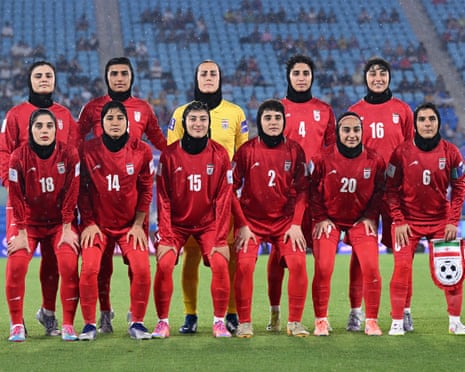 Iran’s women’s football team before their defeat to the Philippines on Sunday night. Photograph: Dave Hunt/AAP Image/Reuters
Reuters
Iran’s women’s football team before their defeat to the Philippines on Sunday night. Photograph: Dave Hunt/AAP Image/Reuters
Reuters
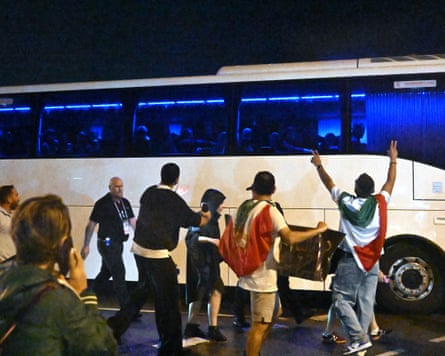 People cheer the Iranian women’s football team on their bus after their defeat to the Philippines on Sunday night. Photograph: Dave Hunt/EPA
theguardian.com
People cheer the Iranian women’s football team on their bus after their defeat to the Philippines on Sunday night. Photograph: Dave Hunt/EPA
theguardian.com
 'Save our girls': support shown for Iran players after exit from Women's Asian Cup – video
theguardian.com
'Save our girls': support shown for Iran players after exit from Women's Asian Cup – video
theguardian.com
Five Iranian women footballers were granted temporary humanitarian visas in Australia early Tuesday after seeking protection during the Women’s Asian Cup, according to the Guardian. The group had travelled with Iran’s national team and feared punishment at home after the players did not sing the national anthem before a match, a gesture that drew criticism inside Iran.
Australian home affairs minister Tony Burke said the visas were approved around 1.30am and that the Australian federal police moved the players to a “secure location” once they asked for assistance. Prime minister Anthony Albanese said the government had been working on the situation “for some time” and offered help to other members of the squad if they request it. The visas are temporary but provide a pathway to permanent residency.
The episode shows how international sport has become a low-friction corridor for asylum claims: athletes travel on state-issued documents, appear in public, and can quickly become politically charged symbols once they are abroad. For the receiving state, the costs are modest—processing, security, and a handful of visas—while the domestic payoff is immediate: a public display of humanitarian responsiveness, amplified by the visibility of elite sport.
For Tehran, the incentives run the other way. A national team is supposed to export legitimacy; when players use the trip to signal dissent, the state faces a choice between punishing them and deterring future defection, or tolerating the act and weakening discipline. Either response is useful to other governments: the harsher the threatened consequences, the stronger the asylum case; the softer the response, the more such symbolic gestures can be repeated.
The story also illustrates how third parties can inject themselves into a migration decision without bearing the downstream responsibilities. The Guardian reports that Donald Trump posted overnight on Truth Social, first warning Australia against sending the players back and offering US help, then later praising Albanese and saying five players had been “taken care of”. Burke said the government’s engagement with the team began earlier, but the timing turned a consular-style protection process into a real-time political spectacle.
The immediate question is whether more players will take up Australia’s offer. Burke said the same opportunity remains open to other team members who want to speak to Australian officials.
The Iranian team arrived as athletes. By the time the tournament schedule caught up with domestic politics back home, five of them had become a humanitarian case file under armed guard.