
Australia faces asylum pressure over Iran women’s football team
Anthem protest and state media backlash turn tournament travel into a protection pathway, departure logistics become the real contest
Images
 Iranian players salute during their national anthem at the AFC Women's Asian Cup Group A match between Iran and the Philippines at Gold Coast Stadium on the Gold Coast, Australia, on Sunday.
japantimes.co.jp
Iranian players salute during their national anthem at the AFC Women's Asian Cup Group A match between Iran and the Philippines at Gold Coast Stadium on the Gold Coast, Australia, on Sunday.
japantimes.co.jp
 A solar farm in Nakai, Kanagawa Prefecture, in March 2016. Japan gets about a tenth of its electricity from solar panels despite having nearly no domestic production of photovoltaics (PVs).
japantimes.co.jp
A solar farm in Nakai, Kanagawa Prefecture, in March 2016. Japan gets about a tenth of its electricity from solar panels despite having nearly no domestic production of photovoltaics (PVs).
japantimes.co.jp
 Haruna Kambayashi stands by her newly purchased home on a street now lined with mostly empty lots.
japantimes.co.jp
Haruna Kambayashi stands by her newly purchased home on a street now lined with mostly empty lots.
japantimes.co.jp
 Imperial Hotel, Kyoto: Where hospitality traditions meet
japantimes.co.jp
Imperial Hotel, Kyoto: Where hospitality traditions meet
japantimes.co.jp
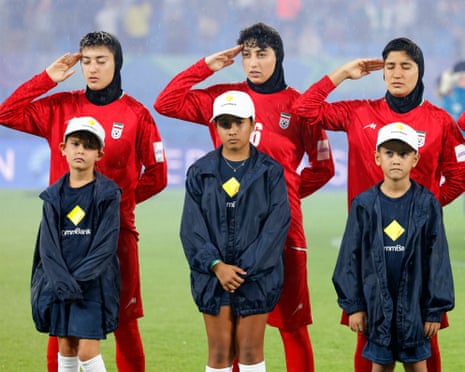 Fears are growing over the safety of the Iran women’s football team players with their return to Iran imminent after exiting the Women’s Asian Cup. Photograph: AFP/Getty Images
theguardian.com
Fears are growing over the safety of the Iran women’s football team players with their return to Iran imminent after exiting the Women’s Asian Cup. Photograph: AFP/Getty Images
theguardian.com
 'Save our girls': support shown for Iran players after exit from Women's Asian Cup – video
theguardian.com
'Save our girls': support shown for Iran players after exit from Women's Asian Cup – video
theguardian.com
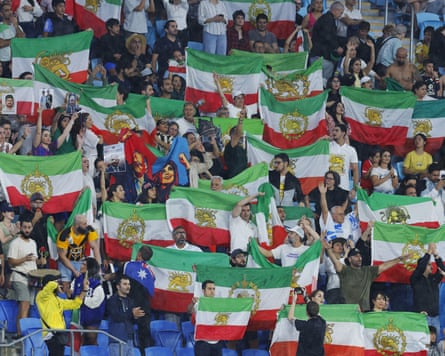 Iran fans wave flags during their team’s loss to the Philippines at the Women’s Asian Cup. Photograph: Matthew Starling/SPP/Shutterstock
theguardian.com
Iran fans wave flags during their team’s loss to the Philippines at the Women’s Asian Cup. Photograph: Matthew Starling/SPP/Shutterstock
theguardian.com
Australia is facing calls to protect members of Iran’s women’s national football team after the squad’s Asian Cup campaign ended on the Gold Coast and attention shifted to what happens next. The Japan Times reports that Iranian state television figures branded players “traitors” after they remained silent during the national anthem before their opening match, a gesture later reversed as the team mouthed the words and saluted in subsequent games. With war escalating in the region, the team’s return has become a political question rather than a sporting itinerary.
The immediate trigger is symbolic behaviour that can be replayed and reinterpreted at home. In authoritarian systems, the cost of being seen as disloyal is not priced in advance; it is imposed after the fact, often through public denunciation and opaque sanctions. That uncertainty is what turns a tournament into a live migration scenario: once a team is abroad, the decision to return becomes a personal security calculation, and the host country becomes the only institution able to change the payoff.
As the Guardian notes, nobody outside the squad knows what each player wants, and that ambiguity becomes its own pressure point. Iranian officials travelling with the team would have an incentive to move them out quickly, while activists and unions try to slow the process long enough for players to seek advice or lodge claims. FIFPRO’s Asia leadership has said it is in contact with the Australian government, FIFA and the Asian Football Confederation, urging them to ensure the players have “agency” over whether they depart.
For Australia, the issue arrives through a channel that bypasses regular border politics. International sport creates a predictable pipeline of temporary entry with high media visibility, and the cost of refusal is reputational. If players seek asylum, the decision is framed as a human-rights test; if they do not, any rapid departure can be framed as complicity or coercion. Either way, the host state is pushed to provide services—legal access, security, and potentially long-term protection—under a spotlight that ordinary applicants rarely receive.
This dynamic is not new, but it is becoming more routine as tournaments move across jurisdictions and political crises travel faster than schedules. A visa issued for a group-stage match can become the first step in a years-long protection process.
On the Gold Coast, the football is finished. The team is still in a hotel, and the question is no longer who advances, but who gets to leave on what terms.