
Epstein reporter describes intimidation after Maxwell trial
Guardian profile details surveillance and harassment around survivor interviews, accountability shifts from courts to private pressure campaigns
Images
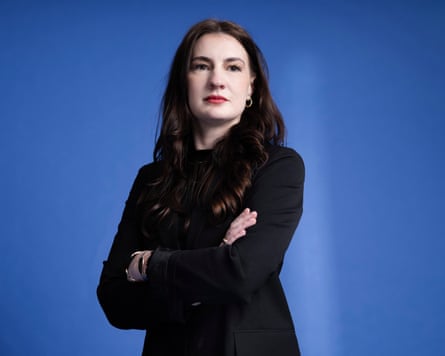
 ‘This is a story about grooming and the girls who lived through it’ … Lucia Osborne-Crowley. Photograph: Linda Nylind/The Guardian
theguardian.com
‘This is a story about grooming and the girls who lived through it’ … Lucia Osborne-Crowley. Photograph: Linda Nylind/The Guardian
theguardian.com
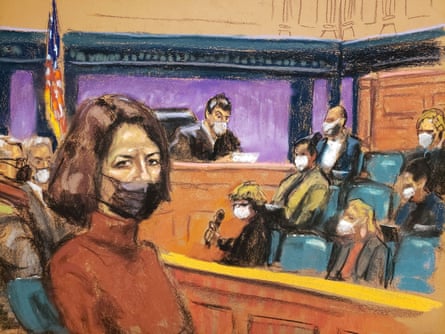 ‘A group of 12 people decided that this conspiracy was real’ … a court illustration of Maxwell during her trial in 2021. Photograph: Jane Rosenberg/Reuters
theguardian.com
‘A group of 12 people decided that this conspiracy was real’ … a court illustration of Maxwell during her trial in 2021. Photograph: Jane Rosenberg/Reuters
theguardian.com
![‘It’s hard to overstate the role that Jess [Michaels] and Liz played’ … Liz Stein (right), a survivor of Epstein and Maxwell, speaks before the State of the Union last month. Photograph: Alex Wroblewski/AFP/Getty Images](https://i.guim.co.uk/img/media/9a89de1a541d6fab96a465c8d3f36bf184f35526/0_0_5861_3908/master/5861.jpg?width=445&dpr=1&s=none&crop=none) ‘It’s hard to overstate the role that Jess [Michaels] and Liz played’ … Liz Stein (right), a survivor of Epstein and Maxwell, speaks before the State of the Union last month. Photograph: Alex Wroblewski/AFP/Getty Images
theguardian.com
‘It’s hard to overstate the role that Jess [Michaels] and Liz played’ … Liz Stein (right), a survivor of Epstein and Maxwell, speaks before the State of the Union last month. Photograph: Alex Wroblewski/AFP/Getty Images
theguardian.com
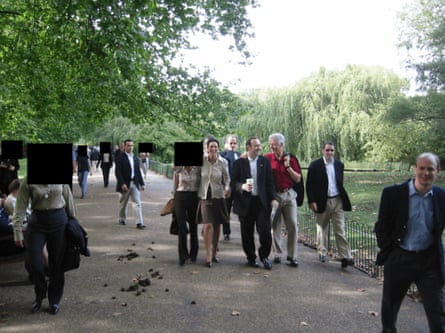 ‘He was being used as a grooming tool’ … Bill Clinton (in red) with Kevin Spacey and Ghislaine Maxwell. Photograph: AP
theguardian.com
‘He was being used as a grooming tool’ … Bill Clinton (in red) with Kevin Spacey and Ghislaine Maxwell. Photograph: AP
theguardian.com
 ‘There will be more people who die before their time because of the toll this trauma this takes on a person’s body.’ Photograph: Linda Nylind/The Guardian
theguardian.com
‘There will be more people who die before their time because of the toll this trauma this takes on a person’s body.’ Photograph: Linda Nylind/The Guardian
theguardian.com
A journalist who covered the Jeffrey Epstein and Ghislaine Maxwell case says harassment and intimidation did not end with Maxwell’s conviction, describing private investigators, sexual harassment and threats aimed at survivors and people reporting on them. In an interview profile published by The Guardian, Lucia Osborne-Crowley recounts travelling to Florida in 2022 to meet Carolyn Andriano, a key witness in Maxwell’s 2021 trial, only to find both women being approached by older men probing what she was writing.
Osborne-Crowley says a man in his 60s approached her in a restaurant, asked about her work, offered drugs and cash and a meeting with one of Epstein’s pilots, then put his hands under her skirt. When staff intervened, she says he waited outside and she left through a staff exit. The episode sits alongside a broader pattern described in the piece: in November 2025, 28 Epstein survivors issued a statement saying many had received death threats and all requested police protection.
The Guardian frames the intimidation as a continuation of the control tactics survivors say were used during the abuse itself. Osborne-Crowley describes Maxwell allegedly warning victims that if they ever spoke, “no matter how far into the future”, they would be found and stopped—and argues that the message has been reinforced by follow-on harassment. Two women withdrew from Osborne-Crowley’s book, The Lasting Harm, after receiving threats, according to the report.
The story also points to a structural problem for journalism: the costs and risks are borne by individuals, while the benefits—traffic, prestige, and institutional positioning—flow to media organisations and the broader ecosystem that packages scandal as content. Osborne-Crowley now files court reports for Law360, covering unrelated litigation during the week she speaks to The Guardian, a reminder that even high-profile investigations often become one assignment among many once the headlines move on.
In the Epstein case, the legal consequences have been uneven. Epstein is dead; Maxwell is in prison; but the Guardian report repeatedly returns to the question implied by the surveillance and the money behind it: if multiple survivors and a reporter in different countries were being followed at the same time, someone was paying for coordination.
Osborne-Crowley’s account begins with a Greyhound bus from Miami to West Palm Beach and ends with the same unanswered question: who still has enough at stake to keep sending people to the door?