
Deportations push migration pressure south
US removals leave families stranded in Colombia while Haitians wait in limbo in Mexico, regional bottlenecks replace border crossings
Images
 Migrants from Haiti stand in line outside the Mexican commission for refugee assistance (Comar) office to apply for asylum in Mexico City. Photograph: Marco Ugarte/AP
theguardian.com
Migrants from Haiti stand in line outside the Mexican commission for refugee assistance (Comar) office to apply for asylum in Mexico City. Photograph: Marco Ugarte/AP
theguardian.com
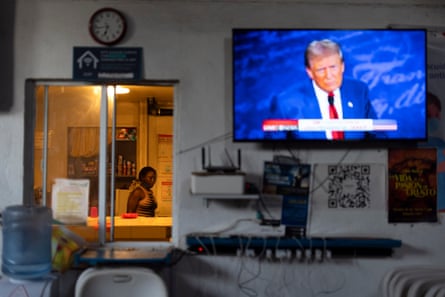 An asylum-seeking migrant from Haiti who did not give her name out of fear, cleans a kitchen at a shelter for migrants in Tijuana, Mexico. Photograph: Gregory Bull/AP
theguardian.com
An asylum-seeking migrant from Haiti who did not give her name out of fear, cleans a kitchen at a shelter for migrants in Tijuana, Mexico. Photograph: Gregory Bull/AP
theguardian.com
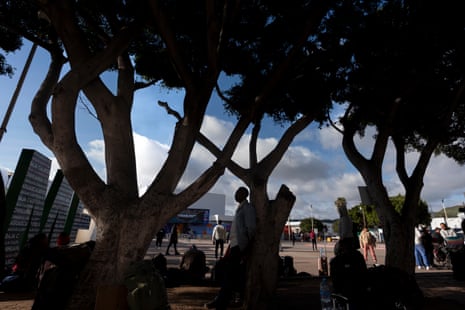 Gang violence racking Haiti has reverberated among millions who left the country for Brazil, Chile, Mexico and the US. Photograph: Gregory Bull/AP
theguardian.com
Gang violence racking Haiti has reverberated among millions who left the country for Brazil, Chile, Mexico and the US. Photograph: Gregory Bull/AP
theguardian.com
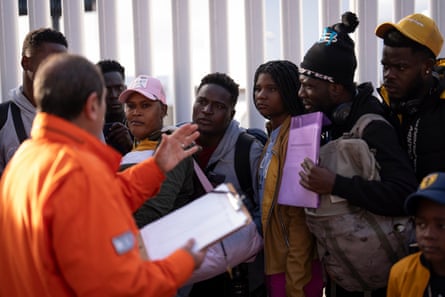 A Mexican immigration official speaks to migrants as they line up for their appointment with US immigration officials to apply for asylum. Photograph: Gregory Bull/AP
theguardian.com
A Mexican immigration official speaks to migrants as they line up for their appointment with US immigration officials to apply for asylum. Photograph: Gregory Bull/AP
theguardian.com
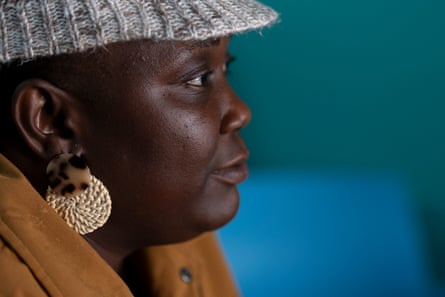 Vivianne Petit Frére, of Haiti, sits at a table in the Haitian restaurant she runs in downtown Tijuana, Mexico. Photograph: Gregory Bull/AP
theguardian.com
Vivianne Petit Frére, of Haiti, sits at a table in the Haitian restaurant she runs in downtown Tijuana, Mexico. Photograph: Gregory Bull/AP
theguardian.com
 Joseph, pictured left, with his younger brother. The six-year-old, who is deaf, was deported from the United States. Federal agents denied the child access to his hearing devices before putting him on a plane to Colombia with his mom and brother, according to his family’s lawyer. He and his family are now in hiding (Family of Lesly Rodriguez Guttierez)
Family of Lesly Rodriguez Guttierez
Joseph, pictured left, with his younger brother. The six-year-old, who is deaf, was deported from the United States. Federal agents denied the child access to his hearing devices before putting him on a plane to Colombia with his mom and brother, according to his family’s lawyer. He and his family are now in hiding (Family of Lesly Rodriguez Guttierez)
Family of Lesly Rodriguez Guttierez
 Lesly Rodriguez Gutierrez and her two children were detained earlier this week during a routine check-in at Immigration and Customs Enforcement’s Intensive Supervision Appearance Program office in San Francisco. The family had been living in Hayward, California, since arriving in the U.S. as asylum seekers (Family of Lesly Rodriguez Gutierrez)
Family of Lesly Rodriguez Gutierrez
Lesly Rodriguez Gutierrez and her two children were detained earlier this week during a routine check-in at Immigration and Customs Enforcement’s Intensive Supervision Appearance Program office in San Francisco. The family had been living in Hayward, California, since arriving in the U.S. as asylum seekers (Family of Lesly Rodriguez Gutierrez)
Family of Lesly Rodriguez Gutierrez
 De Bremaeker said that while Gutierrez and her two boys were at the ICE center in San Francisco, a relative had been sitting outside in a car with Joseph’s hearing aids, pictured, which he relies on to communicate. Throughout the process Gutierrez had begged the agents to allow them to retrieve the devices (Family of Lesly Rodriguez Gutierrez)
Family of Lesly Rodriguez Gutierrez
De Bremaeker said that while Gutierrez and her two boys were at the ICE center in San Francisco, a relative had been sitting outside in a car with Joseph’s hearing aids, pictured, which he relies on to communicate. Throughout the process Gutierrez had begged the agents to allow them to retrieve the devices (Family of Lesly Rodriguez Gutierrez)
Family of Lesly Rodriguez Gutierrez
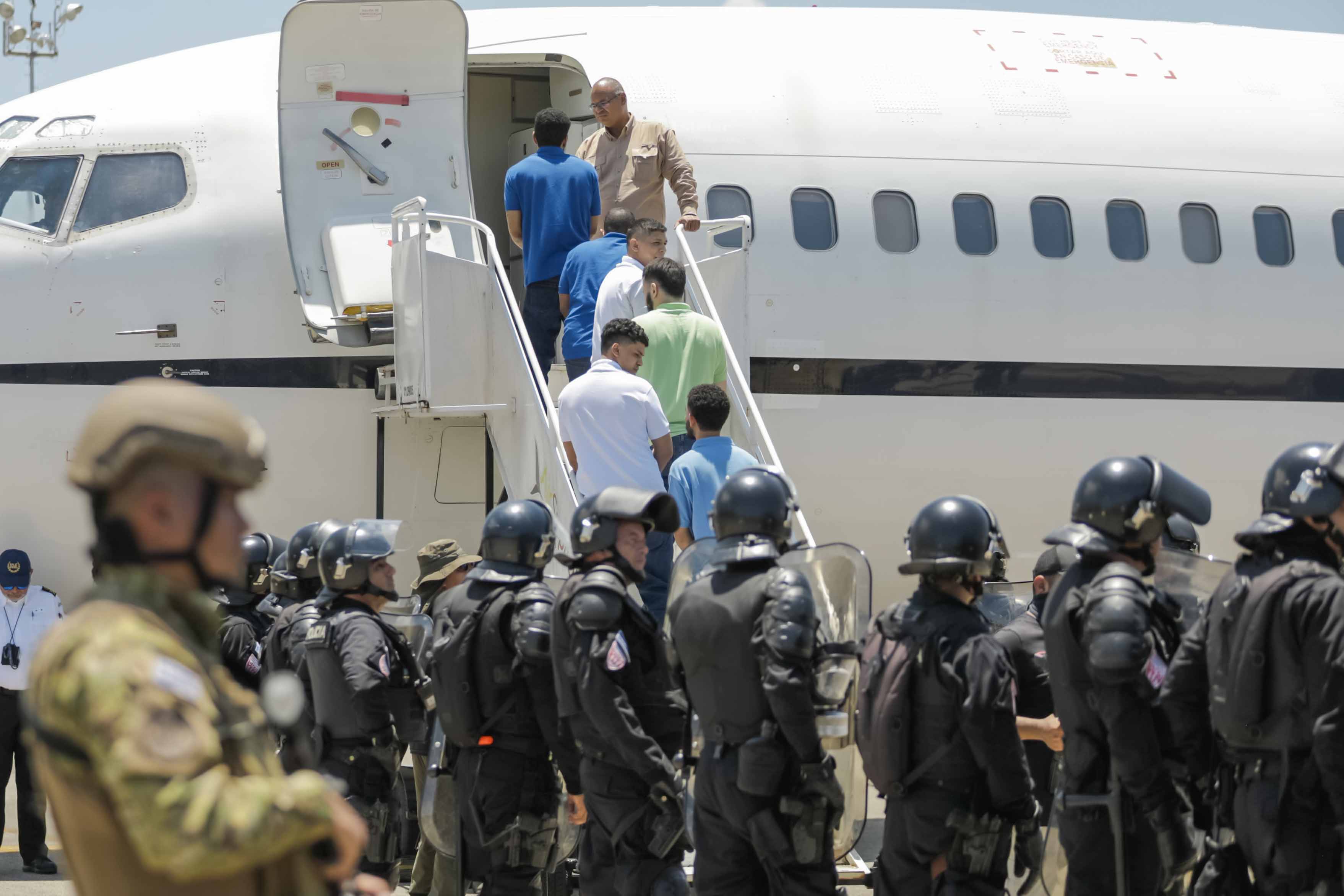 The family’s lawyer also said he was given misleading information and was unable to find the family for two days before tracking them down to a detention center in Arizona before their removal to South America. All three were traumatized by the ordeal (Getty Images)
Getty Images
The family’s lawyer also said he was given misleading information and was unable to find the family for two days before tracking them down to a detention center in Arizona before their removal to South America. All three were traumatized by the ordeal (Getty Images)
Getty Images
A six-year-old Colombian boy who is deaf was deported from the United States without his hearing aids after his family was detained at an ICE check-in in San Francisco, according to his lawyer. At the same time in southern Mexico, Haitian migrants in Tapachula describe months-long waits for refugee processing and work authorization as US policy tightens and international funding is cut, The Guardian reports.
The two stories sit on different sides of the same bottleneck: Washington’s decision to narrow entry routes and speed removals pushes pressure outward, and the pressure does not disappear—it relocates. In Tapachula, migrants who once treated Mexico as a corridor now describe it as an indefinite holding zone, where the Mexican refugee agency COMAR offers the promise of permits but delivers long delays. The Guardian notes that arrivals continue while legal pathways to the US have hardened, leaving people to choose between settling in Mexico without predictable paperwork or attempting onward movement through a border that is increasingly closed.
In the Colombian case, the removal itself becomes a logistical and legal event with downstream effects. The Independent reports that ICE detained the mother and her two children during a routine appointment, moved them rapidly through facilities, and deported them while a relative waited outside with the child’s assistive devices. The lawyer says the mother refused to sign documents she did not understand and lacked access to counsel, and that the family is now in hiding in Colombia, unable to access schooling and specialised care.
The regional market that grows around these policies is not limited to smugglers. When status depends on appointments, permits, and discretionary decisions, local intermediaries—lawyers, shelters, employers, and officials with the power to delay or accelerate paperwork—become part of the price of movement. Mexico’s southern border towns see the economic effects of large populations who cannot legally work for months, while receiving cities in Colombia absorb deportees who often left precisely because local institutions could not protect them.
In Tapachula, the system’s concrete output is lines outside government offices and informal work while people wait. In Colombia, it is a family staying out of sight with a child who cannot hear. The policy lever is pulled in Washington, but the administrative consequences show up in places where the paperwork is slow and the social services are thinner.