
US weighs special forces raid to seize Iran uranium
Inspectors have not verified stockpile for nine months, war aims shift from strikes to physical custody
Images
 U.S. President Donald Trump speaks to reporters alongside special envoy Steve Witkoff (center) and and Defense Secretary Pete Hegseth on board Air Force One on Saturday.
japantimes.co.jp
U.S. President Donald Trump speaks to reporters alongside special envoy Steve Witkoff (center) and and Defense Secretary Pete Hegseth on board Air Force One on Saturday.
japantimes.co.jp
 A solar farm in Nakai, Kanagawa Prefecture, in March 2016. Japan gets about a tenth of its electricity from solar panels despite having nearly no domestic production of photovoltaics (PVs).
japantimes.co.jp
A solar farm in Nakai, Kanagawa Prefecture, in March 2016. Japan gets about a tenth of its electricity from solar panels despite having nearly no domestic production of photovoltaics (PVs).
japantimes.co.jp
 Haruna Kambayashi stands by her newly purchased home on a street now lined with mostly empty lots.
japantimes.co.jp
Haruna Kambayashi stands by her newly purchased home on a street now lined with mostly empty lots.
japantimes.co.jp
 Imperial Hotel, Kyoto: Where hospitality traditions meet
japantimes.co.jp
Imperial Hotel, Kyoto: Where hospitality traditions meet
japantimes.co.jp
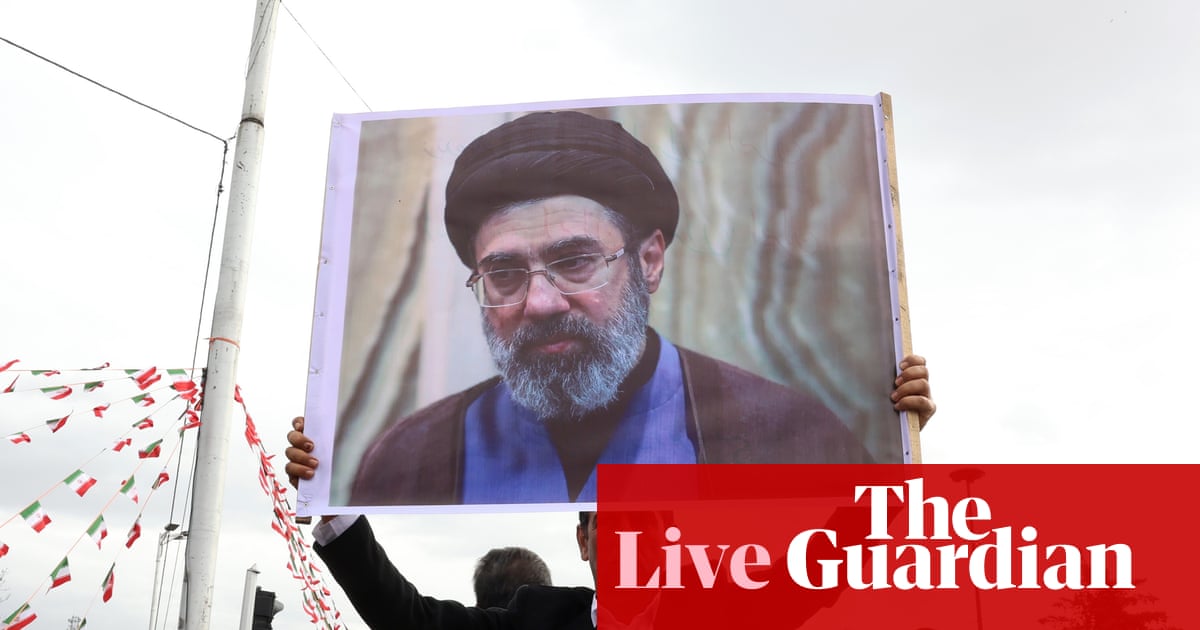 Middle East crisis live: Mojtaba Khamenei chosen as Iran’s new supreme leader; oil prices soar past $100 a barrel
theguardian.com
Middle East crisis live: Mojtaba Khamenei chosen as Iran’s new supreme leader; oil prices soar past $100 a barrel
theguardian.com
US weighs special forces raid for Iran uranium, inspectors have not verified stockpile for nine months, mission metrics push war from airstrikes to seizures
U.S. officials are weighing a ground operation to seize Iran’s near-bomb-grade uranium stockpile, a step that would move the conflict from strikes on facilities to a hunt for material. According to the Japan Times, citing Bloomberg reporting and diplomats briefed on the discussions, the concern is that the highly enriched uranium may have been moved since international inspectors last verified its location.
The proposal lands in a war that has already produced a catalogue of measurable events—destroyed sites, intercepted missiles, price spikes—but not a single object that can be photographed and presented as the thing that ended the problem. Air campaigns can crater buildings and disrupt command chains; they are less good at producing inventory. Uranium is different: it is countable, transportable, and politically legible. When leaders promise to eliminate a nuclear threat, the easiest proof is not a damaged centrifuge hall but material in custody.
That logic also explains why the uranium question keeps resurfacing even as officials acknowledge the risks. A raid would require intelligence precise enough to avoid turning a search into a running firefight, and logistics robust enough to extract personnel and cargo from a country that has spent decades preparing for asymmetric retaliation. It would also create incentives for Iran to disperse, conceal, or booby-trap storage sites, because uncertainty itself becomes a defensive asset: the less outsiders know, the more expensive every next step becomes.
The time gap matters. The Japan Times reports it has been almost nine months since United Nations atomic inspectors confirmed the stockpile’s location. In that period, the war has widened beyond nuclear sites to energy and commercial infrastructure, while shipping and insurance markets have treated the Gulf as a high-risk zone. In that environment, a “later” operation is not merely delayed; it is priced differently, staffed differently, and judged against a shifting threshold of acceptable escalation.
Donald Trump, speaking aboard Air Force One, framed the idea as optional: “We haven’t gone after it, but it’s something we can do later on,” adding that it would not be done “now,” according to the report. The statement leaves room for two audiences at once—domestic voters who want closure and adversaries who are meant to doubt what Washington will do next.
For now, the stockpile remains where the public cannot see it, and the policy debate is about whether a war that began with airpower ends with a receipt.
Trump’s own description of the uranium option was that it was “something we can do later on,” a timeline that depends on whether the material can still be found when “later” arrives.