
Iran names Mojtaba Khamenei as supreme leader
Assembly of Experts confirms succession during US Israel war, wartime continuity favours the security apparatus
Images
 Iran's Assembly of Experts announced Mojtaba Khamenei, the son of the slain Ayatollah Ali Khamenei, as the country's new supreme leader on March 8, 2026.
japantimes.co.jp
Iran's Assembly of Experts announced Mojtaba Khamenei, the son of the slain Ayatollah Ali Khamenei, as the country's new supreme leader on March 8, 2026.
japantimes.co.jp
 A solar farm in Nakai, Kanagawa Prefecture, in March 2016. Japan gets about a tenth of its electricity from solar panels despite having nearly no domestic production of photovoltaics (PVs).
japantimes.co.jp
A solar farm in Nakai, Kanagawa Prefecture, in March 2016. Japan gets about a tenth of its electricity from solar panels despite having nearly no domestic production of photovoltaics (PVs).
japantimes.co.jp
 As Japan accelerates AI adoption, policymakers and corporations frame the technology as essential to offsetting a projected labor shortfall of 11 million workers by 2040.
japantimes.co.jp
As Japan accelerates AI adoption, policymakers and corporations frame the technology as essential to offsetting a projected labor shortfall of 11 million workers by 2040.
japantimes.co.jp
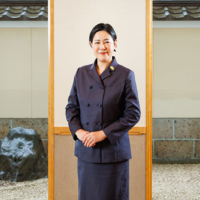 Imperial Hotel, Kyoto: Where hospitality traditions meet
japantimes.co.jp
Imperial Hotel, Kyoto: Where hospitality traditions meet
japantimes.co.jp
Iran’s Assembly of Experts has named Mojtaba Khamenei as the country’s new supreme leader, succeeding his father Ali Khamenei, according to Reuters reporting published by the Japan Times. The decision was announced just after midnight Tehran time on March 8, in the second week of Iran’s war with the United States and Israel.
The choice settles an open question that had been hanging over Iran’s wartime chain of command: who signs off on the security state when the original architect is gone. Mojtaba Khamenei is described by Reuters as a mid-ranking cleric with influence inside Iran’s security forces and “vast business networks” built under his father. That profile matters more than the formal religious rank. In practice, the supreme leader’s office sits atop the Revolutionary Guards, the intelligence services, and the patronage economy that ties sanctions evasion, contracts, and political loyalty together. Naming a successor with established access to those networks reduces the risk of a leadership vacuum that rival factions could exploit.
Dynastic succession also solves a narrower problem: continuity under external pressure. A regime that believes it is being targeted for collapse has incentives to pick a leader who is already trusted by the coercive apparatus and who is unlikely to reinterpret past deals, purge insiders, or renegotiate the balance of power between clerics and the Guards. The Assembly of Experts is nominally an 88-member clerical body tasked with selecting the leader, but the war has shifted the practical center of gravity toward the institutions that can mobilise force, control information, and keep oil and logistics moving.
The appointment lands in a parallel legitimacy contest being waged outside Iran. In recent days, US President Donald Trump has spoken publicly as if Washington’s approval determines who lasts in Tehran, turning Iran’s succession into a messaging battlefield as much as a constitutional procedure. Tehran’s response is to present the handover as decisive and closed: a vote, a statement, a single name.
Iran’s new leader was announced after midnight in Tehran, and the man chosen was the one already embedded in the security networks that run the state.