
Projectile hits Saudi residential area
Two foreign nationals killed in Al-Kharj and 12 injured, Gulf security premium rises when civilian zones enter the target set
Images
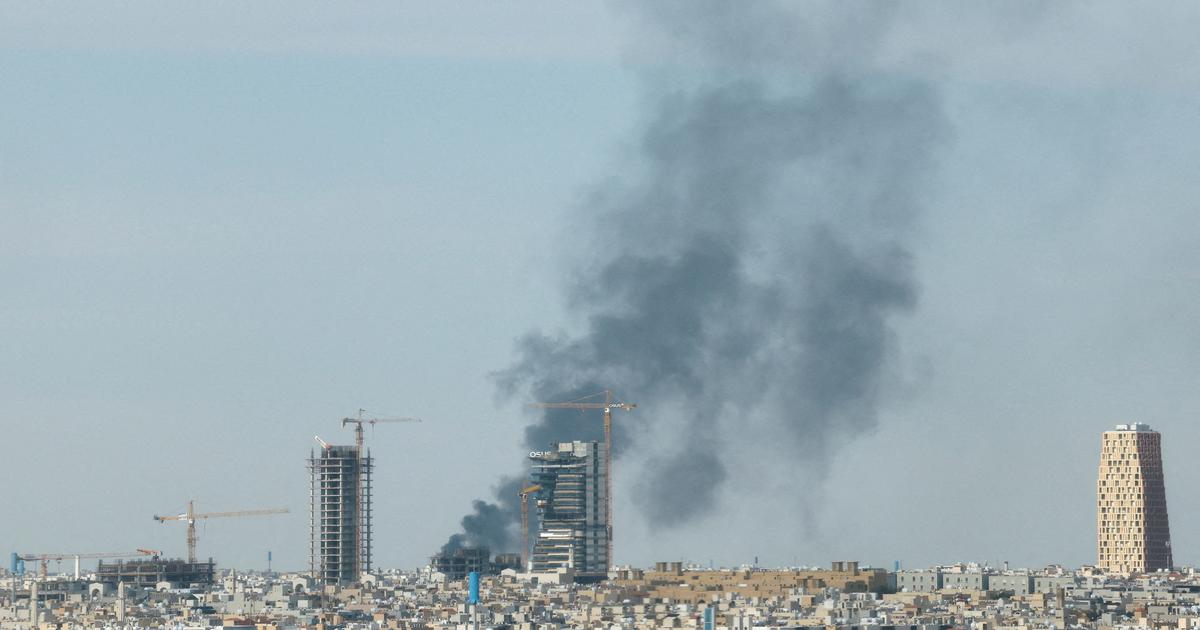 Smoke rises from a building in Saudi Arabia amid the conflict in West Asia.
|
Stringer/Reuters
scroll.in
Smoke rises from a building in Saudi Arabia amid the conflict in West Asia.
|
Stringer/Reuters
scroll.in
A military projectile hit a residential area in Al-Kharj, south of Riyadh, killing two foreign nationals and injuring 12 others, according to Reuters reporting cited by Scroll. One of those killed was an Indian citizen and the other a Bangladeshi national, Saudi Civil Defence said. Iran’s Revolutionary Guards claimed earlier on Sunday to have targeted radar systems in several locations, including Al-Kharj.
The strike is small in physical terms but large in what it does to the Gulf’s business model. For decades, Gulf monarchies sold a package: predictable internal security, enforceable contracts, and infrastructure that works. That package is what attracts expatriate labour, foreign contractors, and the logistics firms that turn airports and ports into regional hubs. When projectiles land in housing districts rather than near military bases, the risk moves from “headline war” to personal safety—exactly the category that prompts people to leave, insurers to reprice, and employers to pause deployments.
The first-order effect is labour. A multinational can reroute cargo or harden a facility; it cannot easily compel skilled expatriates to keep bringing families to a place that is no longer treated as a safe posting. The second-order effect is cost of capital. Once civilian areas are within the strike envelope, lenders and underwriters stop treating the region as an exception that governments will always backstop. War-risk premiums rise, clauses get rewritten, and projects that depend on cheap financing start to look optional.
The conflict’s geography has already been shifting from symbolic targets to economic pressure points. In recent days, reporting across outlets has focused on disrupted aviation, shipping risk in the Gulf, and strikes that affect energy and water infrastructure. A residential strike extends that logic into the domain where governments have fewer technical fixes: you can add interceptors, but you cannot intercept every rumour, every relocation decision, or every boardroom risk committee.
For India, Bangladesh and other labour-sending countries, the incident also turns into a consular and remittance problem. Workers who leave early are workers who stop sending money home; workers who stay demand hazard pay; and governments face pressure to evacuate even when commercial flights and routes are already constrained.
Saudi Civil Defence reported two dead and 12 injured in Al-Kharj. The victims were not military personnel, and the strike did not need to be repeated to change how the region is priced.