
EU warships mass off Cyprus
Iran warns Europe could become target for aiding US and Israel, logistics hubs turn into liabilities
Images
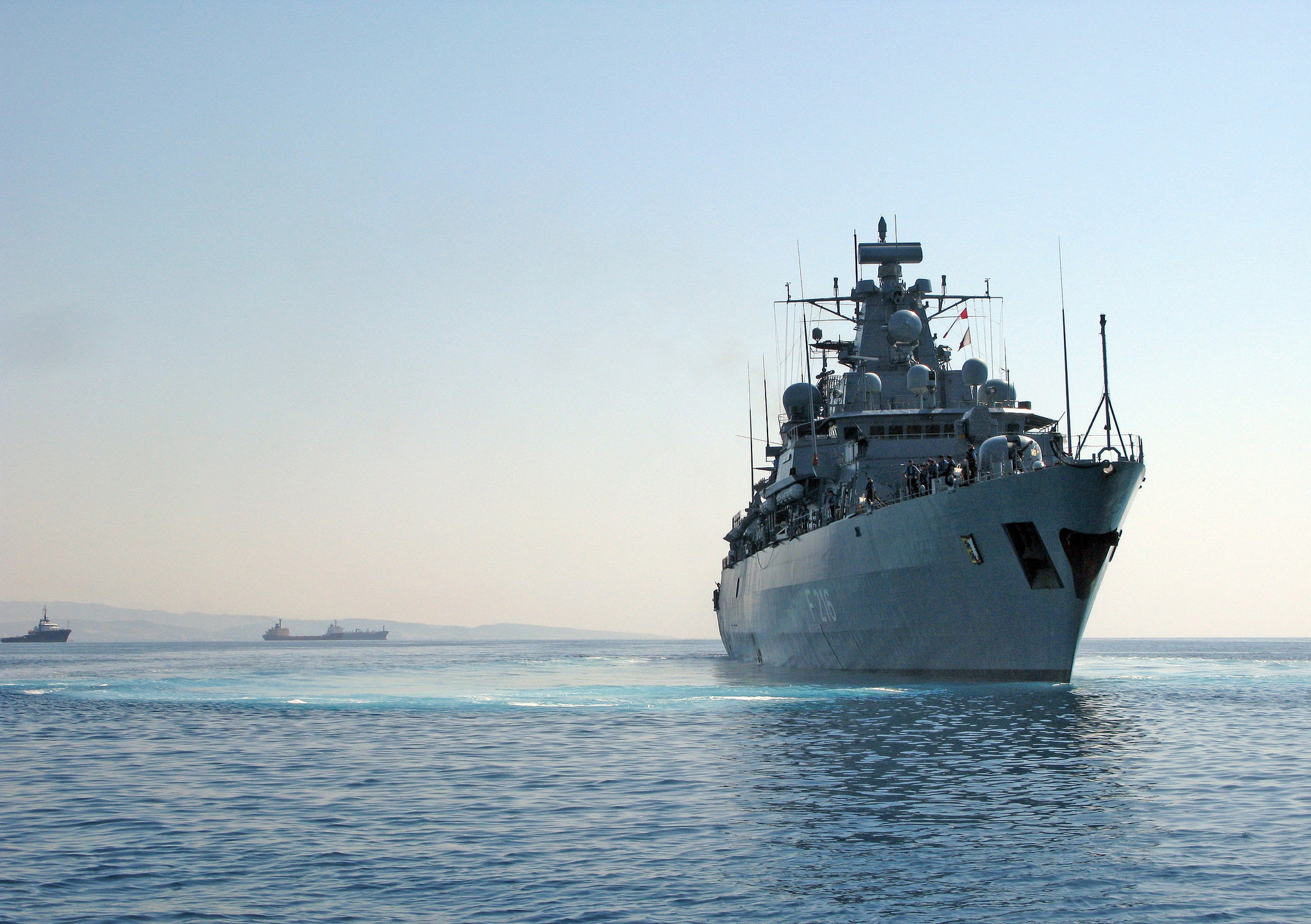 Germany is sending a frigate to join a growing fleet of EU navies and air-defence systems in the area
euobserver.com
Germany is sending a frigate to join a growing fleet of EU navies and air-defence systems in the area
euobserver.com
Iran has warned that European countries could become “legitimate targets” if they are seen to be helping the US and Israel in the war, as EU member states move warships and air-defence assets toward Cyprus.
According to EUobserver, Germany is sending a frigate to join French, Dutch, Greek, Italian and Spanish vessels already in the eastern Mediterranean or en route. France’s Emmanuel Macron and Greece’s Kyriakos Mitsotakis are due in Cyprus on Monday to coordinate air and maritime defence and evacuation planning. Iran has already launched drones and ballistic missiles at a UK base on Cyprus, and Iranian officials have pointedly widened their message beyond the immediate theatre: deputy foreign minister Majid Takht-Ravanchi told France 24 that any European state joining the “aggression” would be treated as a target.
The military logic is straightforward: Cyprus sits on the air and sea corridors that connect Europe to the Levant and the Gulf, and it hosts facilities that can support surveillance, refuelling, missile defence and evacuations. The political logic is more awkward. European governments want to be seen to “do something” in a fast-moving crisis, but the cheapest “something” is often to provide access, basing and logistics while keeping formal distance from offensive operations. Tehran’s threat collapses that distinction by treating support functions as participation, which turns ports, runways and radar sites into dual-use nodes.
Once a base becomes a hub, it also becomes a bill. Air-defence deployments consume interceptors and maintenance hours; naval presence consumes fuel and crews; evacuation planning demands aircraft, landing rights and diplomatic bandwidth. Cyprus, Greece, Italy and Spain carry the geographic exposure, while the wider EU gains the signalling value. The second-order effects show up in commercial markets that are not waiting for communiqués: war-risk insurance premiums, shipping routes, and airline flight paths reprice in real time when a location is reclassified from “support area” to “targetable”.
EUobserver notes that Turkey is now talking about sending F-16s to Northern Cyprus, adding a separate layer of friction between Nato allies in an already crowded airspace. At the same time, the war’s shadow is stretching north: a bomb blast at the US embassy in Oslo on Sunday underlined fears of Iran-aligned networks in Europe shifting from missiles to asymmetric attacks, with Norwegian police saying the incident could be a deliberate strike on the embassy.
European leaders will meet in Cyprus to coordinate “defence operations and repatriation efforts”, but the map they are drawing is one in which Europe’s safest logistics are increasingly inside the war’s radius.