
Sotheby’s auctions Lothar Schmid chess trove in London
50000 artefacts include Fischer–Spassky score sheets and a 15th-century chess book, private collecting turns game history into investable lots
Images
 Lothar Schmid watches over the 1972 Chess World Championship between Boris Spassky (left) and Bobby Fischer. Photograph: Sotheby’s
theguardian.com
Lothar Schmid watches over the 1972 Chess World Championship between Boris Spassky (left) and Bobby Fischer. Photograph: Sotheby’s
theguardian.com
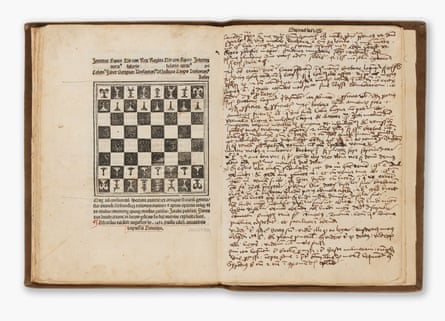 A page from one of Schmid’s books dating from 1482. Photograph: Sotheby’s
theguardian.com
A page from one of Schmid’s books dating from 1482. Photograph: Sotheby’s
theguardian.com
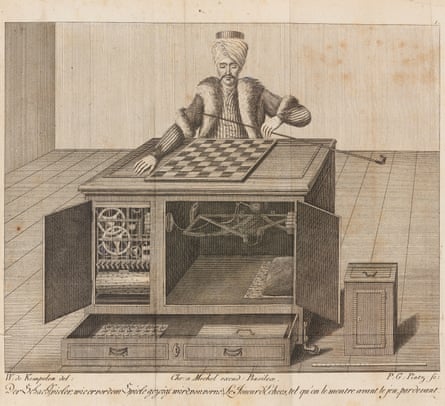 An 1783 illustration of the Mechanical Work, a chess-playing automaton that in fact had a real chess player hidden inside. Photograph: Sotheby’s
theguardian.com
An 1783 illustration of the Mechanical Work, a chess-playing automaton that in fact had a real chess player hidden inside. Photograph: Sotheby’s
theguardian.com
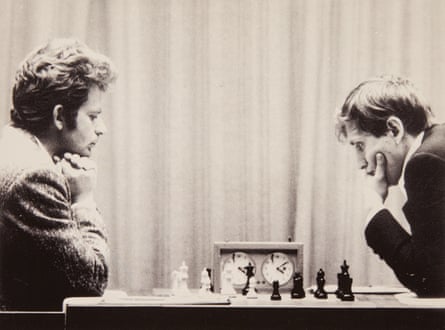 Another photo of the Spassky (left) v Fischer match from Schmid’s collection. Photograph: Sotheby’s
theguardian.com
Another photo of the Spassky (left) v Fischer match from Schmid’s collection. Photograph: Sotheby’s
theguardian.com
Sotheby’s in London will auction what it calls one of the largest private collections of chess memorabilia next month, a trove assembled by the late German grandmaster Lothar Schmid. The Guardian reports the sale includes more than 50,000 artefacts spanning centuries, from tournament ephemera to rare books, with items tied to the 1972 Fischer–Spassky world championship match in Reykjavik.
Schmid was not just a collector with storage space; he was the chief arbiter of that 1972 “Match of the Century”, a cold-war spectacle in which a Soviet champion faced an American challenger under global scrutiny. Among the lots are Schmid’s score sheets from the match, alongside the players’ own notes. These are the kinds of objects that turn a televised event into something tradable: provenance is clear, the story is widely known, and the supply is fixed.
The headline book in the auction is a copy of Repetition of Loves and the Art of Chess by Luis Ramírez de Lucena, dated to the late 15th century and described as the oldest surviving book on chess strategy. Sotheby’s expects at least £70,000 for it, according to the Guardian. Other lots include material on the “Mechanical Turk”, the famous chess-playing automaton that toured Europe and the US for decades while hiding a human operator inside.
The sale also illustrates how niche cultural objects have become a recognisable asset class. Chess has enjoyed a renewed boom in recent years, helped by lockdown-era online play and pop-cultural catalysts such as Netflix’s The Queen’s Gambit. When a hobby gains new entrants, it also gains a new layer of buyers: not only players and historians, but investors looking for scarce, narrative-rich items that cannot be replicated.
Schmid’s son, Bernhard, told the Guardian his father travelled across five continents to buy artefacts he “fell in love with”, once flying to South America for a book he compared in price to a house. That kind of collecting only becomes legible to a wider market when it is converted into catalogue lots, estimates, and a London sale date.
The collection was stored in Schmid’s house in Bamberg until his death in 2013. Next month it will be dispersed, one numbered lot at a time.