
Deaf six-year-old deported after ICE check-in
Lawyer says hearing aid blocked before removal, DHS cites final removal order and calls detention a choice
Images
 Demonstrators in California protest the Trump administration’s crackdown on immigration. On Tuesday, the Department of Homeland Security detained a six-year-old deaf boy in San Francisco and refused to allow a family member to give him his hearing aid before deporting him to Colombia (AFP/Getty)
AFP/Getty
Demonstrators in California protest the Trump administration’s crackdown on immigration. On Tuesday, the Department of Homeland Security detained a six-year-old deaf boy in San Francisco and refused to allow a family member to give him his hearing aid before deporting him to Colombia (AFP/Getty)
AFP/Getty
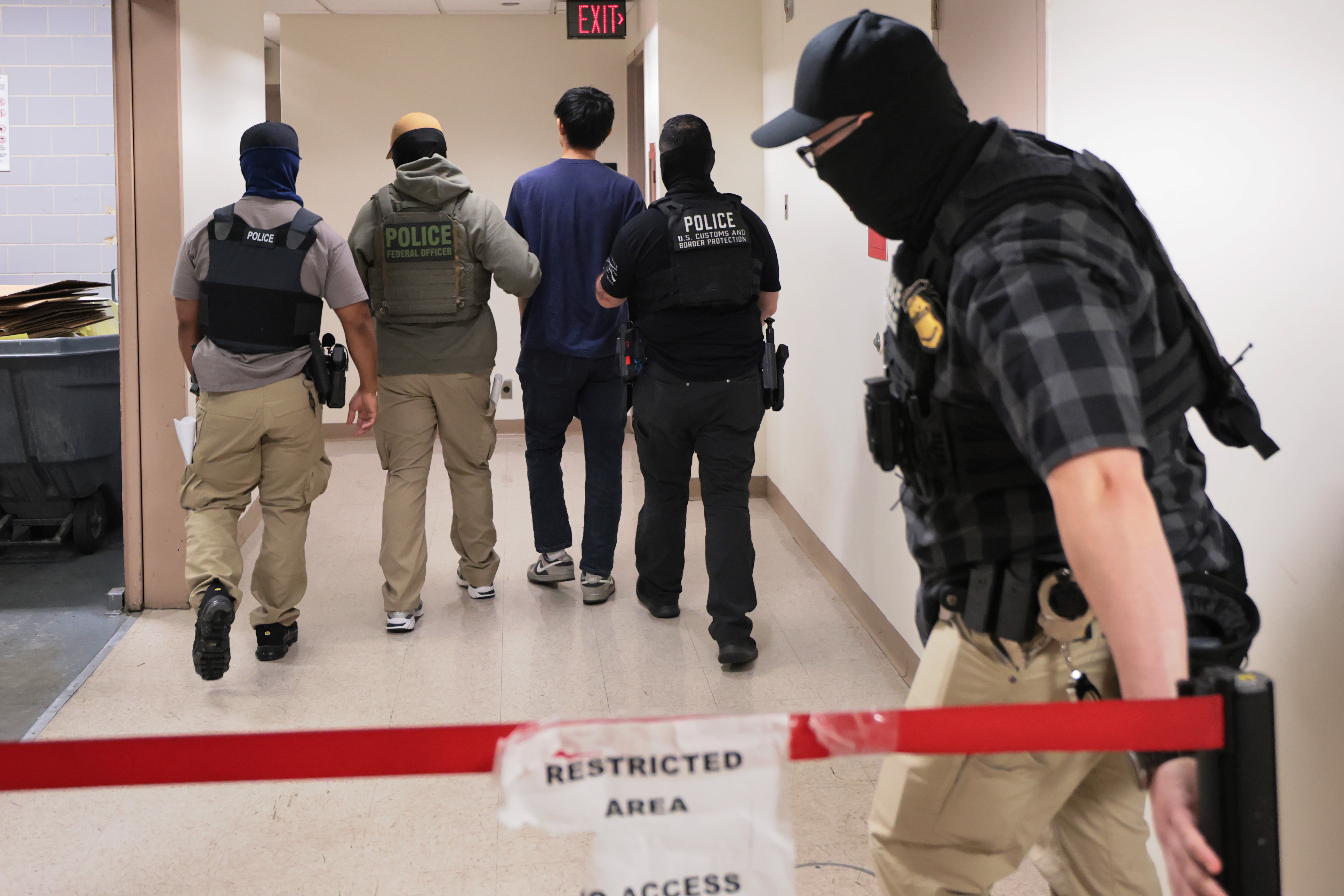 A man is led away by ICE agents inside a New York immigration court. A mother and her two young children, asylum seekers from Colombia were deported this week, without due process, their lawyer said (Getty)
Getty
A man is led away by ICE agents inside a New York immigration court. A mother and her two young children, asylum seekers from Colombia were deported this week, without due process, their lawyer said (Getty)
Getty
A six-year-old deaf boy was deported from the United States after being detained with his mother and younger brother during a routine check-in at an ICE supervision office in San Francisco, according to The Independent. The family, Colombian asylum seekers who had lived in Hayward, California for five years, were removed to Colombia after being transferred through detention facilities, including one in Arizona.
According to the family’s lawyer, Nikolas De Bremaeker of Centro Legal de la Raza, the child’s hearing aid was not allowed to be delivered to him before departure. De Bremaeker said a relative attempted to bring the device to the ICE facility in San Francisco but was turned away. He also said he was unable to locate the family for two days and argued the mother had a legal right to notice prior to deportation because she had no criminal record.
The Department of Homeland Security disputes that characterization. In a statement cited by The Independent, DHS said the mother received “full due process” and that an immigration judge issued a final order of removal on November 25, 2024. DHS also said ICE does not separate families and that parents are offered a choice between being removed with their children or placing them with someone they designate; in this case, DHS said, the mother chose removal with her children.
The clash is less about whether deportations happen — they do — than about what counts as procedure when the state controls the timetable, the location, and the information flow. Lawyers and local officials can only react to what they can document, which increasingly means reconstructing events after the fact: where a detainee was moved, whether notice was given, and what access to medical devices or communication aids was actually provided.
California’s superintendent of public instruction, Tony Thurmond, said he was “deeply disturbed” that the boy was deported without access to his necessary device and called for his return to California, according to The Independent. The boy had attended the California School for the Deaf in Fremont for three years.
For federal agencies, removals are measured in completed operations and compliance with internal protocols; for families and counsel, the relevant question is whether the process was legible and contestable before the plane left. When those two definitions diverge, accountability shifts from courts to press conferences — and to whatever paperwork or recordings surface later.
The family was deported on March 5, DHS said. The dispute now turns on whether the hearing aid ever made it into the chain of custody before the door closed.