
US jury convicts Asif Merchant over alleged Iran-linked assassination plot
FBI sting and a $5000 cash handoff form the case record, upstream attribution rests largely on the defendant’s account
Images
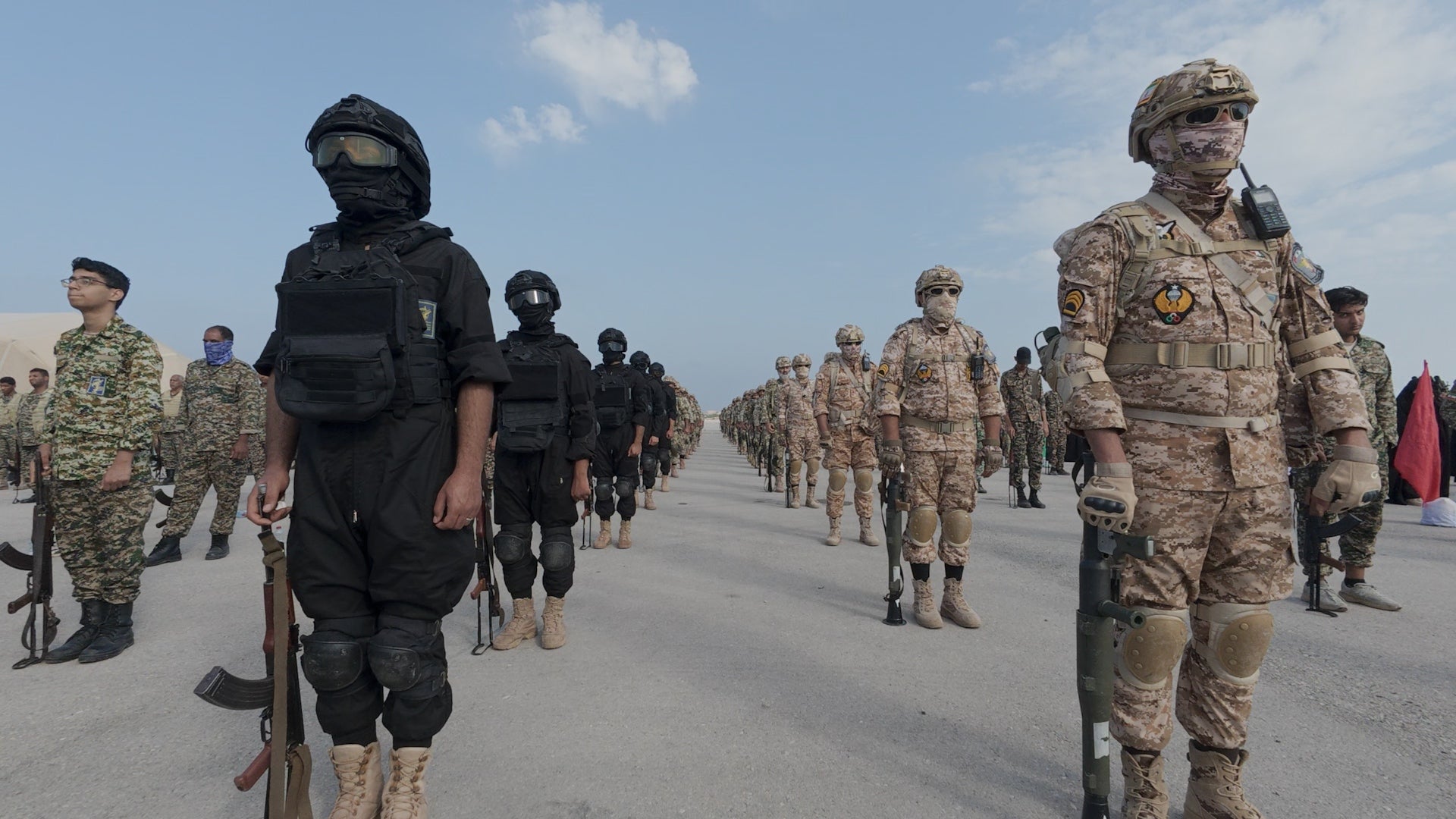 Merchant told the jury he was carrying out instructions from a contact in the Islamic Republic’s powerful paramilitary Revolutionary Guard. In this image provided by Sepahnews of the Iranian Revolutionary Guard shows troops standing at attention during the guard's drill in the Persian Gulf (Sepahnews)
Sepahnews
Merchant told the jury he was carrying out instructions from a contact in the Islamic Republic’s powerful paramilitary Revolutionary Guard. In this image provided by Sepahnews of the Iranian Revolutionary Guard shows troops standing at attention during the guard's drill in the Persian Gulf (Sepahnews)
Sepahnews
 Asif Merchant (Justice Department via AP, File)
Justice Department via AP, File
Asif Merchant (Justice Department via AP, File)
Justice Department via AP, File
A federal jury in Brooklyn convicted Asif Merchant, a 47-year-old Pakistani businessman, of terrorism and murder-for-hire charges after prosecutors said he tried to commission the assassination of a US political figure during the 2024 campaign. According to the Associated Press report carried by The Independent, Merchant paid $5,000 in cash to people he believed were hitmen in Manhattan, who were in fact undercover FBI agents.
The case is built on a familiar modern chain: alleged foreign direction, a domestic intermediary, and an operational plan that never reaches execution. Merchant testified that he met an Iranian Revolutionary Guard intelligence operative about three years earlier, received countersurveillance training, and was tasked with arranging an assassination; he told jurors the handler floated names including Donald Trump, Joe Biden and Nikki Haley but did not specify a target. Iranian officials have denied plotting to kill US figures.
The evidentiary core described in the report is not a recovered weapon or a near-miss attack but recorded conversations, a diagram sketched on a napkin to explain a shooting at a rally, and the controlled handover of cash. That kind of record is strong proof of intent and steps taken, but it is also structurally thin at the “who ordered it” end: jurors were asked to infer the upstream command relationship largely through the defendant’s own account of a handler and assignments.
That asymmetry matters because these prosecutions rarely stay confined to the courtroom. A disrupted plot is cited as proof of persistent, covert foreign reach; the counterargument—how much of the threat is independently verifiable beyond the sting—can be hard to litigate in public without exposing sources and methods. The result is a policy environment where the state can expand sanctions, surveillance authorities and domestic security budgets on the back of threats that are, by design, compartmentalised and deniable.
Merchant’s defence, as described by The Independent, leaned on duress: he said he complied to protect family members in Iran and expected to be arrested before anyone was harmed. Prosecutors countered that he did not go to authorities and did not raise fear for his family when later speaking with agents about potential cooperation.
The jury deliberated for only a couple of hours. Merchant was arrested on 12 July 2024 while packing to fly to Pakistan, one day before the unrelated Butler, Pennsylvania shooting attempt on Trump.