
South African women train with guns and martial arts amid femicide crisis
Government declares national disaster but shelters and policing lag, private security expands as households buy protection directly
Images
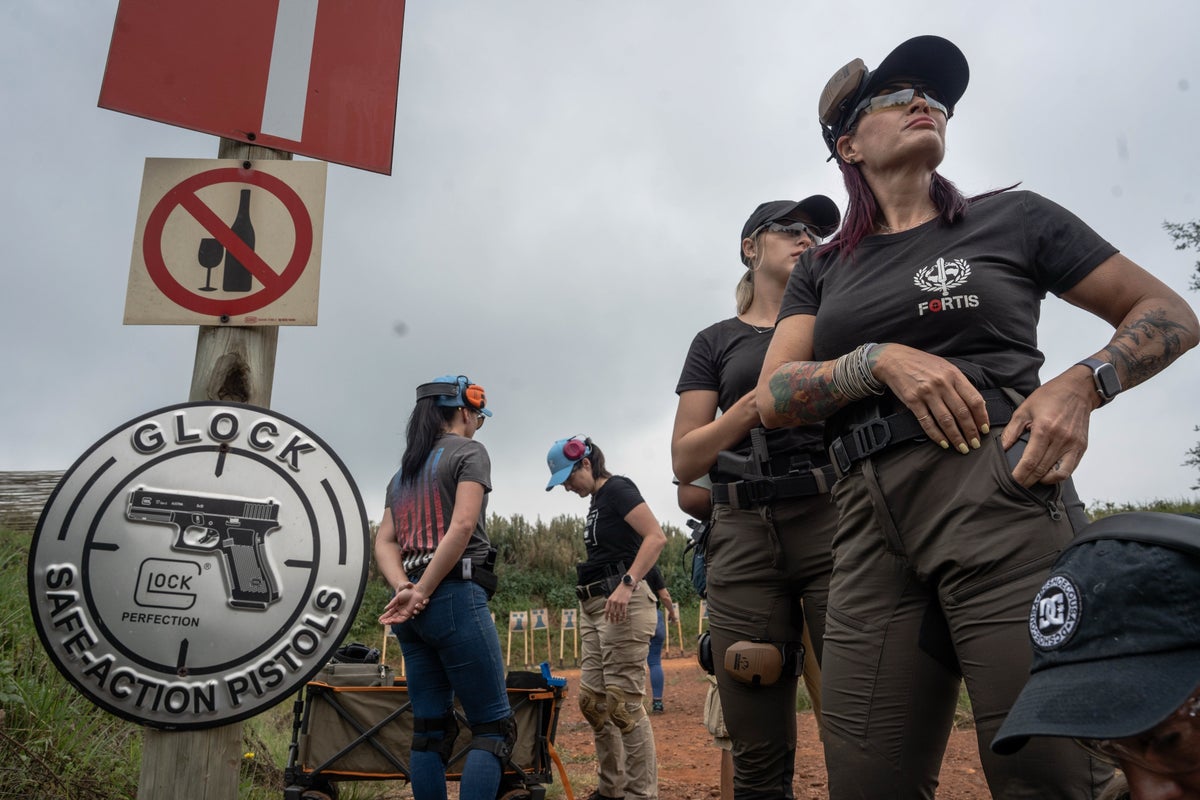 Women in South Africa take up guns and martial arts for protection against gender violence
independent.co.uk
Women in South Africa take up guns and martial arts for protection against gender violence
independent.co.uk
At a shooting range outside Pretoria, girls and women as young as 13 practised firing 9mm pistols under a female instructor’s commands, part of a training course designed around scenarios such as shooting from the ground and escaping attacks. The classes reflect a widening private response to South Africa’s high levels of violence against women, which President Cyril Ramaphosa’s government declared a national disaster in November, according to The Independent.
The market logic is straightforward: when the expected response time of police is uncertain, households buy time and deterrence elsewhere. The Independent notes that South Africa’s firearms are heavily regulated, requiring owners to be over 21 and to pass proficiency tests and background checks. That creates a pipeline of paid training, licensing services, and private security advice—an ecosystem that grows when the state’s monopoly on protection is weak in practice even if strong on paper.
The statistics cited are stark. UN Women says South Africa’s femicide rates are five to six times the global average, while a 2022 study found more than 35% of women aged 18 and older had experienced physical or sexual violence, often by an intimate partner. Sonke Gender Justice’s Mpiwa Mangwiro‑Tsanga told the paper roughly 15 women are killed each day due to gender-based violence. The government’s disaster declaration allows funds to be directed to the issue, but activists point to a national strategic plan announced six years ago that has not shifted outcomes, and to shortages of shelters and safe spaces as evidence that policy announcements are not the same thing as operational capacity.
As more middle-class women internalise risk—through firearms courses, martial arts training, and private precautions—the social consequences extend beyond the individual. Demand rises for training slots, insurance products, and gated or monitored living arrangements. The people least able to pay remain dependent on overstretched police and underfunded shelters. In that gap, personal security becomes another service tiered by income.
One participant, a 51-year-old grandmother, described firearm training as a way to regain confidence after a home invasion by five men who tied her up and ransacked her house. The course did not promise safety; it sold the ability to act before help arrives.