
Heavy rains flood Nairobi and strand motorists
Military deployed as Red Cross teams struggle to reach residents, clogged drains and neglected maintenance turn seasonal weather into recurring transport shutdowns
Images
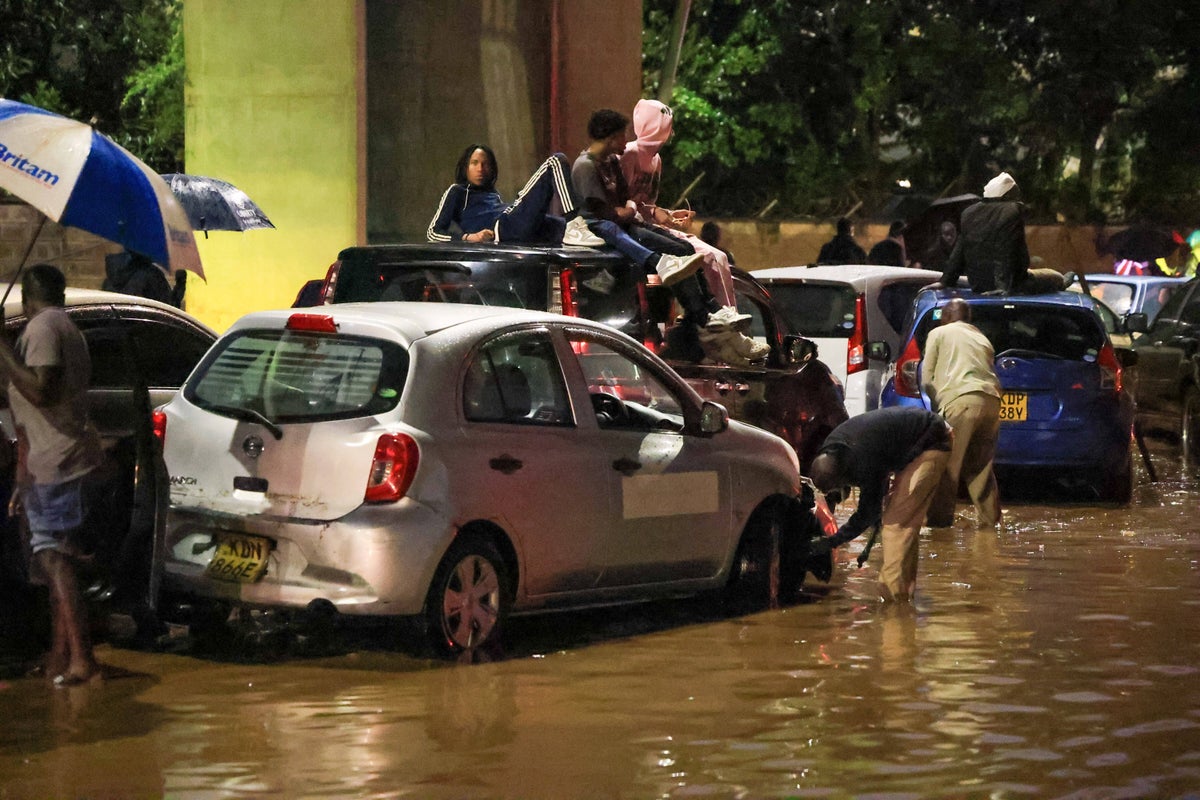 Motorists stranded and military deployed after heavy rains pound Kenyan capital overnight
independent.co.uk
Motorists stranded and military deployed after heavy rains pound Kenyan capital overnight
independent.co.uk
Floodwater turned parts of Nairobi into an overnight gridlock on Saturday after heavy rain submerged roads and vehicles, forcing some motorists to wade through hip-high water to reach higher ground. Kenya’s military was deployed to support emergency rescue services as Kenya Red Cross teams reported being unable to reach stranded residents because “what used to be roads” had become impassable, according to The Independent.
The episode fits a pattern Nairobi residents have seen across multiple rainy seasons: dramatic images, emergency deployments, and then the slow return to normal until the next downpour. The immediate costs are visible—stalled transport, delayed deliveries, closed roads, and emergency operations—but the underlying bill is mostly paid in lost hours and disrupted trade. Flood prevention is a long, unglamorous chain of tasks: drainage capacity, routine clearing of culverts, enforcement against building on waterways, and maintenance budgets that survive election cycles. Those tasks rarely produce ribbon-cutting ceremonies, while new projects do. When responsibility is split between agencies and contractors, the easiest outcome is that each unit can blame another for “clogged drains” after the fact.
The Independent reports that a toll road operator waived fees for an elevated road during the flooding, a small detail that shows how a private operator reacts when infrastructure failure threatens its own throughput and reputation. The public side of the system can deploy soldiers and issue warnings, but it cannot waive the city’s underlying risk: drainage that is treated as an afterthought and enforcement that arrives late, if at all. As Nairobi expands and more land is paved, runoff accelerates; without continuous investment in water management, each storm turns into a test of whether the city can keep moving.
Residents on social media blamed clogged drainage and asked why authorities had not prepared ahead of the long-rains season, which began in late February. The rain arrived on schedule; the water did too.