
Formula 1 rewrites 2026 car rules
Hybrid power shifts toward 50-50 split and active aero replaces DRS, complexity rewards teams that can industrialise software as much as speed
Images
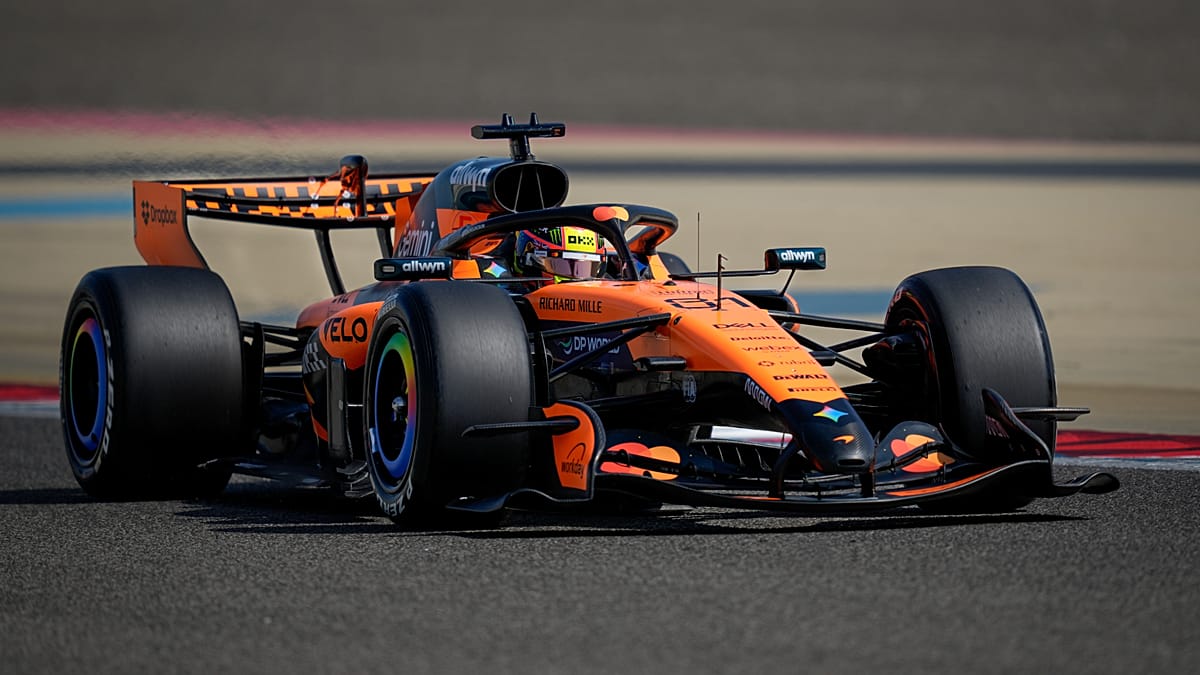 What are the innovations coming to Formula 1 in 2026?
euronews.com
What are the innovations coming to Formula 1 in 2026?
euronews.com
Formula 1’s governing body is preparing its biggest technical reset in decades for the 2026 season, with a power unit that shifts to a near 50–50 split between electric output and internal combustion, and aerodynamic rules that replace today’s Drag Reduction System with movable wings. According to Euronews, battery power is set to rise sharply versus the current generation, and new “Overtake Mode” rules will ration extra electrical deployment based on proximity to the car ahead.
The headline changes are being sold as both climate policy and consumer relevance. F1 has tied the regulations to a carbon-neutral-by-2030 narrative and to the wider automotive turn away from pure petrol powertrains, pointing to Europe’s planned phase-out of new petrol and diesel car sales from 2035 as the direction of travel. For manufacturers, the pitch is that a tightly regulated series can still act as a high-speed test bench: Ford, returning through a partnership with Red Bull Powertrains, framed its decision in terms of “increasingly electric, software-defined” road cars. The sport’s rulebook is doing two jobs at once—constraining costs and performance while also shaping what kinds of engineering are worth investing in.
That dual purpose has a familiar side effect: complexity becomes a moat. A power unit that depends on energy harvesting, battery management, and software-controlled deployment is not just a different engine; it is an integration problem across hardware, controls, and reliability testing. When the rules require teams to learn in live race conditions—Euronews notes that early seasons under new regulations often expose unpredictable performance and reliability issues—the advantage shifts to organisations with deeper simulation capacity, tighter supplier relationships, and the budget to iterate quickly within homologation limits. Smaller teams can buy components, but they cannot buy back lost development time.
The aerodynamic changes point in the same direction. DRS, a relatively simple overtaking aid, is replaced by “Active Aero”: movable front and rear wing elements that switch between high-downforce and low-drag configurations. Drivers can use the low-drag mode in designated zones each lap, while the car returns to high-downforce mode under braking. Layered on top is “Overtake Mode”, which gates additional electrical energy to situations where a driver is within a second of the car ahead. The system turns overtaking into a combined software-and-rules problem: timing the aero state, managing battery charge, and hitting detection points precisely.
The result is a championship where performance is increasingly determined by who can treat regulation as an engineering specification rather than a constraint. In 2026, the car that wins may be the one whose control systems keep the battery, motor-generator and aero surfaces behaving consistently for 300 kilometres, not the one with the most ingenious mechanical trick.
The sport will begin the new era by asking teams to debug a more electrified powertrain and a more automated aerodynamic package at racing speeds. The first failures will arrive on live television.