
US Justice Department appeals judge order blocking third-country deportations
Supreme Court stays turn immigration enforcement into a rolling emergency docket, removals depend on unverifiable assurances
Images
 ICE director reveals number of illegal aliens with deportation orders
foxnews.com
ICE director reveals number of illegal aliens with deportation orders
foxnews.com
 Judge Brian Murphy of Massachusetts
foxnews.com
Judge Brian Murphy of Massachusetts
foxnews.com
 Deportation flight out of U.S.
foxnews.com
Deportation flight out of U.S.
foxnews.com
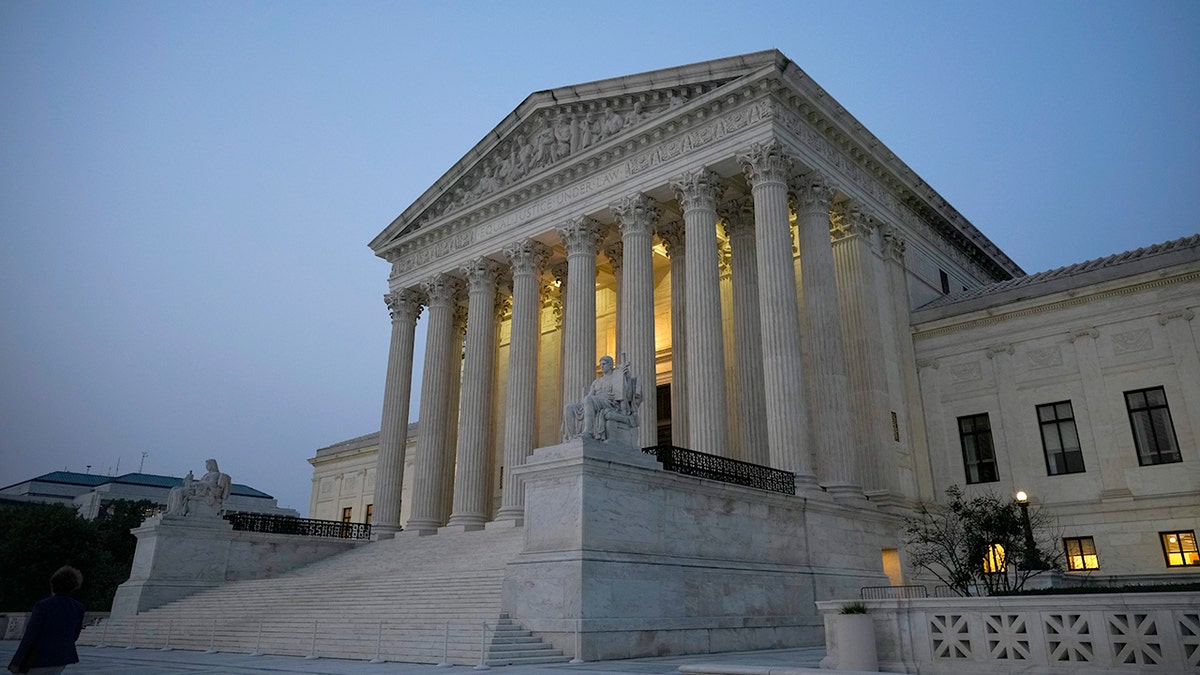 Supreme Court
foxnews.com
Supreme Court
foxnews.com
The US Justice Department has asked a federal appeals court to pause an order from Judge Brian Murphy in Boston that blocks “third-country” deportations — removals to countries not listed in a migrant’s original paperwork. According to Fox News, the department argues the ruling could affect “thousands” of removals and disrupt “tight timing and sensitive diplomatic coordination” with foreign governments.
The case is a narrow procedural fight on paper — notice requirements and the chance to raise torture claims before removal — but it sits on a broader fault line: how much operational discretion the executive branch can claim when immigration enforcement overlaps with foreign policy. The administration says it relies on diplomatic “assurances” from receiving countries and that courts are poorly placed to second-guess those judgments. Murphy’s 81-page decision, as quoted by Fox News, counters that the government’s assurances are effectively unverifiable to the people being deported: “Whom do they cover? What do they cover? Why has the Government deemed them credible?”
The more consequential detail is procedural escalation. The Supreme Court has already twice intervened, staying Murphy’s earlier injunction and later rebuking an attempt to apply it to a set of detainees bound for South Sudan, with Justice Elena Kagan joining the conservatives, according to Fox News. The Justice Department now frames Murphy’s new order as an effort to repackage the same restraint after being overruled. That sequence matters because emergency stays from the Supreme Court are increasingly used as management tools for the federal government’s day-to-day operations — and because each round teaches agencies what it takes to keep the machinery moving.
In practice, “third-country” removals are a way to turn a final deportation order into a flexible logistics problem: if a home country will not accept a returnee quickly, the government looks for another state willing to take the person, often with opaque conditions. For the executive branch, the payoff is speed and throughput; for receiving states, the payoff can be aid, leverage, or a quiet concession in a separate negotiation. For the deportee, the downside is obvious: the destination changes late, the factual record is thinner, and the cost of challenging the move rises sharply when timelines compress.
The Justice Department’s appeal asks the First Circuit to treat Murphy’s order not as a constitutional safeguard but as operational interference. The judge treats the same uncertainty as the constitutional issue.
The policy dispute is now being litigated through the scheduling of flights and the wording of “assurances,” with the Supreme Court repeatedly asked to decide what can proceed while the paperwork catches up.