
Black Death linked to post-plague plant diversity decline
Fossil pollen data tracks farmland abandonment and forest spread, Rewilding can erase the habitats it promises to restore
Images
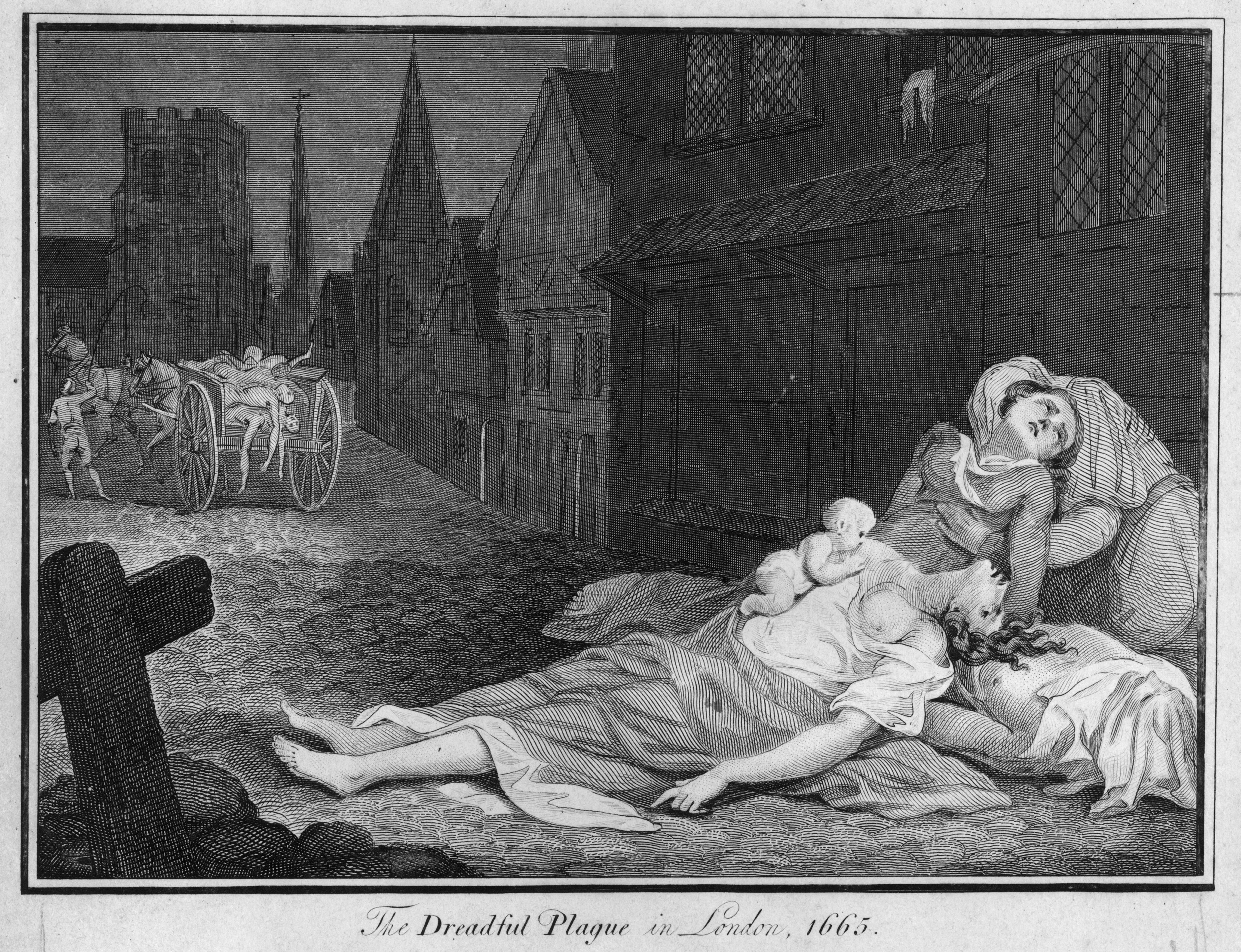 A family lies dead and dying in the street while a cart carries away corpses of those who have already succumbed to the plague (Getty Images)
Getty Images
A family lies dead and dying in the street while a cart carries away corpses of those who have already succumbed to the plague (Getty Images)
Getty Images
Pollen grains preserved in European lake sediments suggest that plant diversity fell across large parts of the continent in the century and a half after the Black Death, despite the pandemic killing an estimated 30% to 50% of Europe’s population between 1347 and 1353. The findings, reported by The Independent and published in Ecology Letters, draw on fossil pollen records to reconstruct how vegetation changed as farms and villages were abandoned.
For years, the Black Death has been treated as a natural experiment for what happens when humans suddenly withdraw: fields revert to woodland, wildlife returns, and biodiversity rises. The new analysis complicates that story by tying diversity not to the absence of people, but to the kind of disturbance people created. According to the University of York’s Jonathan Gordon, abandonment ended long-running practices such as grazing, small-scale cultivation, and periodic clearance—activities that maintained mosaics of habitats. As forests expanded into former farmland, the landscape became more uniform, and many open-habitat plants that thrive in managed grasslands and field edges declined.
The mechanism matters because the study’s signal is not “nature got worse,” but “a particular mix of habitats disappeared.” A pollen record is a proxy: it captures shifts in plant communities over time, but it also has limits in spatial precision and in how it represents local versus regional vegetation. The paper’s timeframe—roughly 150 years after the pandemic—also leaves room for other forces to shape the outcome, including climate variability, changes in burning regimes, and later waves of resettlement. Even so, the broad pattern supports a basic point conservationists often sidestep: Europe’s celebrated species richness is, in many places, a product of centuries of low-intensity land use.
That has direct implications for today’s “rewilding” politics. Removing farming can increase forest cover and carbon storage, but it can also erase semi-open landscapes that depend on grazing and periodic cutting. The winners and losers are not abstract: orchids, meadow butterflies, and pasture plants tend to lose when scrub and woodland take over; forest specialists may gain. A policy that subsidises land abandonment while promising a general biodiversity dividend risks mis-selling a trade-off as a free lunch.
The authors argue for a “patchwork” approach—maintaining a mosaic of crops, woodlands, pastures, ponds, and other habitats—citing systems such as Iberian dehesas and montados, Alpine pastures, and Hungary’s tanya landscapes. The practical question is not whether humans should be present, but who pays to keep disturbance going when it stops being economically rational.
In the pollen record, the post-plague forest expansion reads as recovery. In the species counts, it reads as simplification.