
US deportees sue Eswatini over detention
Third-country removals shift legal responsibility across borders, A paid holding cell replaces due process
Images
 The claimants, one of whom has since been repatriated to his home country, were held at Matsapha correctional complex in Eswatini. Photograph: AP
theguardian.com
The claimants, one of whom has since been repatriated to his home country, were held at Matsapha correctional complex in Eswatini. Photograph: AP
theguardian.com
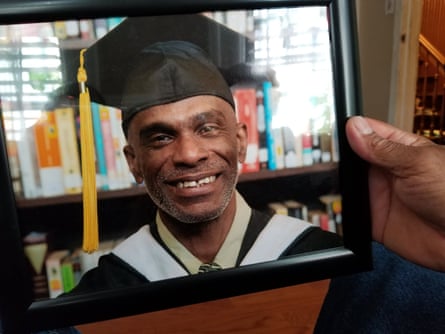 Orville Etoria was sent to his home country, Jamaica, in September, after being detained in Eswatini. Photograph: Courtesy of Margaret McKen
theguardian.com
Orville Etoria was sent to his home country, Jamaica, in September, after being detained in Eswatini. Photograph: Courtesy of Margaret McKen
theguardian.com
Three men deported by the US to Eswatini have filed a case with the African Commission on Human and Peoples’ Rights, arguing that their detention in the country’s Matsapha correctional complex is unlawful. According to the Guardian, the men—originally from Cuba, Jamaica and Yemen—were sent to Eswatini after completing criminal sentences in the US, and say they have committed no crime in Eswatini.
Two of the claimants have been held for eight months, while the third, Orville Etoria, was repatriated to Jamaica in September. They were part of a group of five deported in July, with another 10 sent in October; the men’s lawyers say that, aside from Etoria, the group remains in custody. The complaint, filed via the Global Strategic Litigation Council, says the detainees have been kept indefinitely and have not been allowed in-person meetings with their lawyers.
The case illustrates how “third-country deportation” turns immigration enforcement into a supply chain. The originating state removes a person from its jurisdiction; the receiving state provides the secure holding space; and the legal responsibility becomes a fog of “administrative and diplomatic processes” that can last as long as both sides choose. The Guardian reports that the African Commission can demand compliance or refer matters to the African court, but neither body has enforcement powers—an institutional asymmetry that makes detention easy to start and hard to end.
Eswatini’s government denies the men are imprisoned, saying they are being “accommodated in a secure environment” while repatriation arrangements are made, and that their rights and dignity are being respected. But the dispute is about the practical meaning of custody: if a person cannot leave, cannot access counsel, and cannot predict an end date, the label on the door matters less than the lock.
Reuters has reported that the US agreed to pay Eswatini $5.1m to take up to 160 third-country nationals. That figure clarifies the transaction logic: a small state is paid to absorb the reputational and administrative burden of holding people who are politically difficult to return directly. The Guardian notes that other African countries that have accepted third-country deportees from the US include Ghana, Rwanda, South Sudan and Uganda.
In February, Eswatini’s high court dismissed a challenge brought by local NGOs arguing the detention was unconstitutional, ruling the applicants lacked standing because they were not directly affected. The men’s new filing shifts the venue from domestic courts—where standing rules can block scrutiny—to a regional body designed to hear rights claims, even when local politics makes them inconvenient.
The detainees’ lawyers say one man went on a 30-day hunger strike late last year, showing signs of organ failure. Eight months after being flown in, two of the claimants remain in the same prison complex where they were first placed, waiting for paperwork to become an exit.