
Walmart recalls more than 40
000 light-up bicycle helmets, US safety regulator says retention system can fail in a crash, Customers told to cut straps off for refunds
Images
 Check out what's clicking on FoxBusiness.com.
foxbusiness.com
Check out what's clicking on FoxBusiness.com.
foxbusiness.com
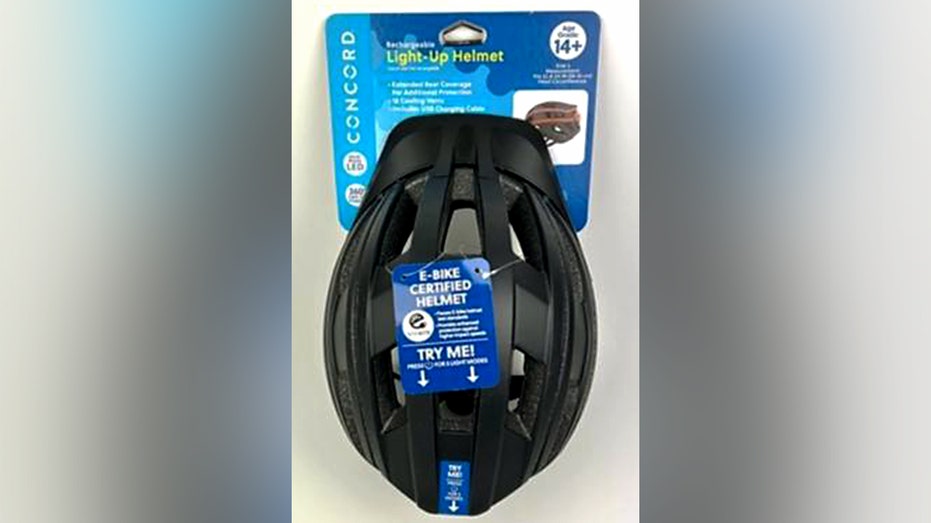 A black helmet is packaged with a tag that reads "E-Bike Certified Helmet."
foxbusiness.com
A black helmet is packaged with a tag that reads "E-Bike Certified Helmet."
foxbusiness.com
 A graphic that reads "LOT #, MODEL #, REF #, LOCATION" points to a tag inside of a black bicycle helmet.
foxbusiness.com
A graphic that reads "LOT #, MODEL #, REF #, LOCATION" points to a tag inside of a black bicycle helmet.
foxbusiness.com
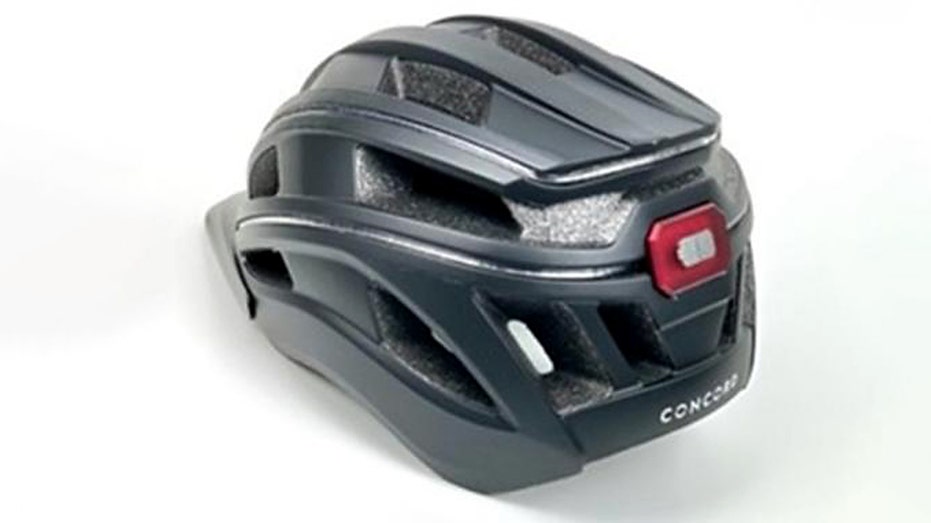 The back of a black helmet in front of a white background.
foxbusiness.com
The back of a black helmet in front of a white background.
foxbusiness.com
More than 40,000 Concord-branded bicycle helmets sold through Walmart are being recalled in the US after federal testing found they fail key safety requirements. According to Fox Business, the Consumer Product Safety Commission said the helmets do not meet mandatory retention and positional-stability standards, meaning they may not stay on a rider’s head in a crash.
The recall covers 40,245 “Concord 360 Degree Rechargeable Light-Up” helmets, large size, with a black shell, built-in LED lighting, black straps and buckle, and a black adjustment dial at the back. The helmets were sold in Walmart stores nationwide and on Walmart.com from January 2025 through September 2025 for about $30, the report says. No injuries have been reported.
The episode is a familiar pattern in mass retail: the product is marketed with a safety promise, distributed at scale, and only later stress-tested against the details that actually matter in an impact. A helmet that slips or comes off turns certification language into paperwork, not protection. The CPSC’s notice focuses on the mechanics—retention system and stability—rather than the electronics that made the model stand out on a shelf.
The remedy is also telling. Buyers are urged to stop using the helmet immediately and seek a refund from Todson Inc., a Massachusetts bicycle wholesaler. Consumers are instructed to destroy the helmet by cutting off the straps and emailing photographic proof to obtain the refund, rather than returning it to a store. That shifts the logistics cost away from the retailer while reducing the chance that recalled stock re-enters secondary markets.
There is a second hazard embedded in the product’s feature set. The helmet contains a lithium-ion battery for the lights; Todson warned consumers not to dispose of the battery in household trash or standard recycling due to fire risk, and to use local hazardous-waste facilities instead. In practice, that adds a disposal chore to what was sold as a convenience upgrade.
The recalled helmets can be identified by the “Concord” branding printed on the rear and a sticker inside the helmet. The recall was announced on 26 February.
A $30 helmet can be cheap only if the failure is discovered after it reaches customers—and if the customer is the one who cuts it apart.