
Labour MP husband arrested on suspicion of spying for China
Counter-terror police probe access networks around Westminster
Images
.jpeg) Labour MP Joani Reid said ‘I have never seen anything to make me suspect my husband has broken any law’ (UK Parliament)
UK Parliament
Labour MP Joani Reid said ‘I have never seen anything to make me suspect my husband has broken any law’ (UK Parliament)
UK Parliament
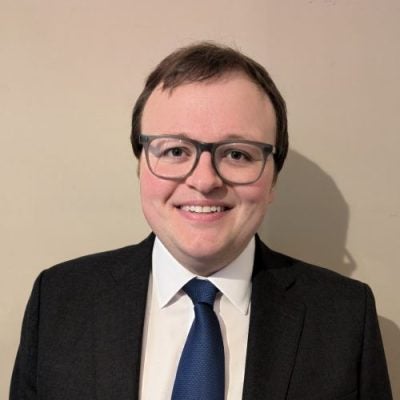 David Taylor has been arrested over allegations of spying for China (Asia House)
Asia House
David Taylor has been arrested over allegations of spying for China (Asia House)
Asia House
Three men were arrested in the UK on Wednesday on suspicion of assisting China’s foreign intelligence service, including the husband of Labour MP Joani Reid, according to The Independent and the Metropolitan Police. Counter Terrorism Policing London said a 39-year-old was arrested in London, alongside a 68-year-old in Powys and a 43-year-old in Pontyclun, with searches also carried out at additional addresses in London, East Kilbride and Cardiff.
Reid said she had “never seen anything” suggesting her husband had broken the law and asked media to respect her children’s privacy. She added that she had never been to China, had not spoken on China-related matters in parliament, and had not met Chinese businesses or diplomats in her capacity as an MP, framing her own record as irrelevant to the alleged conduct under investigation.
The case points to a practical vulnerability that sits below the level of headline diplomacy: access, proximity and networks. The suspect identified by The Independent as David Taylor works at Asia House, a London-based think tank, and has held roles in political advising, including as a special adviser to a cabinet minister and as an adviser connected to an all-party parliamentary group. That mix—policy institutions, parliamentary groups and personal relationships—creates the sort of “soft access” that does not require a formal government post to be useful.
Commander Helen Flanagan, head of Counter Terrorism Policing London, said national-security casework has increased in recent years and described the arrests as part of a “proactive investigation”, adding that police did not believe there was any imminent threat to the public. The absence of an immediate danger does not reduce the administrative problem for parliament: vetting, staff access, invitations, event calendars, and the informal social layer through which information and influence move.
The timing lands amid a broader argument in Westminster about how to balance openness with security. The Independent notes recent political concern about Chinese interference, and references controversy around plans for a large Chinese embassy in London. Those disputes are typically framed as trade and diplomacy questions. The arrests underline a different cost: the more a political system runs on porous interfaces—think tanks, lobbying, diaspora-linked business networks, and parliamentary groups—the more it must treat internal access as a security perimeter.
The security minister, Dan Jarvis, told MPs there would be “severe consequences” if evidence showed China had attempted to interfere with UK sovereign affairs, The Independent reports. For now, the concrete facts are that three men remain in custody and police have widened their searches beyond the initial arrest locations.
One of the arrests involves the spouse of a sitting MP, and the investigation is being run by counter-terrorism police rather than parliamentary authorities.