
Google Pixel 10a offers long support window
Guardian review says midrange value is now software policy not hardware, updates run to 2033 while premium AI stays gated
Images
 The Google Pixel 10a is a quality Android at a mid-range price. Photograph: Samuel Gibbs/The Guardian
theguardian.com
The Google Pixel 10a is a quality Android at a mid-range price. Photograph: Samuel Gibbs/The Guardian
theguardian.com
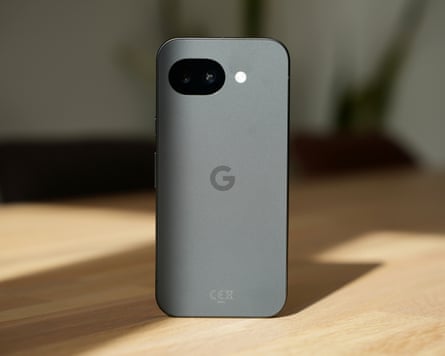 The back of the new Pixel is completely flat, lacking the protruding camera bump that has plagued almost every handset for decades. Photograph: Samuel Gibbs/The Guardian
theguardian.com
The back of the new Pixel is completely flat, lacking the protruding camera bump that has plagued almost every handset for decades. Photograph: Samuel Gibbs/The Guardian
theguardian.com
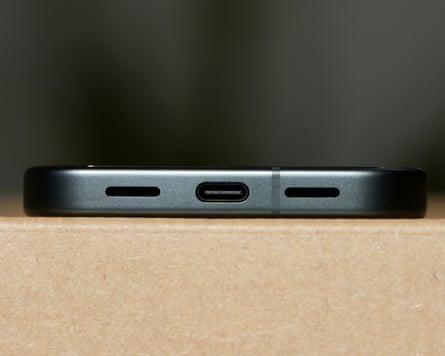 The Pixel 10a supports 30W charging, hitting 50% in about 30 minutes, and 10W Qi wireless charging. Photograph: Samuel Gibbs/The Guardian
theguardian.com
The Pixel 10a supports 30W charging, hitting 50% in about 30 minutes, and 10W Qi wireless charging. Photograph: Samuel Gibbs/The Guardian
theguardian.com
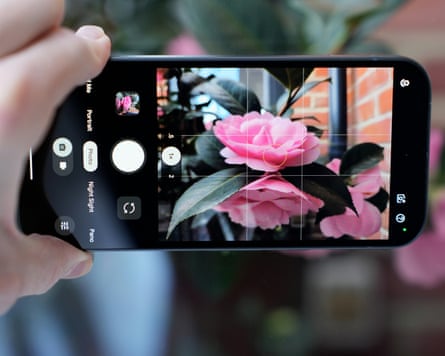 The Pixel camera app is one of the best in the business at helping you get good shots. Photograph: Samuel Gibbs/The Guardian
theguardian.com
The Pixel camera app is one of the best in the business at helping you get good shots. Photograph: Samuel Gibbs/The Guardian
theguardian.com
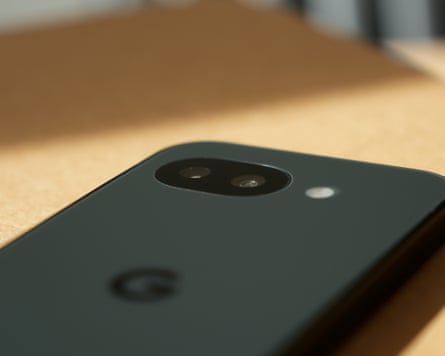 The plastic back won’t crack like glass can, while the screen is covered in scratch-resistant Gorilla Glass 7i. Photograph: Samuel Gibbs/The Guardian
theguardian.com
The plastic back won’t crack like glass can, while the screen is covered in scratch-resistant Gorilla Glass 7i. Photograph: Samuel Gibbs/The Guardian
theguardian.com
Google’s Pixel 10a starts at £499 and looks, in most ways, like a rerun. In a review for The Guardian, Samuel Gibbs notes that the new midrange Pixel shares the same Tensor G4 chip, memory, storage and cameras as last year’s Pixel 9a, which is still on sale.
The hardware pitch is incremental. The 10a keeps a 6.3-inch OLED display but reaches a higher peak brightness, and it drops the familiar camera bump for a flat back. It adds emergency satellite messaging—still rare outside flagships—and offers 30W wired charging plus 10W Qi wireless charging. Battery life is strong: Gibbs reports roughly 52 hours per charge with around seven hours of screen time, which for many users means charging every other day.
The real product, however, is software policy. Google promises security and Android version updates through March 2033, a support window that now functions as a differentiator in the midrange market. That promise reshapes buying decisions: a phone becomes less a one-off gadget and more a managed endpoint that stays eligible for banking apps, identity checks, payments and corporate device policies.
Google’s own AI features also illustrate the new hierarchy. The Pixel 10a ships with Gemini, but lacks some of the on-device tools found in the rest of the Pixel 10 line, including Magic Cue and the Pixel Screenshots app, which Gibbs calls excellent. In other words, the midrange device is kept current on security and core Android, while premium models reserve the more ambitious local AI functions.
That split matters because it is how a platform vendor protects margins when physical innovation slows. The Pixel 10a’s camera system remains a highlight—its 48MP main and 13MP ultrawide still compete with far more expensive phones, and Google adds an “auto best take” mode for group shots. But the phone’s competitive edge is increasingly defined by what Google chooses to maintain, enable, or withhold over time.
The Pixel 10a is sold as a cheaper Android phone. The longer story is that midrange phones are now sold as long-lived software contracts, with hardware mainly serving as the credential that gets you into the ecosystem.
The Pixel 10a’s most concrete new feature is the satellite SOS option. Its most durable one may be the date Google printed on the support promise: March 2033.