
Punch the monkey starts leaving his Ikea toy behind
Viral Japanese macaque draws crowds and new zoo rules, Social integration becomes the exit plan
Images
 Punch the monkey climbs on the back of another Japanese macaque in their playground at the Ichikawa city zoo in Tokyo. Photograph: Hiro Komae/AP
theguardian.com
Punch the monkey climbs on the back of another Japanese macaque in their playground at the Ichikawa city zoo in Tokyo. Photograph: Hiro Komae/AP
theguardian.com
 Abandoned baby monkey 'Punch' finds comfort in stuffed orangutan - loop
theguardian.com
Abandoned baby monkey 'Punch' finds comfort in stuffed orangutan - loop
theguardian.com
 Visitors gather at Ichikawa city zoo to watch Punch at the Japanese macaque area. Photograph: Masatoshi Okauchi/Shutterstock
theguardian.com
Visitors gather at Ichikawa city zoo to watch Punch at the Japanese macaque area. Photograph: Masatoshi Okauchi/Shutterstock
theguardian.com
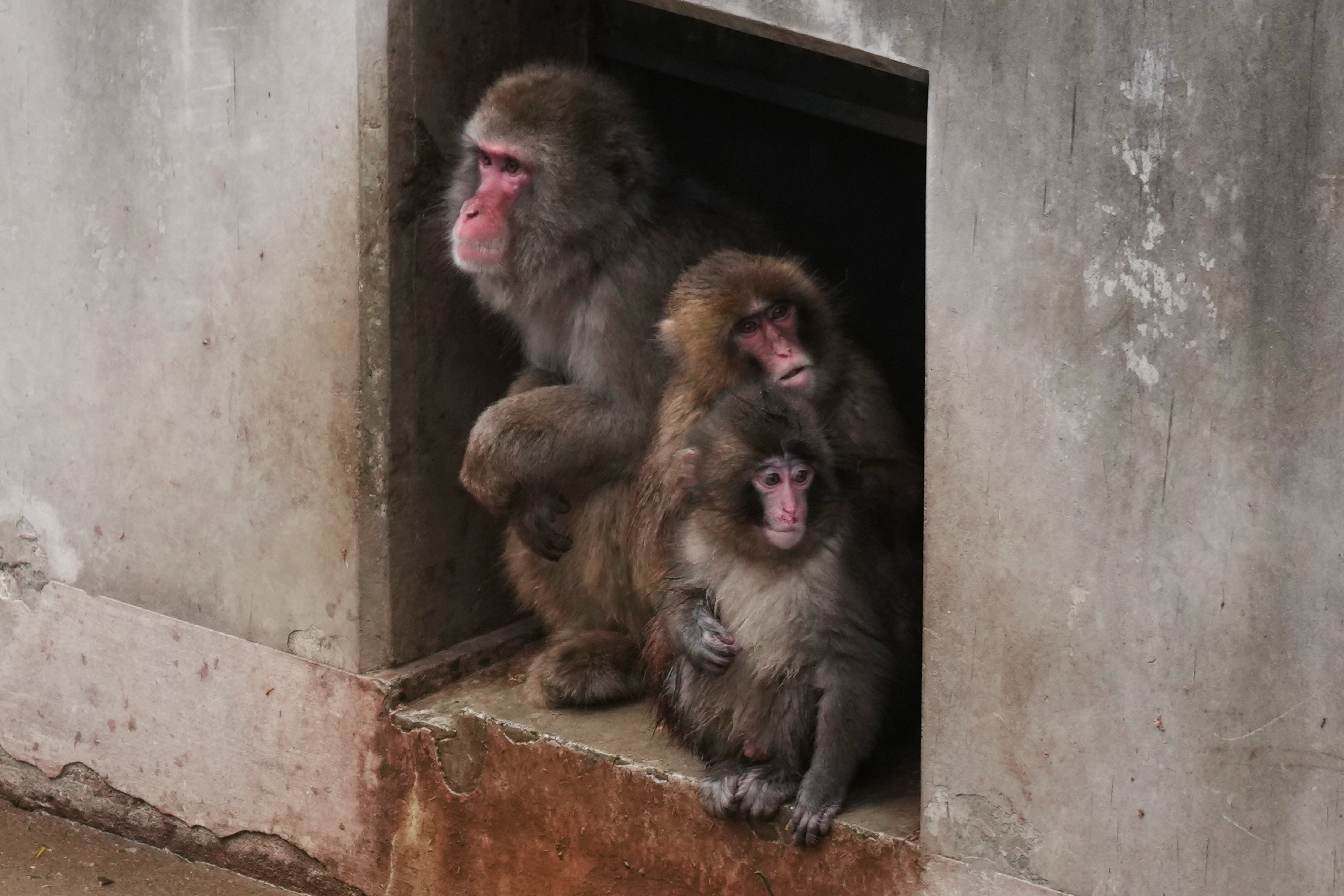 Punch, right, sits with others in the monkeys' playground at the Ichikawa city zoo (AP)
independent.co.uk
Punch, right, sits with others in the monkeys' playground at the Ichikawa city zoo (AP)
independent.co.uk
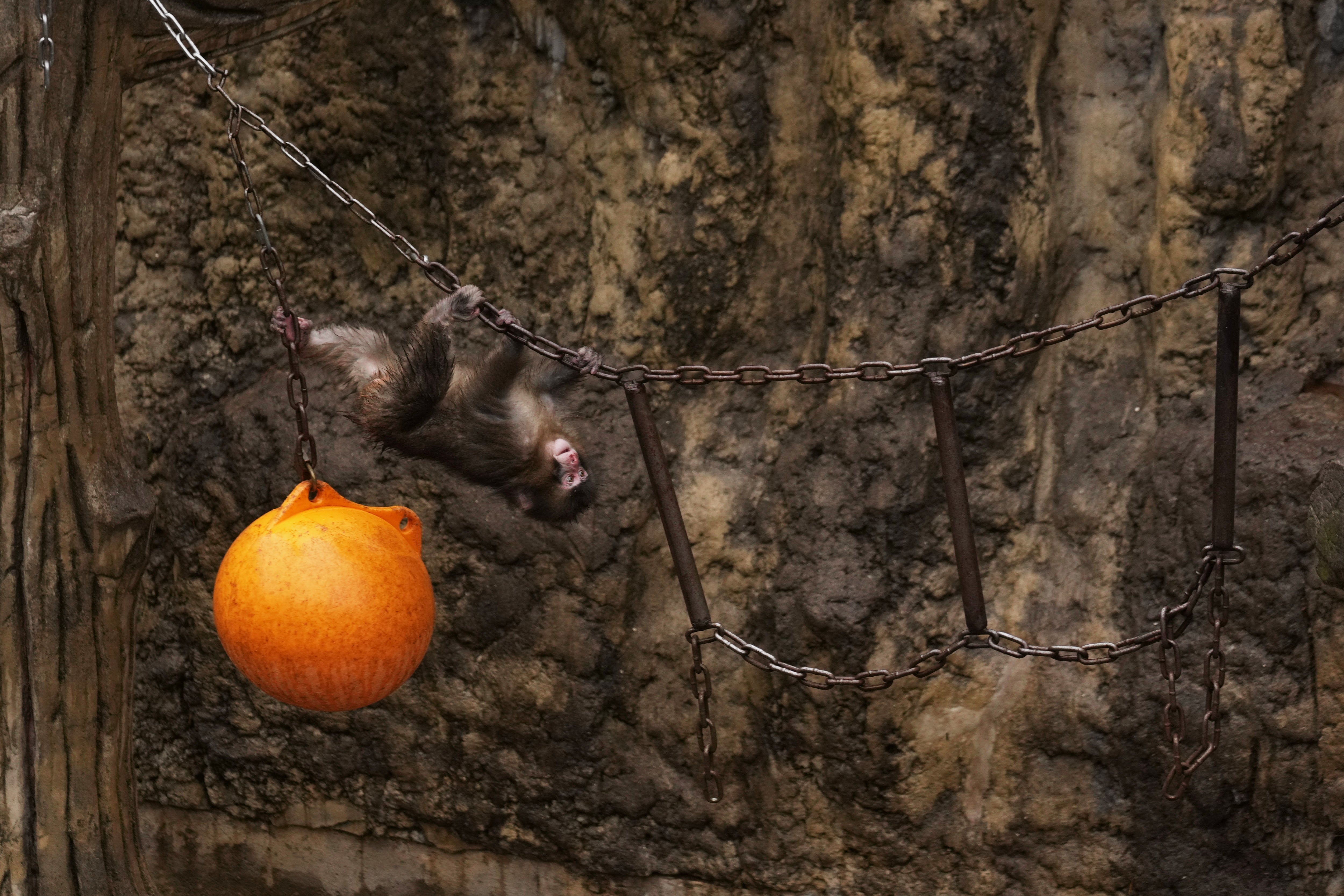 Punch is a Japanese macaque born on July 26, 2025 (AP)
independent.co.uk
Punch is a Japanese macaque born on July 26, 2025 (AP)
independent.co.uk
Seven-month-old “Punch”, a Japanese macaque at Ichikawa City Zoo near Tokyo, is beginning to spend less time clutching the Ikea Djungelskog plush toy that staff gave him after his mother rejected him. According to The Guardian, recent visitor videos show the infant climbing onto other macaques, sitting near adults and sometimes being groomed—behaviour the zoo reads as early acceptance into the troop.
The toy was never just a cute prop. Keepers say they provided it to encourage clinging, a survival behaviour newborn macaques normally learn by hanging onto their mothers, and to reduce stress while Punch was being shooed away by older monkeys. A primatology expert quoted by The Guardian notes that maternal abandonment is unusual but can happen when mothers are inexperienced, unhealthy, or under environmental stress; the zoo has suggested Punch’s birth coincided with a heatwave.
What changed once the story went viral was not Punch’s biology but the institution around him. The zoo drew crowds, then introduced rules asking visitors to stay quiet and limiting viewing to 10 minutes to reduce stress on the roughly 50 other macaques. Attention converts quickly into operational constraints: staff time shifts to crowd management, animals become content, and the costs of “adorable” decisions—noise, disruption, stress—land on the enclosure and the keepers rather than on the viewers who came for a moment of internet-famous tenderness.
The zoo’s stated goal now is social integration, not plush dependency. Director Shigekazu Mizushina told reporters that outgrowing the toy would be a sign of growing independence, though Punch still sleeps with it at night. The next milestone, staff say, would be seeing him sleep huddled with other macaques, the way the troop manages warmth and safety without human substitutes.
On a recent day, visitors stood at the viewing area watching Punch sit among adults, with the oversized orangutan toy no longer glued to his side.