
Japanese investors dump overseas bonds
Repatriation accelerates as domestic yields rise, Deficit financing loses a quiet backstop
Images
 Japanese investors sold the largest amount of overseas bonds since 2024 last month.
japantimes.co.jp
Japanese investors sold the largest amount of overseas bonds since 2024 last month.
japantimes.co.jp
 A solar farm in Nakai, Kanagawa Prefecture, in March 2016. Japan gets about a tenth of its electricity from solar panels despite having nearly no domestic production of photovoltaics (PVs).
japantimes.co.jp
A solar farm in Nakai, Kanagawa Prefecture, in March 2016. Japan gets about a tenth of its electricity from solar panels despite having nearly no domestic production of photovoltaics (PVs).
japantimes.co.jp
 As Japan accelerates AI adoption, policymakers and corporations frame the technology as essential to offsetting a projected labor shortfall of 11 million workers by 2040.
japantimes.co.jp
As Japan accelerates AI adoption, policymakers and corporations frame the technology as essential to offsetting a projected labor shortfall of 11 million workers by 2040.
japantimes.co.jp
 Inaka no Taiho: Chinese restaurant offers experience of ‘receiving life’
japantimes.co.jp
Inaka no Taiho: Chinese restaurant offers experience of ‘receiving life’
japantimes.co.jp
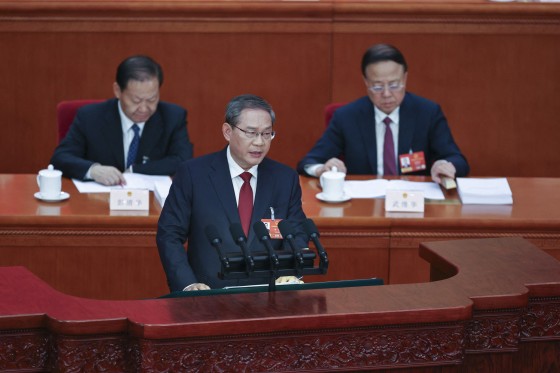 Chinese Premier Li Qiang delivers a work report during the opening session of the National People's Congress (NPC) at the Great Hall of the People in Beijing.
nbcnews.com
Chinese Premier Li Qiang delivers a work report during the opening session of the National People's Congress (NPC) at the Great Hall of the People in Beijing.
nbcnews.com
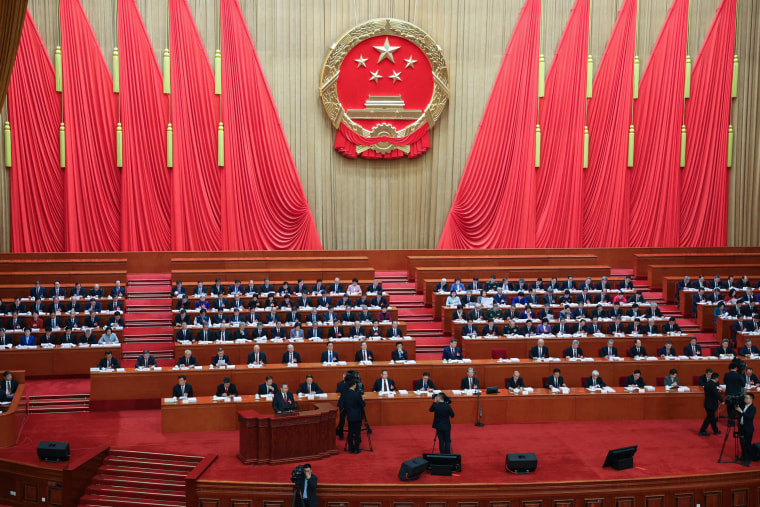 Thousands of delegates are gathered in Beijing for China’s biggest political event of the year.Florence Lo / Pool / AFP via Getty Images
nbcnews.com
Thousands of delegates are gathered in Beijing for China’s biggest political event of the year.Florence Lo / Pool / AFP via Getty Images
nbcnews.com
 nbcnews.com
 A man watching Li deliver his speech on Thursday.Pedro Pardo / AFP - Getty Images
nbcnews.com
A man watching Li deliver his speech on Thursday.Pedro Pardo / AFP - Getty Images
nbcnews.com
Japanese investors sold a net ¥3.42 trillion of overseas bonds in February, the biggest monthly outflow since 2024, according to preliminary Ministry of Finance figures cited by The Japan Times. The move comes as Beijing sets its lowest growth target in decades—4.5% to 5% for 2026—signalling a slower, more constrained Chinese economy, NBC News reports.
The Japanese flow matters because Japan’s insurers and asset managers have long been a structural bid for foreign government debt, particularly US Treasurys and European sovereigns. When domestic yields rise, that bid can fade quickly: The Japan Times notes life insurers faced impairment losses as Japanese government bonds fell, and some may be realising gains on foreign holdings to manage overall profits. One insurer, Fukoku Mutual Life Insurance, said it has been selling low-yield foreign bonds and shifting into yen-denominated bonds since April and plans to maintain that stance, adjusting mainly for FX trends.
For deficit-running governments, this is the unglamorous plumbing of global finance. A country can run persistent budget gaps more easily when foreign institutions treat its debt as a convenient parking place. If those institutions start to repatriate—because local yields finally pay, because currency risk looks less one-way, or because duration risk is being cut—the marginal buyer changes, and so does the price. The immediate effect is not a crisis but a higher clearing yield and more volatile auctions, especially at the long end.
China’s new target points in the same direction: fewer promises of effortless momentum. NBC News describes a policy agenda focused on rebalancing away from the old export-and-property model while managing a prolonged real-estate slump, industrial overcapacity and heavy local-government debt. Beijing is still leaning on advanced manufacturing—AI and robotics feature prominently—but the headline number is a public admission that the previous growth regime is harder to finance and harder to repeat.
Together, the two datapoints suggest a world where capital is less willing to subsidise other countries’ experiments. Japan is pulling money home as its own bond market becomes investable again; China is lowering the bar rather than committing to another credit surge to hit an old target. The result is a higher global cost of capital that shows up first in bond flows, then in refinancing terms for governments and firms.
In Tokyo, a 30-year Japanese government bond auction this week showed demand improving after a selloff, The Japan Times reports. The same week’s data showed ¥3.42 trillion leaving overseas bond markets.