
US trade judge orders tariff refunds
Supreme Court ruling forces Customs to unwind Trump IEEPA duties, A tax that may come back as a claim
Images
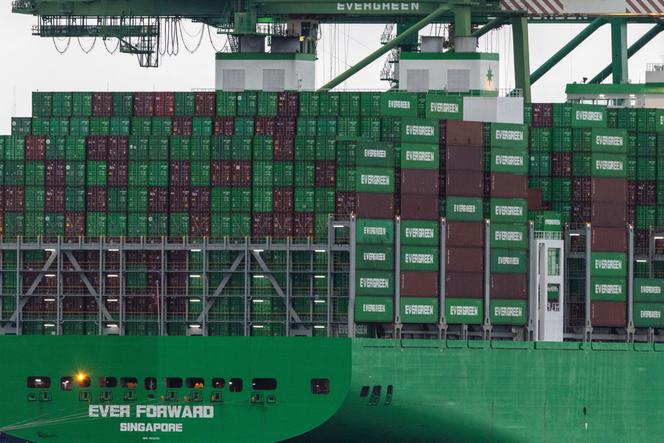 Dans le port d’Oakland (Californie), le 24 février 2026. CARLOS BARRIA / REUTERS
CARLOS BARRIA / REUTERS
Dans le port d’Oakland (Californie), le 24 février 2026. CARLOS BARRIA / REUTERS
CARLOS BARRIA / REUTERS
A US trade judge has ordered Customs and Border Protection to recalculate import duties as if President Donald Trump’s International Emergency Economic Powers Act tariffs never existed, clearing a procedural path for refunds after the Supreme Court struck the levies down. Judge Richard K. Eaton of the US Court of International Trade said importers are “entitled to the benefit” of the Supreme Court’s ruling and directed CBP to “liquidate” affected entries without the unlawful duties, according to Business Insider.
The mechanics matter because “liquidation” is where a provisional duty deposit becomes a final bill. In most cases, importers have a limited window—typically 180 days after liquidation—before the accounting becomes legally final, which is why Eaton’s order focuses on entries that are not yet locked in. Le Monde reports the judge also questioned why collections continued after the Supreme Court decision, and framed his instruction as a way to make future refunds easier by removing an administrative step that would otherwise have to be unwound shipment by shipment.
The numbers are large enough to change behavior. Business Insider cites the Penn Wharton Budget Model estimating refunds could reach as high as $175 billion if the reversals are applied broadly. That turns tariffs from a predictable cost into a contingent claim: firms pay first, then finance lawyers and paperwork to get money back later. The firms best positioned to do that are the ones with compliance teams, customs brokers, and cash buffers—precisely the large importers and retailers that can treat duty deposits as working capital.
It also creates a template for future presidents to “tax first, litigate later.” If an administration can impose sweeping duties via executive action and keep the money flowing until courts stop it, the political payoff arrives immediately while the legal bill arrives years later—often under a different Congress, a different budget cycle, and a different set of headlines. For supply chains, the result is a price signal that can be reversed retroactively: sourcing decisions, inventory builds, and contract pricing get made under one duty regime and settled under another.
Eaton said he will serve as the sole judge overseeing refund cases tied to the struck-down tariffs. The next concrete step is not a new tariff announcement but a backlog of import entries being recalculated inside CBP’s accounting systems.