
Iran keeps Hormuz risky with drones
Insurers and trade finance can choke flows without a full blockade, Tankers stop when paperwork turns hostile
Images
 Tankers are visible in the background as Iran vows to close the Strait of Hormuz, amid the U.S.-Israel conflict with Iran, in Fujairah, United Arab Emirates, on Tuesday.
japantimes.co.jp
Tankers are visible in the background as Iran vows to close the Strait of Hormuz, amid the U.S.-Israel conflict with Iran, in Fujairah, United Arab Emirates, on Tuesday.
japantimes.co.jp
 A solar farm in Nakai, Kanagawa Prefecture, in March 2016. Japan gets about a tenth of its electricity from solar panels despite having nearly no domestic production of photovoltaics (PVs).
japantimes.co.jp
A solar farm in Nakai, Kanagawa Prefecture, in March 2016. Japan gets about a tenth of its electricity from solar panels despite having nearly no domestic production of photovoltaics (PVs).
japantimes.co.jp
 As Japan accelerates AI adoption, policymakers and corporations frame the technology as essential to offsetting a projected labor shortfall of 11 million workers by 2040.
japantimes.co.jp
As Japan accelerates AI adoption, policymakers and corporations frame the technology as essential to offsetting a projected labor shortfall of 11 million workers by 2040.
japantimes.co.jp
 Inaka no Taiho: Chinese restaurant offers experience of ‘receiving life’
japantimes.co.jp
Inaka no Taiho: Chinese restaurant offers experience of ‘receiving life’
japantimes.co.jp
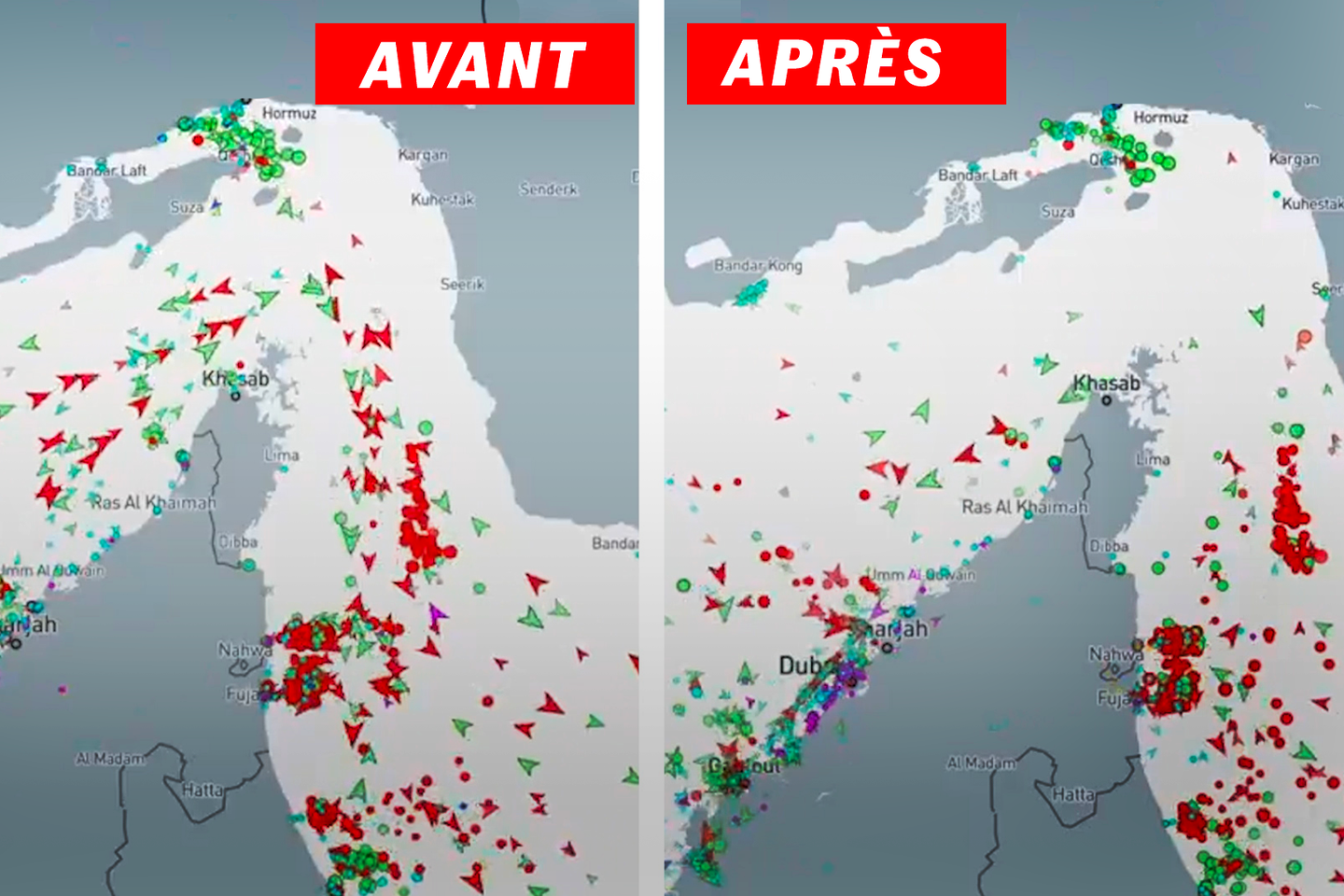 Vidéo. VIDEO Guerre en Iran : les images du détroit d’Ormuz montrent comment la guerre affecte le trafic maritime mondial
lemonde.fr
Vidéo. VIDEO Guerre en Iran : les images du détroit d’Ormuz montrent comment la guerre affecte le trafic maritime mondial
lemonde.fr
Traffic through the Strait of Hormuz fell by roughly 80% after the US and Israel launched strikes on Iran on 28 February, according to shipping-tracking data cited by Le Monde. Reuters reported on 5 March that Iranian drone attacks could keep the chokepoint disrupted for months, even without a declared “closure”, as tankers and insurers react to sporadic strikes and threats.
The mechanics are less about a physical barricade than about paperwork and pricing. Tanker voyages are financed and insured under contracts that often include war-risk clauses: if the route is judged unsafe, insurers can raise premiums, lenders can tighten credit, and shipowners can refuse to sail unless charter rates rise enough to compensate. That cascade can freeze cargoes before they are ever loaded—letters of credit become harder to secure, counterparties demand new guarantees, and vessels wait offshore for clearer signals. Le Monde says it has independently confirmed four ships hit by projectiles since the war began, alongside damage to oil and gas infrastructure, facts that make “risk” legible to underwriters.
Iran’s advantage is that the tools are cheap and scalable. Reuters, citing intelligence sources and analysts, describes Tehran as a major drone producer with industrial capacity measured in the thousands per month. A handful of successful strikes is not required; uncertainty is the product. When a route carries not just crude but refined products and liquefied natural gas, delays propagate into inventories, and the cost shows up as higher delivered prices rather than a headline “blockade.” Le Monde notes that about a fifth of global LNG and large volumes of oil transit Hormuz, and that prices have already begun to rise.
This is why “keeping the strait open” is not a binary military objective. Naval escorts and missile defence can reduce the probability of loss, but the market prices the residual risk—and the friction of rerouting, queuing, and compliance checks. Large traders and well-capitalised shippers can buy optionality; smaller importers and marginal refiners tend to be rationed first when finance and insurance terms tighten.
On current evidence, the strait does not need to be sealed to function as a lever. It only needs to become intermittently expensive.