
US Senate blocks Iran war powers resolution
Tim Kaine bid fails as Trump keeps operational freedom, Congress keeps the receipt without taking the decision
Images
 nbcnews.com
 nbcnews.com
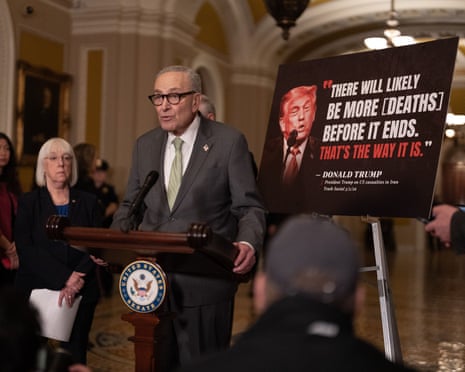 Chuck Schumer speaks to reporters about the Democratic plan to force a Senate vote on a war powers resolution that would prevent Donald Trump from continuing the Iran conflict. Photograph: Douglas Christian/ZUMA Press Wire/Shutterstock
theguardian.com
Chuck Schumer speaks to reporters about the Democratic plan to force a Senate vote on a war powers resolution that would prevent Donald Trump from continuing the Iran conflict. Photograph: Douglas Christian/ZUMA Press Wire/Shutterstock
theguardian.com
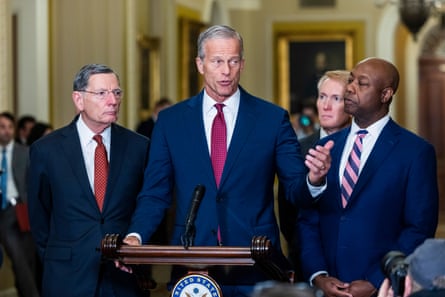 John Thune, the majority leader, speaks before being briefed by Trump officials about the conflict in Iran. Photograph: Jim Lo Scalzo/EPA
theguardian.com
John Thune, the majority leader, speaks before being briefed by Trump officials about the conflict in Iran. Photograph: Jim Lo Scalzo/EPA
theguardian.com
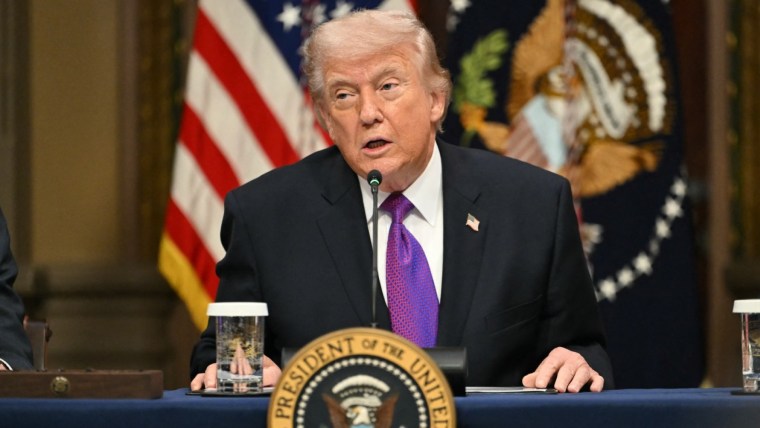
The US Senate voted 47–53 on Wednesday to block a War Powers resolution that would have required President Donald Trump to seek explicit congressional authorisation before continuing military operations against Iran. The measure, introduced by Senator Tim Kaine, failed to advance; Senator Rand Paul was the only Republican to back it, while Democrat John Fetterman voted with the GOP, according to NBC News.
The vote matters less for what it changes than for what it records. Under the 1973 War Powers Resolution, presidents can initiate hostilities and then run a 60-day clock before Congress must act to authorise or force withdrawal. In practice, Congress rarely uses the deadline to terminate a war; instead it holds votes that fail, issues statements, and then funds the operation anyway. Lindsey Graham made that logic explicit on the Senate floor, arguing that if lawmakers truly want to stop the war they should refuse to pay for it—an option Congress almost never chooses because it would convert a symbolic dispute into a concrete budget fight.
Kaine’s case was straightforward: the president, the chairman of the Joint Chiefs, and the secretary of state have called the campaign a “war”, and US service members have died. By that standard, the constitutional requirement for Congress to decide on war should be more than a rhetorical flourish. But the Senate’s rejection functions as a kind of institutional permission slip: not a declaration of war, but a recorded decision to avoid one.
That pattern also exports costs. The US can treat the conflict as an executive initiative buffered by congressional ambiguity, while allies and trading partners absorb the secondary effects—insurance premiums, shipping risk, and energy price volatility—without having had a vote. European governments, for their part, often present themselves as spectators to Washington’s decisions, even as their consumers and industries pay the bill through fuel, freight, and inflation.
The House is expected to vote down a similar resolution on Thursday, NBC News reports. After two chambers have declined to force a legal boundary, the war will continue under the same mechanism that started it: presidential discretion backed by appropriations that nobody wants to be seen cutting mid-conflict.