
Search groups halt work in Jalisco after El Mencho death
Families say protection vanished as politicians debate restricting missing-person posters, World Cup security planning reshuffles priorities
Images
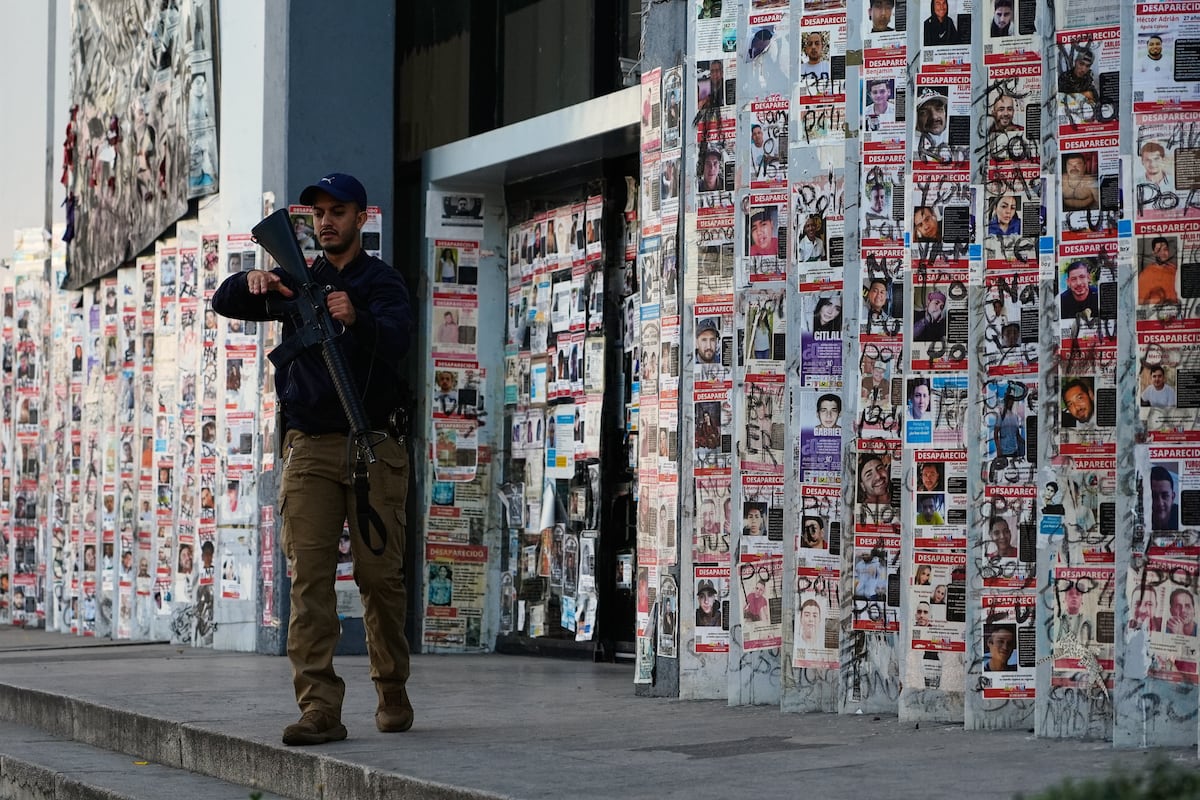 El Mencho’s death brings to a halt the search for missing persons in Jalisco
english.elpais.com
El Mencho’s death brings to a halt the search for missing persons in Jalisco
english.elpais.com
Families searching for missing relatives in Mexico’s Jalisco state have suspended field searches and stopped speaking publicly after the reported death of Nemesio Oseguera Cervantes, known as “El Mencho,” the leader of the Jalisco New Generation Cartel (CJNG). According to El País, search collectives say the days after the operation that killed him brought a new wave of threats and uncertainty, even as the state government insisted life was returning to normal.
Jalisco’s missing-person crisis is large enough to sustain an entire civic infrastructure. El País cites official state figures of 16,079 missing people, while Mexico’s national registry lists 12,570 forced disappearances in the state—two numbers that describe the same phenomenon through different bureaucratic lenses. The collectives’ routine work has long resembled improvised forensics: anonymous tips about mass graves, families digging with picks and shovels, and the ever-present risk of surveillance by lookouts, kidnappings, or being caught in firefights. What changes after a cartel leader’s death is not the baseline danger but the volatility: local actors do not know which faction is now enforcing which rules, and the easiest risk to price is the visible one—public searches and posters.
That volatility intersects with the state’s own capacity constraints. Families told El País they will not resume searches without protection and accompaniment from the National Guard, a dependency that turns a constitutional right into a scheduling problem for armed units. The State Search Commission says it remains open and continues monitoring cases, but collectives describe operations continuing without support from the Guard or the army (Sedena). In practice, the bottleneck is not a lack of laws or offices; it is the availability of armed protection in territory where the state is only one participant.
The state legislature is simultaneously debating an initiative meant to protect families’ ability to post missing-person flyers in public spaces—a low-cost way to create leads and social pressure. El País reports that the proposal has been rewritten into something closer to a restriction, limiting where posters can be placed and giving authorities new grounds to remove them. For families who already suspect institutional obstruction, a legal ban on visibility is not a side issue; it is the last step in moving disappearances from a public emergency into private grief.
Even international events become part of the timing. Some groups told El País they expect searches to be cancelled for weeks or months ahead of the World Cup, with matches scheduled at Guadalajara’s Akron Stadium. The implication is not that football causes disappearances, but that major events reallocate police and military attention—away from rural pits and toward stadium perimeters.
In Jalisco, the families say disappearances do not pause. Their searches do.