
Hormuz tanker traffic collapses
War-risk insurance adds up to 15 dollars a barrel, Households pay through energy bills and inflation
Images
 Passage denied: Hormuz shutdown keeps oil prices on the rise
euronews.com
Passage denied: Hormuz shutdown keeps oil prices on the rise
euronews.com
 War in Middle East threatens UK living standards growth; markets rally on report of Iran’s ‘secret outreach’ to end conflict – business live
theguardian.com
War in Middle East threatens UK living standards growth; markets rally on report of Iran’s ‘secret outreach’ to end conflict – business live
theguardian.com
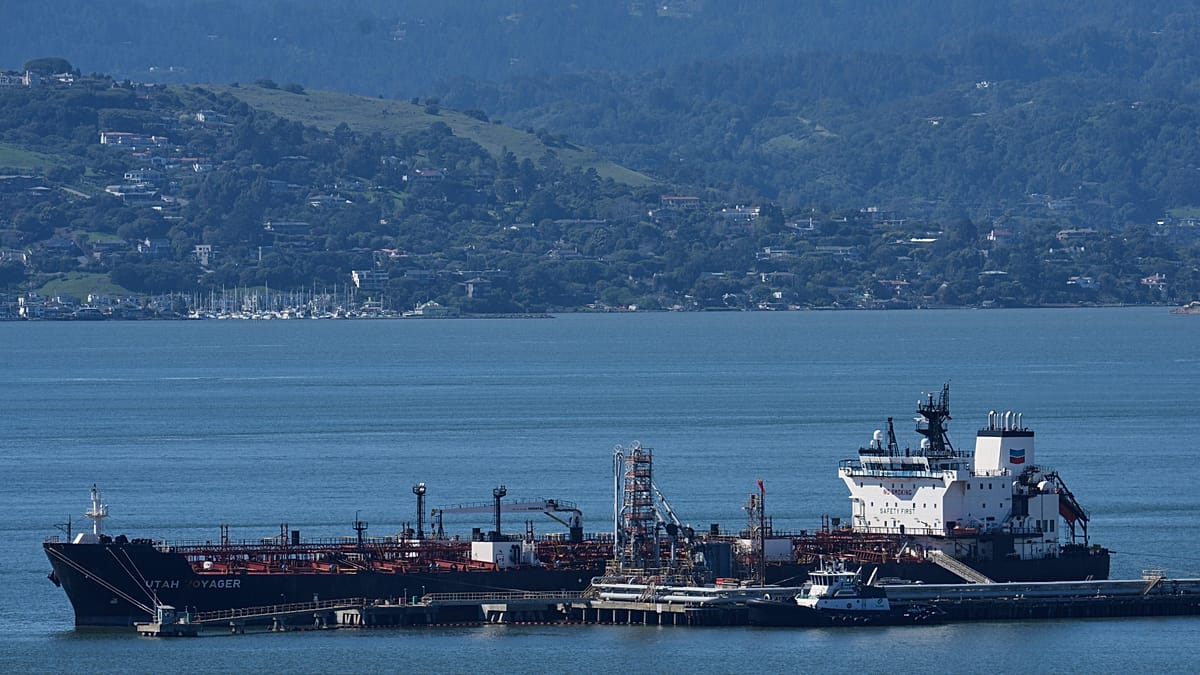
Crude tanker traffic through the Strait of Hormuz fell to four vessels on Sunday from an average of 24 a day since January, according to Vortexa, as the US–Israel war with Iran entered its fifth day. Lloyd’s List Intelligence estimates around 200 internationally trading crude and product tankers are now effectively stuck inside the Gulf, with shipowners treating the strait as too dangerous to transit.
The market reaction has been less about a single “oil price” than about a stack of risk add-ons that hit every link of the supply chain. Euronews, citing Mizuho Bank, reports that war-risk insurance alone could add $5 to $15 per barrel to delivered crude, even before accounting for rerouting, delays, or higher financing costs for cargoes that take longer to arrive. That surcharge is not paid by Tehran or by the navies patrolling the area; it is charged to whoever still needs the cargo—refiners, utilities, airlines—and then passed through to households and industry as higher fuel, transport, and electricity bills.
The same logic is visible in Europe’s gas market. Dutch TTF futures briefly climbed to around €56 per megawatt hour after reports of attacks and a halt in Qatari production, before easing back toward €50—still far above pre-conflict levels, after prices nearly doubled in 48 hours, according to Euronews. LNG is marketed as flexible supply, but flexibility depends on ships, terminals, and insurers being willing to price the route. When the route becomes a “no-go zone,” the commodity may be available in theory while the delivered molecule becomes scarce in practice.
Washington’s response has moved quickly toward socialising the tail risk. President Donald Trump said he ordered the US International Development Finance Corporation to provide political risk insurance and financial guarantees for maritime trade, and floated US Navy escorts for tankers, Euronews reports. Even if escorts reduce the probability of a catastrophic loss, they do not remove the price of uncertainty: insurers can still charge for the remaining risk, shipowners can still demand higher charter rates, and traders can still widen spreads when schedules become unreliable.
In the UK, the Resolution Foundation warned that a sustained rise in oil and gas prices could add about one percentage point to inflation and roughly £500 to a typical annual energy bill, according to the Guardian’s business live blog. That is the second-order effect that turns a Middle East shipping crisis into a domestic living-standards story: higher energy costs lift headline inflation, which then feeds into wage demands, interest-rate expectations, and government borrowing costs.
For now, the strait has not been formally closed. But with only a handful of tankers attempting passage and hundreds waiting inside the Gulf, the premium is already being charged—itemised across insurance, freight, and finance, before it ever reaches the pump.