
South Sudan raid kills at least 169 people
UN shelters over 1000 civilians as Kiir-Machar tensions flare, aid groups lose staff and clinics to a war economy that survives every peace deal
Images
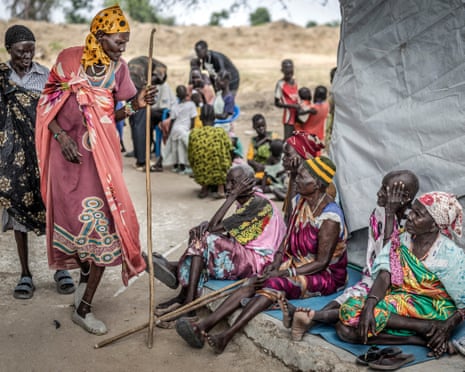 Displaced civilians attend a community health session last month in Bor, Jonglei state. Photograph: Luis Tato/AFP/Getty Images
theguardian.com
Displaced civilians attend a community health session last month in Bor, Jonglei state. Photograph: Luis Tato/AFP/Getty Images
theguardian.com
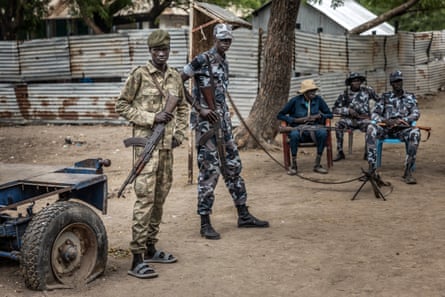 Members of the SPLA-IO gather at a security post outside local government offices in Akobo, Jonglei state. Photograph: Luis Tato/AFP/Getty Images
theguardian.com
Members of the SPLA-IO gather at a security post outside local government offices in Akobo, Jonglei state. Photograph: Luis Tato/AFP/Getty Images
theguardian.com
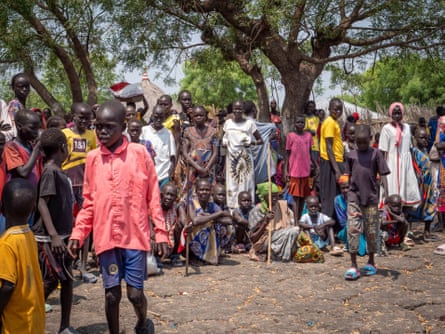 Internally displaced people gather at a church compound in Akobo. Photograph: Florence Miettaux/AP
theguardian.com
Internally displaced people gather at a church compound in Akobo. Photograph: Florence Miettaux/AP
theguardian.com
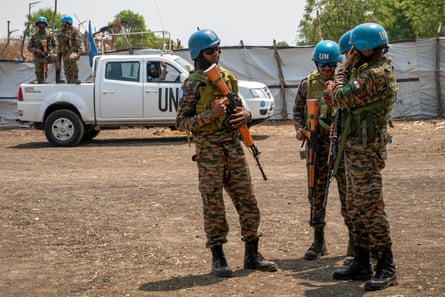 United Nations peacekeepers stand near an airstrip in Akobo last month. Photograph: Florence Miettaux/AP
theguardian.com
United Nations peacekeepers stand near an airstrip in Akobo last month. Photograph: Florence Miettaux/AP
theguardian.com
At least 169 people were killed in a raid in South Sudan’s oil-producing Ruweng administrative area near the Sudan border on Sunday, according to local officials cited by The Guardian. The UN mission in South Sudan said it was sheltering more than 1,000 civilians at its base and treating dozens of wounded after the attack in Abiemnom county.
The killings come amid a broader uptick in armed confrontations between forces aligned with President Salva Kiir and groups that authorities say are linked to the White Army and to the Sudan People’s Liberation Movement-in-Opposition (SPLM‑IO), the political and armed movement associated with First Vice-President Riek Machar. SPLM‑IO denied responsibility for the raid and said it has no military presence in the area.
The pattern is familiar: violence spikes, civilians run to UN compounds, aid agencies lose access, and the political centre promises another round of “implementation” of the 2018 peace deal that created a unity government. But the agreement has repeatedly stalled over the same issues—power-sharing, security arrangements, and who controls armed men on the ground—while local militias and “youth” forces remain the most reliable instrument for coercion.
Doctors Without Borders said 26 staff were unaccounted for after recent violence in Jonglei state, where it reported that its hospital in Lankien was hit by an airstrike and later burned and looted, and that its facility in Pieri was also looted. When medical organisations suspend operations, the immediate cost is measured in untreated trauma and disease; the downstream cost is that armed groups learn that disrupting services is a low-risk way to reshape who gets protection, attention, and resources.
South Sudan’s post-independence political economy has long rewarded actors who can credibly threaten to spoil. The 2013 civil war—triggered after Kiir dismissed Machar and accused him of plotting a coup—killed more than 400,000 people and displaced nearly half the population, The Guardian notes. The 2018 deal ended large-scale fighting but did not build a monopoly of force; it formalised a bargaining table where guns remain the entry ticket.
In that environment, “unity” becomes less a destination than a revenue model: armed factions retain leverage, commanders keep payrolls and checkpoints, and external actors—UN peacekeepers, donors, and humanitarian agencies—absorb part of the cost of non-state violence. The UN base in Ruweng is now functioning as both shelter and emergency clinic.
On Monday, MSF said it had lost contact with 26 staff.
The same week, the UN mission said it was housing more than 1,000 civilians behind its perimeter fences in Ruweng.