
Qatar threatens retaliation after Iran strikes Doha and LNG sites
Gulf base hosts face war costs as infrastructure becomes a target, stability premium evaporates when airspace closes
Images
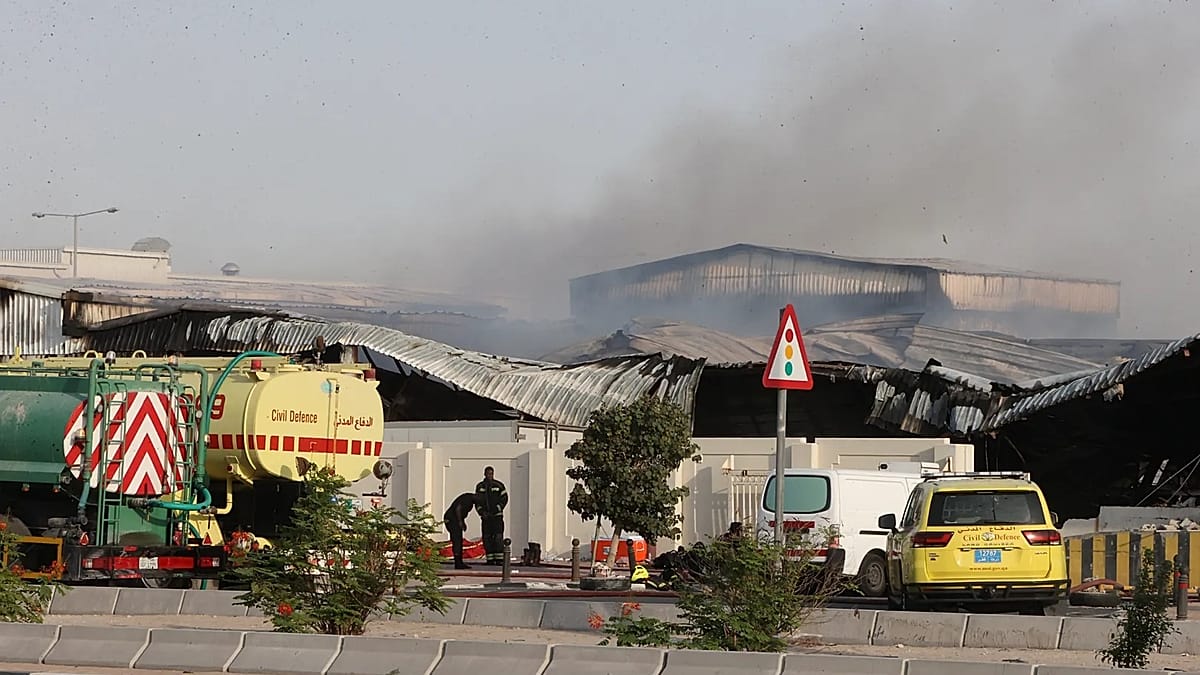 'Iran's attack will not go unanswered,' Qatar's foreign ministry says
euronews.com
'Iran's attack will not go unanswered,' Qatar's foreign ministry says
euronews.com
Qatar said Iran’s latest strikes on the country “crossed every red line” after attacks hit “all of Qatari territory including Doha airport and gas facilities,” according to Euronews. Majed Al-Ansari, a spokesperson for Qatar’s foreign ministry, said Doha “reserve[s] the right to retaliate,” and that “attacks like these will not go unanswered.”
The episode pulls a small state with a carefully cultivated role as mediator and host into a direct security contest it has tried to price as manageable. Qatar’s strategic bargain has long been straightforward: provide basing and access—most notably for the US—while selling itself to investors and residents as a predictable hub for energy exports, aviation, and regional diplomacy. Iranian strikes that reach beyond a US military footprint and into airports, residential areas, and LNG infrastructure challenge that model at the point where it becomes a commercial product.
Al-Ansari said the attacks forced a temporary closure of Qatar’s LNG facilities, warning of “a grave danger to international economies,” and noted that Qatar’s airspace remains closed with more than 8,000 transit passengers stranded. Those details matter because the Gulf’s “stability premium” is not measured in speeches but in uninterrupted flows: flights that keep moving, cargo that clears, gas that ships, insurance that renews. Even limited damage can reprice risk across contracts that assume the opposite.
Iran’s incentive is also visible. If Washington can distribute military power across a network of host states, Tehran can distribute the political costs of escalation across the same network. Punishing the hosts turns basing rights into a liability: local elites face pressure to prove they are not passive staging grounds, while foreign investors start asking whether “neutral” hubs are neutral in a war.
That logic narrows the room for Gulf leaders to do what they often prefer—contain, mediate, and buy time. Once missiles land on civilian infrastructure, restraint becomes harder to sell domestically and internationally. It is not only about deterrence; it is about credibility with residents, insurers, and counterparties who can reroute money and people faster than governments can reopen airspace.
Qatar also said it shot down two Iranian fighter jets that entered its airspace on Monday, suggesting the conflict is now testing air-defence capacity as much as diplomacy. When a state’s export terminals and airports become targets, the line between “base host” and belligerent stops being academic.
Qatar’s foreign ministry said it did not retaliate after an earlier strike during the war’s first 12 days because it prioritised a possible ceasefire. This time, Doha is telling the world that the same calculation may no longer apply.