
China calls for protection in Strait of Hormuz
War-risk insurance and charter rates tighten faster than naval deployments, Tankers wait at anchor for paperwork to become possible again
Images
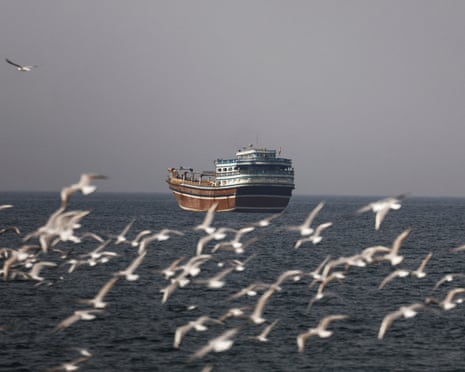 A vessel in the strait of Hormuz is seen from Musandam, Oman, on Monday. Photograph: Amr Alfiky/Reuters
theguardian.com
A vessel in the strait of Hormuz is seen from Musandam, Oman, on Monday. Photograph: Amr Alfiky/Reuters
theguardian.com
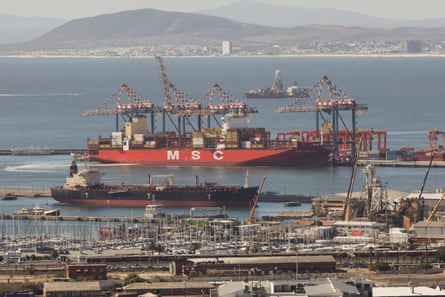 Container ships are moored in Cape Town, South Africa, after shipping companies announce they will reroute vessels. Photograph: Halden Krog/EPA
theguardian.com
Container ships are moored in Cape Town, South Africa, after shipping companies announce they will reroute vessels. Photograph: Halden Krog/EPA
theguardian.com
China urged “all parties” to protect shipping in the Strait of Hormuz as freight and insurance costs jumped after US and Israeli strikes on Iran and Tehran’s retaliation left the waterway largely empty for a fourth day, according to the Guardian. The strait carries roughly a fifth of global seaborne crude, a similar share of LNG tanker traffic, and about a third of widely used fertiliser shipments. With tankers anchoring in the Gulf and some vessels reportedly hit by drones, the practical question for many operators has shifted from naval capability to whether voyages can be insured at any price.
The immediate bottleneck is not only physical danger but the contractual machinery that turns danger into a stop sign. War-risk premiums, insurance exclusions, and “held covered” clauses determine whether a ship can legally sail, whether cargo owners can finance a voyage, and whether a charterer can claim force majeure without paying for an empty hull. When underwriters widen a war zone, the cost of a transit can jump from a manageable surcharge to a sum that wipes out the economics of a cargo. That cost then migrates: from insurers to shipowners, from shipowners to charterers, and from charterers to importers and ultimately consumers—often with a lag that makes the origin hard to see.
The Guardian cites spot charter rates for very large crude carriers surging to record levels, a sign that scarcity is being priced not just in oil futures but in the day-rate for ships willing to take the risk. Energy producers have limited alternatives. Some pipelines exist—Saudi Arabia’s east–west line, routes in the UAE, and infrastructure linked to Kurdistan—but their capacity is far below what sea transport normally moves. That mismatch matters because it forces competition for the remaining “safe” logistics: ships, crews, escorts, and insurance capacity.
Beijing’s call for protection also exposes a recurring feature of global trade: the largest import-dependent economies benefit when someone else absorbs the security costs. China is now the biggest importer of oil and gas and, in recent years, a major buyer of Iranian oil. In practice, the ability to keep Chinese refineries running depends on whether insurers, shipowners, and navies judge that the risk in Hormuz can be priced and managed—or whether the rational decision is to stay at anchor.
On Tuesday, the strait was still described as devoid of ships, while tankers and LNG carriers waited in the Gulf for terms they could sign and banks could finance.