
Illinois reparations commission issues 294-page harms report
Legislative recommendations and funding fights come next, Evanston cash payments show how quickly programs become lawsuits
Images
 San Francisco residents band together to shut down city's 'race-based' Reparations Fund with lawsuit
foxnews.com
San Francisco residents band together to shut down city's 'race-based' Reparations Fund with lawsuit
foxnews.com
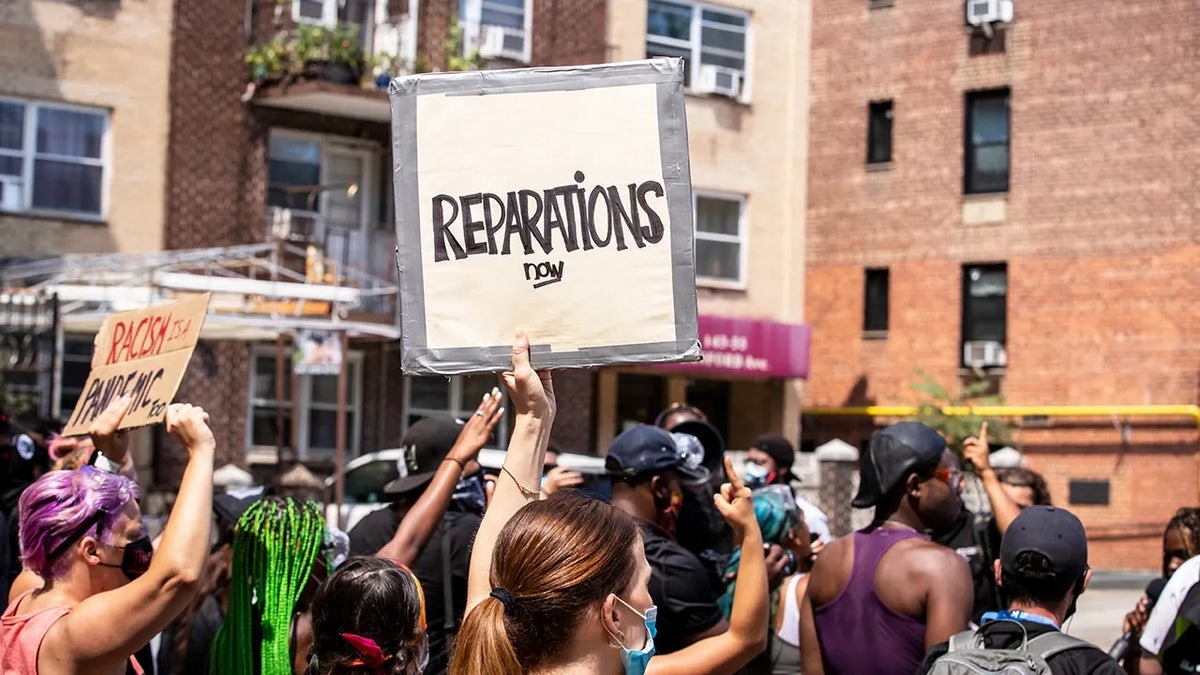 People protesting holding sign
foxnews.com
People protesting holding sign
foxnews.com
 Illinois State Capitol
foxnews.com
Illinois State Capitol
foxnews.com
 foxnews.com
Illinois’ state-appointed reparations commission has published a 294-page report cataloguing what it calls the state’s historical and ongoing harms against Black residents, setting up a fight over what becomes a moral claim and what becomes a budget line.
Fox News reports that the Illinois African Descent-Citizens Reparations Commission (ADCRC) released “Taking Account: A History of Racial Harm & Injustice Against Black Illinoisans”, describing it as its first “comprehensive, evidence-based” accounting. The commission says it traced harms from “colonial enslavement and early statehood through Reconstruction, Jim Crow, urban renewal, and mass incarceration,” and grouped findings into nine broad categories.
The document is not itself a spending plan, but it is designed to become one. The commission says it will develop legislative recommendations to “promote restoration and reparative justice,” which is where the politics shifts from narrative to numbers: eligibility rules, benefit design, and the source of funding. The ADCRC describes its remit as serving African Americans “with lineage to the American Slave Trade,” a definition that implies administrative gatekeeping—who qualifies, who verifies, and who is excluded.
Illinois is not starting from zero. Evanston, a Chicago suburb, has already issued $25,000 payments tied to housing for eligible Black residents and descendants connected to the city between 1919 and 1969, according to Fox News. That program has also drawn legal challenges, reflecting a practical constraint facing any race-based distribution scheme in the US: once benefits are explicit, lawsuits and compliance costs become part of the program.
The report’s breadth also hints at how reparations efforts tend to expand. Once a state creates an official ledger of harms, there is an institutional incentive to keep adding chapters—new categories, new time periods, new affected groups—because the commission’s work product is the catalogue itself. The political coalition that forms around it is rarely limited to recipients; it includes administrators, researchers, contractors, and advocacy organisations whose funding and status depend on the program’s continuation.
For lawmakers, the next step is where trade-offs become unavoidable. A reparations framework that aims to address housing, criminal justice, education, health, and wealth gaps at once quickly collides with the state’s existing commitments—pensions, schools, Medicaid—and with the fact that any new spending must be financed by taxpayers who are not being asked for consent so much as compliance.
Illinois now has a detailed inventory of historical grievances. It does not yet have a price tag, but the commission has been created to produce one.