
Supreme Court blocks California school secrecy rules
Parents win interim order on transgender notifications and pronouns, state privacy guidance meets constitutional limits
Images
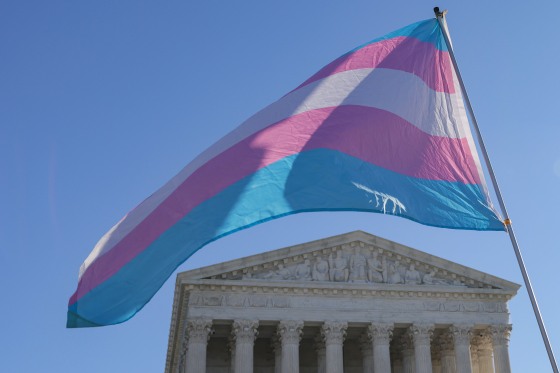 Transgender flag in front of the Supreme Court
nbcnews.com
Transgender flag in front of the Supreme Court
nbcnews.com
The US Supreme Court has blocked California from enforcing statewide rules that limit when schools can notify parents if a student comes out as transgender and that require teachers to use a child’s preferred pronouns. According to NBC News, the justices voted 6–3, allowing a federal judge’s ruling for objecting parents to take effect while the case continues.
The dispute centers on the state’s guidance to public schools, including documents issued by the California Department of Education in 2016 and by the attorney general’s office in 2024. Parents and teachers challenging the policy say it prevents them from raising children in line with their religious beliefs and bars them from information they consider essential for their child’s welfare. California argues the challengers overstate what the guidance requires and says schools must balance parental involvement against privacy and anti-discrimination obligations.
In an unsigned opinion, the court said the parents seeking religious exemptions are likely to succeed under the First Amendment’s free exercise clause. It also said the parents have viable claims under the 14th Amendment, citing precedent that gives parents primary responsibility for raising their children. The court framed the issue as including “the right not to be shut out of participation in decisions regarding their children’s mental health.”
The ruling drew a pointed dissent from Justice Elena Kagan, joined by Justices Sonia Sotomayor and Ketanji Brown Jackson. Kagan wrote that the court’s embrace of a parental-rights theory under the 14th Amendment clashes with its 2022 decision overturning Roe v. Wade, which rejected a similar substantive due process approach to unenumerated rights. She also noted that in a recent case upholding state bans on gender-transition treatments for minors, the court declined to take up a parental-rights claim from parents who wanted access to such care.
The court did not grant a parallel request from teachers who object to the policy, narrowing the immediate effect to parents who seek exemptions on religious grounds. The 9th US Circuit Court of Appeals had previously paused the district judge’s ruling; Monday’s order lifts that pause.
For California’s school districts, the practical question is what information can be withheld from parents, and under what authority, when the state is both the rule-setter and the insurer against liability. The answer will now be litigated under a Supreme Court that has shown it is willing to intervene early.
The decision leaves California’s guidance on paper, but it removes the state’s ability to enforce it while the case proceeds.