
Amazon suspends Abu Dhabi deliveries
Iran strikes and airspace closures jam Gulf logistics, Third-party sellers and stranded travellers absorb the cost
Images
 Nick Westwood and his wife Joanne are stuck in Dubai (Nick Westwood/PA Wire)
Nick Westwood/PA Wire
Nick Westwood and his wife Joanne are stuck in Dubai (Nick Westwood/PA Wire)
Nick Westwood/PA Wire
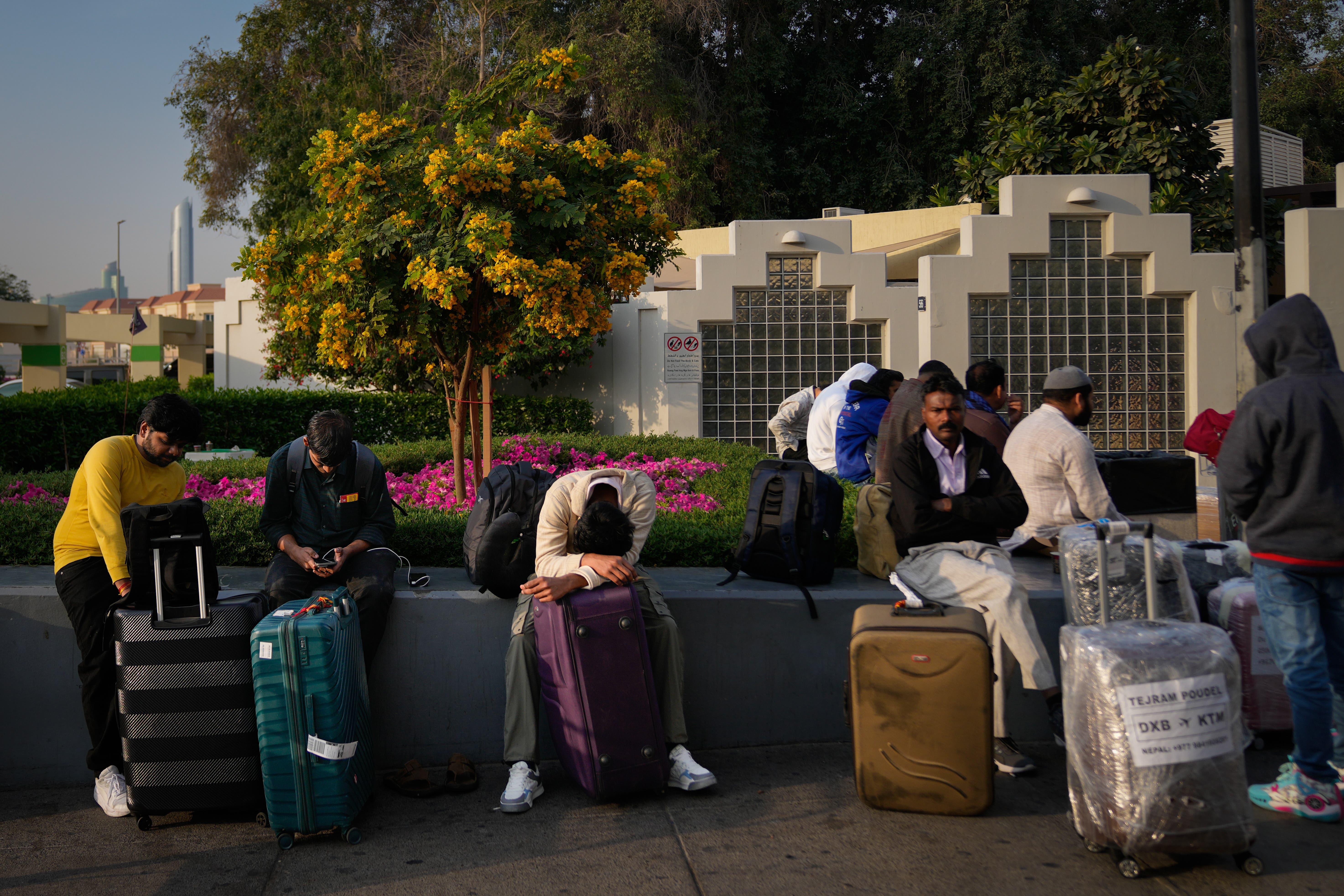 Passengers stranded by the closure of Dubai International Airport await assistance (Altaf Qadri/AP) (AP)
independent.co.uk
Passengers stranded by the closure of Dubai International Airport await assistance (Altaf Qadri/AP) (AP)
independent.co.uk
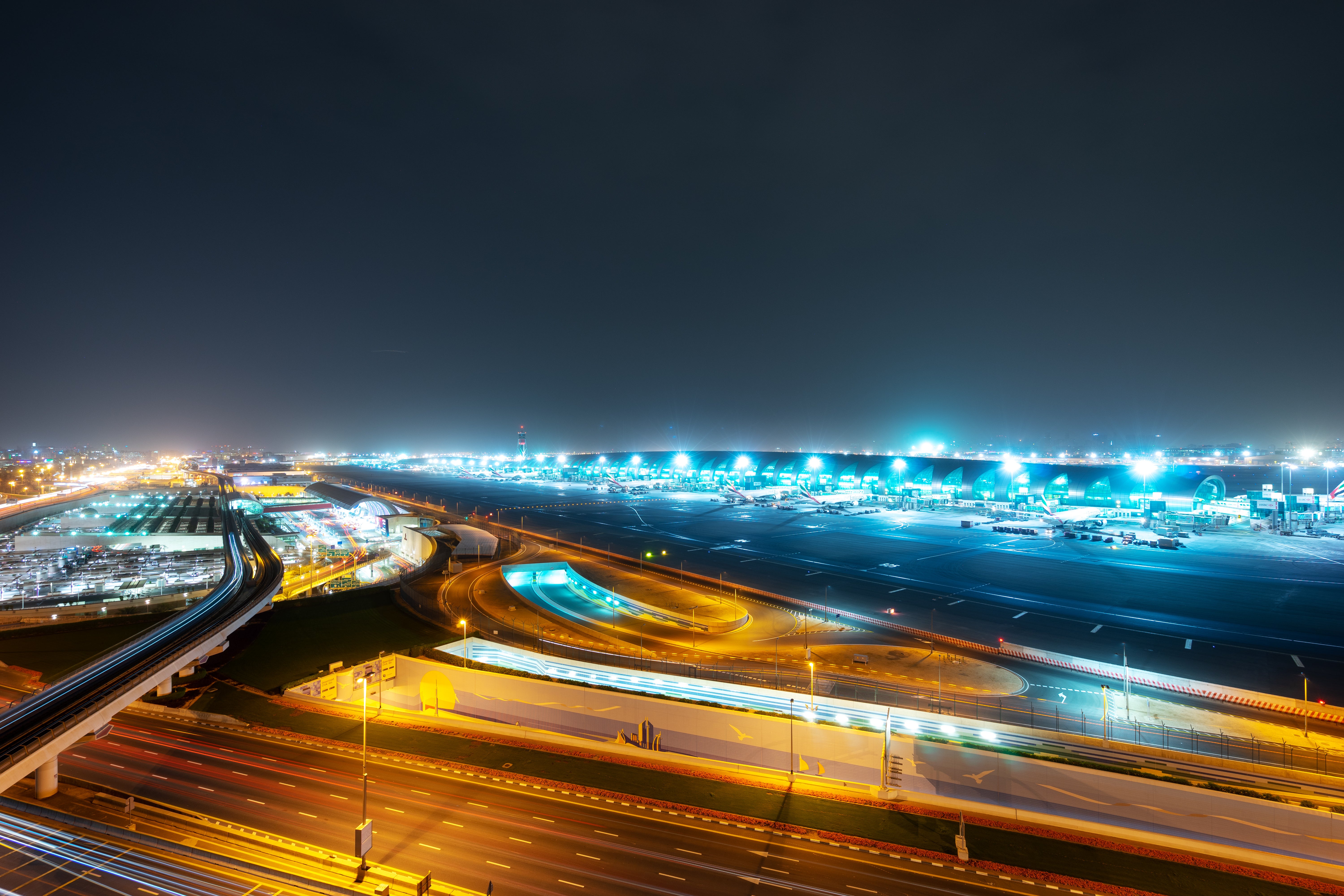 The closure of Dubai Airport, the world's busiest international hub, has had a huge knock-on effect to air travel in the Middle East (zhu difeng - stock.adobe.com)
zhu difeng - stock.adobe.com
The closure of Dubai Airport, the world's busiest international hub, has had a huge knock-on effect to air travel in the Middle East (zhu difeng - stock.adobe.com)
zhu difeng - stock.adobe.com
 Margaret Khumalo who is stuck in Zimbabwe due to flights at Dubai being grounded (Margaret Khumalo)
Margaret Khumalo
Margaret Khumalo who is stuck in Zimbabwe due to flights at Dubai being grounded (Margaret Khumalo)
Margaret Khumalo
 A plume of smoke rises from a warehouse in the industrial area of Sharjah City in the United Arab Emirates on Sunday. Photograph: Altaf Qadri/AP
theguardian.com
A plume of smoke rises from a warehouse in the industrial area of Sharjah City in the United Arab Emirates on Sunday. Photograph: Altaf Qadri/AP
theguardian.com
 Frankie’s family are staying in their building’s car park for safety. Photograph: Handout/Guardian
theguardian.com
Frankie’s family are staying in their building’s car park for safety. Photograph: Handout/Guardian
theguardian.com
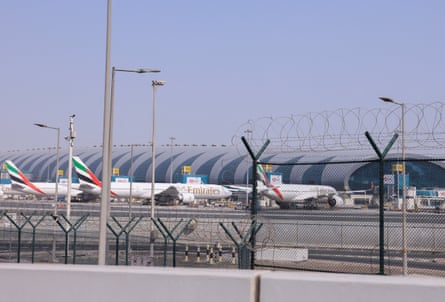 Planes parked at Dubai international airport on Monday. Dubai Airports said ‘limited’ flights would resume on Monday evening. Photograph: Raghed Waked/Reuters
theguardian.com
Planes parked at Dubai international airport on Monday. Dubai Airports said ‘limited’ flights would resume on Monday evening. Photograph: Raghed Waked/Reuters
theguardian.com
Amazon told staff it has shut its Abu Dhabi fulfilment-centre operations and suspended deliveries in the emirate as Iran’s strikes and airspace closures ripple through Gulf logistics, according to Business Insider. The move follows days of disrupted flights through Dubai and Abu Dhabi, with airlines suspending routes and travellers reporting repeated cancellations and expensive rebookings, The Independent reports.
The UAE’s appeal as a global transit and warehousing hub rests on two promises: uninterrupted connectivity and predictable security. When airspace closes, the region’s “hub” advantage flips into a bottleneck. Amazon’s internal memo, seen by Business Insider, describes knock-on effects beyond its own warehouses: roughly 300,000 third-party sellers in the region rely on Amazon’s fulfilment and cross-border shipping links, and disruptions can mean missed delivery windows, cancelled orders and stranded inventory. The same memo said employees in Saudi Arabia and Jordan were advised to stay indoors and that business travel to Israel and Lebanon was blocked—an operational posture that treats the region as a single risk surface rather than a set of separate markets.
For passengers, the cost shows up immediately in hotel nights, rebooking fees and time. The Independent quotes British travellers sleeping in building lobbies or waiting in airport hotels while trying to secure scarce seats out of the Gulf. UK officials have urged nationals to monitor fast-changing travel advice; the practical constraint is that “evacuation” is mostly a promise of coordination, not spare aircraft. In a system optimised for high load factors and tight turnaround times, there is little slack to absorb a sudden closure of major corridors.
The second-order effect is that large, well-capitalised firms can buy optionality—reroute cargo, shift inventory, pay for alternative capacity—while smaller merchants and ordinary travellers cannot. A multinational can move shipments through different hubs or pause sales; a small seller dependent on a single fulfilment pipeline is left with penalties and customer refunds. The Gulf’s model concentrates risk in exchange for efficiency: centralised airports, centralised warehousing and just-in-time flows.
Amazon did not say how long Abu Dhabi deliveries would remain suspended. The memo’s most concrete detail is also the simplest: a hub works until the airspace above it does not.