
Kuwait shoots down three US F-15s in friendly fire
Iran drone and missile salvos strain Gulf air defences, Coalition coordination breaks under seconds-long decisions
Images
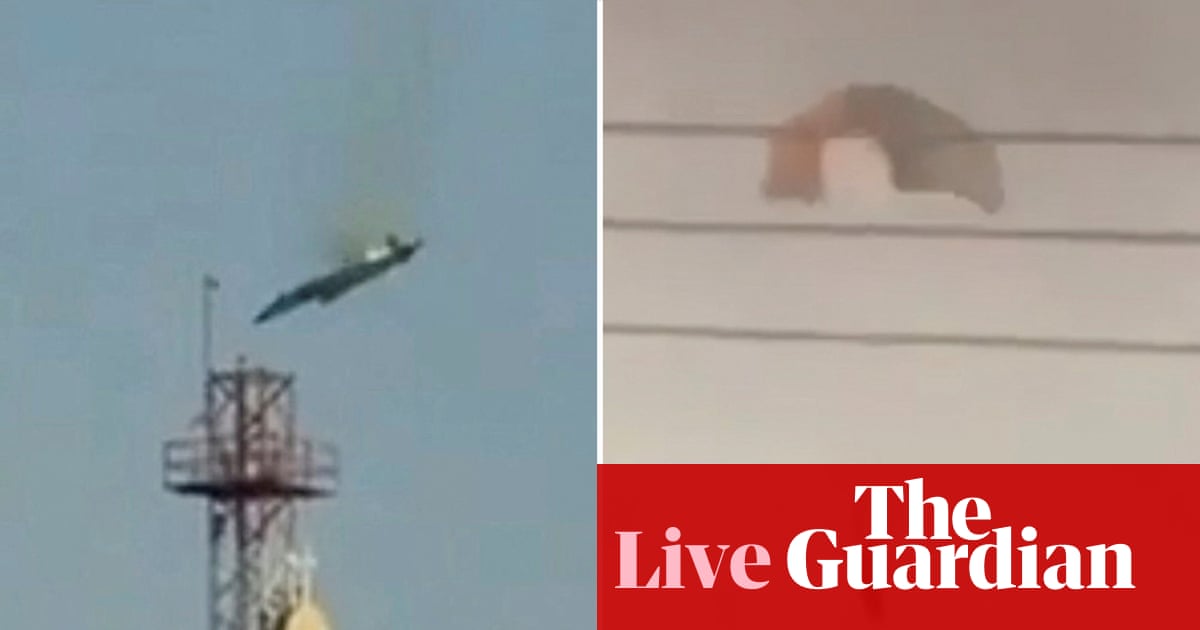 Middle East crisis live: Kuwait mistakenly shoots down three US fighter planes, as US says Iran’s ‘reckless’ attacks threaten regional stability
theguardian.com
Middle East crisis live: Kuwait mistakenly shoots down three US fighter planes, as US says Iran’s ‘reckless’ attacks threaten regional stability
theguardian.com
Kuwait’s air defences mistakenly shot down three US Air Force F-15E Strike Eagles during operations linked to the expanding Israel–US war with Iran, US Central Command said on Monday. All six crew members ejected, were recovered, and are in stable condition, according to Centcom. The incident occurred during what Centcom described as “active combat” involving Iranian missiles and drones, as Gulf states faced repeated strikes across the region.
The episode is a reminder that coalition warfare does not just add aircraft and bases; it adds competing command chains, domestic politics, and seconds-long decision windows. Kuwait’s air-defence operators were facing a threat profile dominated by drones and ballistic missiles—targets that compress identification time and push crews toward “shoot first” rules of engagement. In that environment, the safeguards that prevent friendly fire—deconfliction procedures, shared air tasking orders, and identification friend-or-foe (IFF) interrogations—become brittle. An IFF response can fail for mundane reasons: antenna geometry, jamming, misconfiguration, or simply a radar track that looks wrong for a fraction of a minute.
Kuwait’s incentives also differ from Washington’s. A small Gulf state hosting major US forces sells “stability” to its own population and to foreign investors; when missiles and drones are inbound, political penalties attach to any perception of passivity. That pressure tends to reward rapid engagement and visible action more than caution, especially when the alternative is explaining why an interceptor was not launched. The US, meanwhile, drives tempo and escalation from outside the immediate domestic blast radius. When the coalition’s pace is set by Washington and the threat is borne locally, risk is easily pushed onto the ally operating the trigger.
The wider regional picture makes the misidentification problem harder, not easier. According to the Guardian’s live coverage, Iranian attacks have been reported in Bahrain, Iraq (including the Kurdistan Region), Jordan, Kuwait, Oman, Qatar, Saudi Arabia and the UAE, while Israel has struck targets in Lebanon and Iran. As airspace fills with interceptors, drones, and emergency diversions, “clean” radar pictures become rare. The practical result is that air-defence systems are asked to perform perfect discrimination in a battlespace designed to defeat it.
Centcom said Kuwait has acknowledged the incident and thanked Kuwaiti forces for their support. Three US jets still fell out of the sky over a partner state, during a mission described as defensive.