
Young Chinese buy into empty housing projects to retire early
Property crash turns Evergrande-era ghost developments into low-cost exit ramps, Beijing wants consumption while the new residents want time
Images
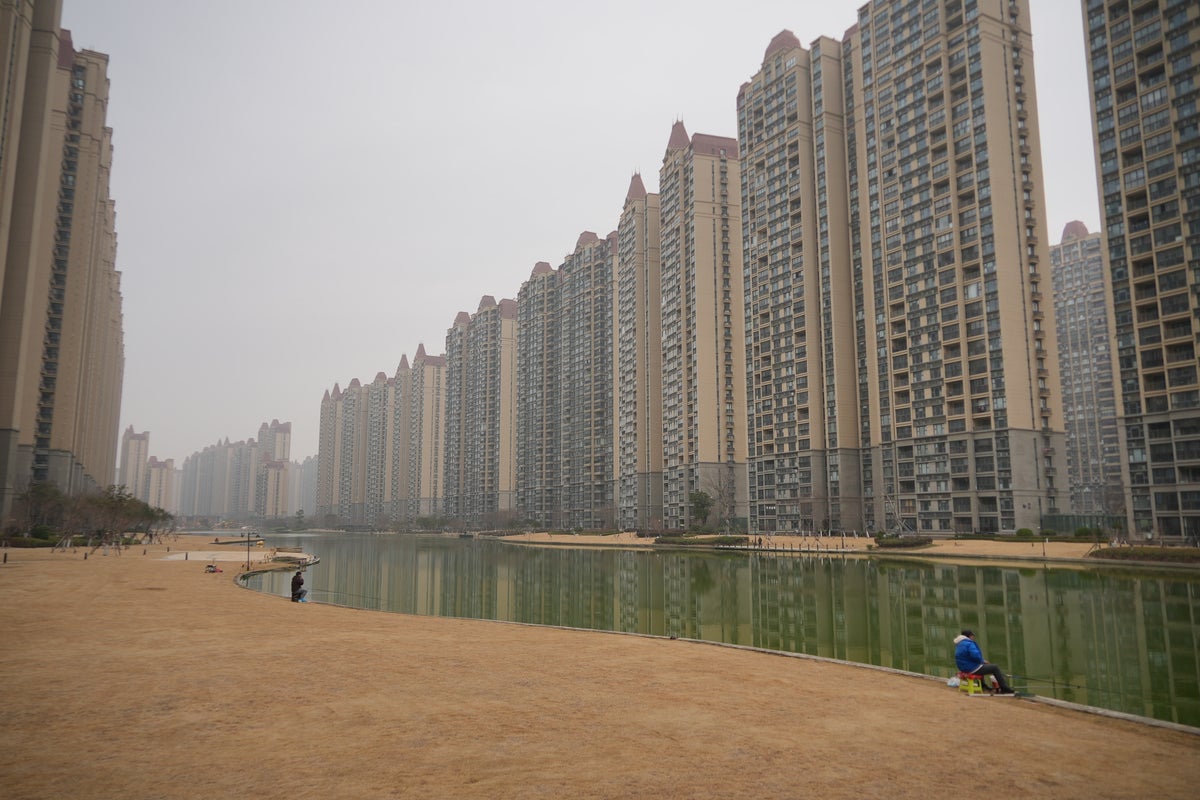 As China's economy slows, some young people are snapping up cheap apartments to 'retire' early
independent.co.uk
As China's economy slows, some young people are snapping up cheap apartments to 'retire' early
independent.co.uk
In a faux-Venice housing development on China’s east coast, a 28-year-old former Shanghai finance worker says she has “retired” on rent of 1,200 yuan a month—about $168—after buying into a half-empty complex built for a boom that never arrived. The Independent reports that the “Life in Venice” project in Jiangsu has 46,000 units and is now less than one-fifth occupied, with empty storefronts and “for sale” signs replacing the weekend-resort vision marketed to wealthy Shanghai buyers.
The bargain is a by-product of China’s property downturn. The project’s developer, Evergrande, went bankrupt in 2024, and local home prices in the complex have more than halved since the wider market started to deflate. Where earlier cohorts treated a big-city job as the entry ticket to home ownership, some younger Chinese are now doing the reverse: using cheap, illiquid housing stock in remote places to buy time away from the labour market.
The story is often told as a lifestyle trend—China’s “lying flat” movement and a low-desire life—but it also reads like a price signal. When housing is no longer a one-way bet and white-collar work demands a “996” schedule—9 a.m. to 9 p.m., six days a week—then the returns to grinding look smaller, especially for those who have already banked savings. The Independent describes the protagonist saving 2 million yuan and calculating that, with low rent and investment returns, she can avoid paid work indefinitely, trading proximity to hospitals and brand-name restaurants for sea air and quiet.
For Beijing, that exit option collides with macro goals. China has been trying to pivot from property-led growth to consumption and innovation, which requires both spending confidence and a workforce willing to take risk inside firms. A cohort choosing semi-abandoned developments and minimal work is a different kind of demand: it consumes less, pays less tax, and is harder to mobilise for the state’s preferred sectors.
The migration pattern is also politically awkward because it is built on surplus. Ghost-city projects were financed, approved and marketed under local growth targets and land-sale revenues; now they provide cheap shelter for people opting out. The same overbuilding that strained developers’ balance sheets is becoming a private welfare substitute for burned-out professionals who can arbitrage collapsing prices.
On the canals of “Life in Venice”, residents fish in artificial waterways beside unfinished villas. The development was supposed to be a weekend playground for Shanghai’s rich; it is now a place where a young ex-banker can afford to stop working.