
Pentagon tells Congress Iran showed no sign of imminent attack
US Israeli strikes expand after Khamenei killing, private briefings undercut public casus belli
Images
 U.S. President Donald Trump boards Air Force One before departing Palm Beach International Airport in Palm Beach, Florida, on Sunday, on his way back to Washington amid U.S. and Israeli strikes on Iran.
japantimes.co.jp
U.S. President Donald Trump boards Air Force One before departing Palm Beach International Airport in Palm Beach, Florida, on Sunday, on his way back to Washington amid U.S. and Israeli strikes on Iran.
japantimes.co.jp
 A solar farm in Nakai, Kanagawa Prefecture, in March 2016. Japan gets about a tenth of its electricity from solar panels despite having nearly no domestic production of photovoltaics (PVs).
japantimes.co.jp
A solar farm in Nakai, Kanagawa Prefecture, in March 2016. Japan gets about a tenth of its electricity from solar panels despite having nearly no domestic production of photovoltaics (PVs).
japantimes.co.jp
 As Japan accelerates AI adoption, policymakers and corporations frame the technology as essential to offsetting a projected labor shortfall of 11 million workers by 2040.
japantimes.co.jp
As Japan accelerates AI adoption, policymakers and corporations frame the technology as essential to offsetting a projected labor shortfall of 11 million workers by 2040.
japantimes.co.jp
 Japan agency aims for both decarbonization, growth
japantimes.co.jp
Japan agency aims for both decarbonization, growth
japantimes.co.jp
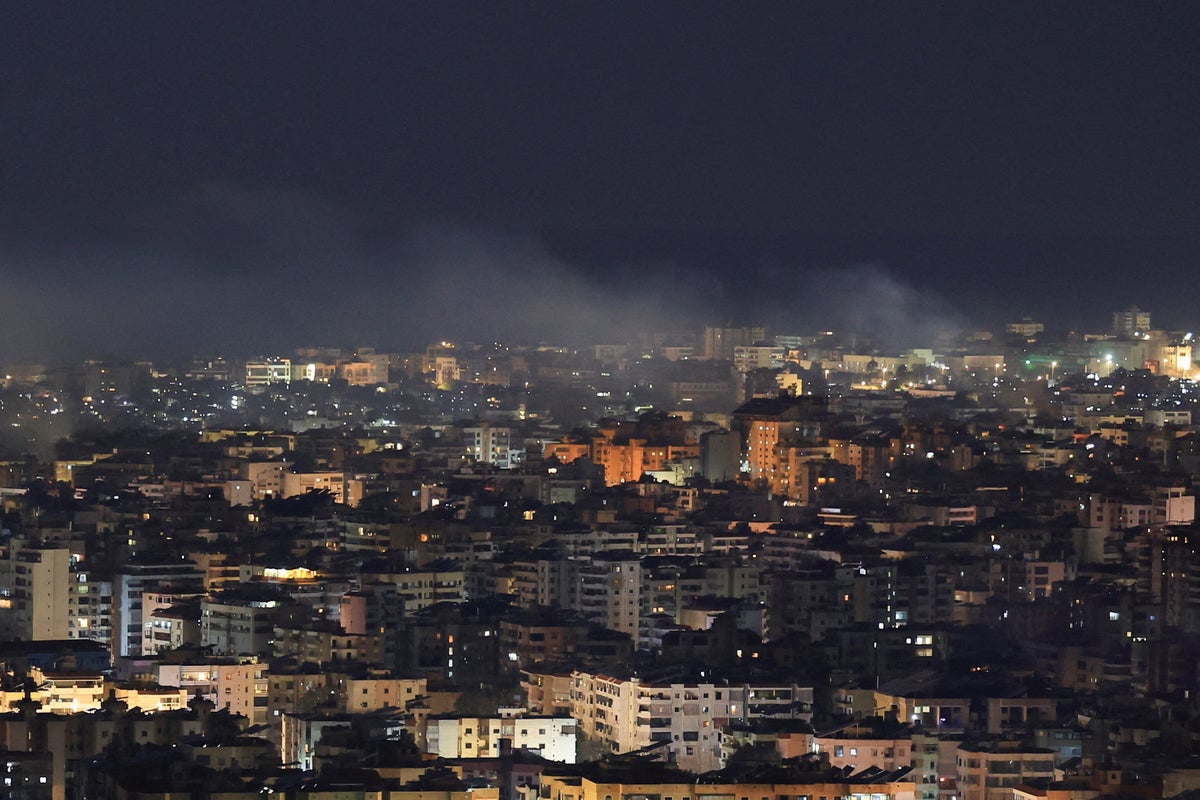 Iran latest: Israel and Lebanon’s Hezbollah trade fresh strikes
independent.co.uk
Iran latest: Israel and Lebanon’s Hezbollah trade fresh strikes
independent.co.uk
US defence officials told congressional staff in closed-door briefings on Sunday that they had seen no intelligence suggesting Iran was preparing to attack American forces first, according to the Japan Times, citing two people familiar with the discussions. The admission came a day after the United States and Israel launched their most ambitious strikes on Iran in decades, including the killing of Supreme Leader Ayatollah Ali Khamenei and attacks on Iranian naval assets and more than 1,000 targets, officials said.
The gap between the administration’s public case and its private briefings matters because it changes what is being justified. Pre-emption requires evidence of an imminent threat; absent that, the rationale shifts to broader claims about deterrence, alliance commitments and the need to keep adversaries guessing. That shift is easier to sell domestically when the costs are diffuse and delayed, and when the immediate political upside is concentrated: projecting resolve, avoiding accusations of weakness, and aligning tightly with an ally already committed to escalation.
Europe sits downstream of that logic. Even when European governments are not participants, they inherit the second-order effects: higher energy prices, higher insurance premia for shipping, disrupted air routes, and the consular expectation that states will extract citizens from a suddenly dangerous region. The Independent’s live coverage on Monday reported the first US casualties—three troops killed and five seriously injured—and described widening strikes involving Hezbollah and new alerts for Americans in Kuwait, a reminder that “limited” operations tend to create new fronts once retaliation begins.
A further complication is that Washington’s actions are now being read as a template. If the world’s dominant military power treats “no sign of an imminent attack” as compatible with large-scale strikes and leadership decapitation, other states will price that precedent into their own security policies. Smaller countries that host Western bases or depend on Western protection are then pulled into conflicts by geography rather than choice, while the legal and evidentiary thresholds become political arguments instead of constraints.
The Pentagon’s message to Congress was not that the war was unnecessary, but that the war was not triggered by an imminent Iranian first strike. That leaves Europe watching a conflict whose stated casus belli is already being revised in private.
In Washington, the briefers reportedly said what the intelligence did not show. The strikes continued anyway.