
Belgium seizes suspected Russian shadow fleet tanker
Prosecutors say Ethera used false Guinea flag and forged papers, Sanctions enforcement reaches ships faster than the enablers
Images
 French forces rappel from helicopters to help seize suspected Russian 'shadow fleet' tanker – video
theguardian.com
French forces rappel from helicopters to help seize suspected Russian 'shadow fleet' tanker – video
theguardian.com
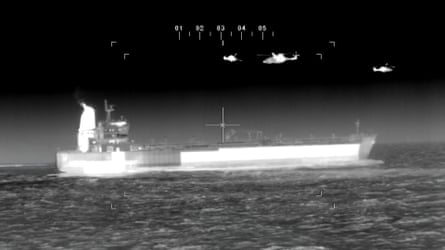 The Belgian army intercepting and boarding the oil tanker Ethera. Photograph: Jorn Urbain/Belgian defence ministry/EPA
theguardian.com
The Belgian army intercepting and boarding the oil tanker Ethera. Photograph: Jorn Urbain/Belgian defence ministry/EPA
theguardian.com
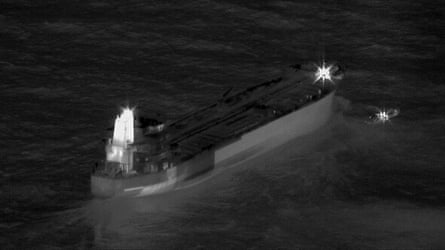 The Ethera was escorted to Zeebrugge to be officially confiscated. Photograph: Jorn Urbain/Belgian defence ministry/EPA
theguardian.com
The Ethera was escorted to Zeebrugge to be officially confiscated. Photograph: Jorn Urbain/Belgian defence ministry/EPA
theguardian.com
Belgian special forces, backed by French military helicopters, boarded an oil tanker in the North Sea on Saturday night and escorted it to Zeebrugge, in what prosecutors described as a seizure inside Belgium’s exclusive economic zone. The vessel, identified as the Ethera, was suspected of being part of Russia’s “shadow fleet” and of sailing under a false Guinean flag with forged documents, according to The Guardian.
The operation sits inside a wider cat-and-mouse market that has grown around sanctions on Russian oil. Western governments have repeatedly tightened restrictions, but the trade has adapted by outsourcing the legal and operational risk to intermediaries: aging tankers, opaque ownership structures, and flag registries willing to sell paperwork to anyone who pays. The Guardian reports that the Ethera had long been under US, EU and UK sanctions yet continued transporting Russian oil, illustrating how sanctions are often enforced at the edge—against ships and crews—rather than at the administrative chokepoints that make the voyages possible.
Flagging is the cheapest of those chokepoints. When a ship “flies” Guinea’s flag without authorization, the immediate question is not only who forged the registration, but why the system makes forgery worthwhile: a flag state’s name is a portable compliance signal that can unlock port access, insurance arrangements, and a veneer of legitimacy. Shadow fleet operators routinely reflag vessels to jurisdictions with limited capacity to verify ownership or enforce standards, while shell companies blur responsibility when ships are involved in accidents, pollution, or sanctions breaches.
Belgium’s move also highlights the asymmetry in enforcement. Boarding a ship at gunpoint is visible, risky, and politically legible; auditing the network of brokers, classification services, insurers, and corporate registries that keep the fleet trading is slower and legally messier. The Guardian notes France has estimated the shadow fleet at roughly 1,000 to 1,200 ships, with more than half now sanctioned—numbers that imply not a handful of rogue vessels but an industry large enough to maintain replacement tonnage and swap paperwork when one ship is caught.
Ukrainian president Volodymyr Zelenskyy praised the seizure as action against Moscow’s “floating purse”, while Russia has previously labelled such seizures “piracy”, according to The Guardian. For European governments, the incentive is straightforward: a single uninsured or under-insured tanker failure in the North Sea or Baltic would impose cleanup and economic costs on coastal states, while the revenue from the oil continues to accrue elsewhere.
The Ethera is now in Zeebrugge as investigators question its Russian captain and examine its documents, prosecutors said. The ship’s alleged Guinean flag was treated as false; the boarding itself was treated as law enforcement.