
Freshwater crocodile turns up in Newcastle creek
Australian reptile park captures animal far south of its natural range, police still do not know how it got there
Images
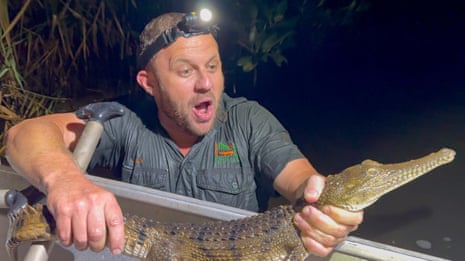 Crocodile spotted in creek in Newcastle, Australia captured by wildlife experts – video
theguardian.com
Crocodile spotted in creek in Newcastle, Australia captured by wildlife experts – video
theguardian.com
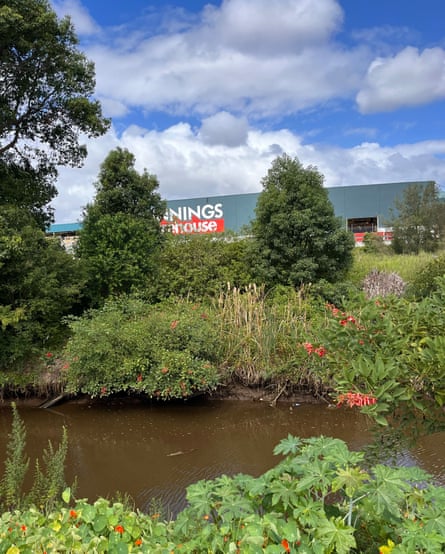 ‘I get there, I look and here’s this little crocodile swimming around in the water.’ Photograph: Stephanie Kirsop
theguardian.com
‘I get there, I look and here’s this little crocodile swimming around in the water.’ Photograph: Stephanie Kirsop
theguardian.com
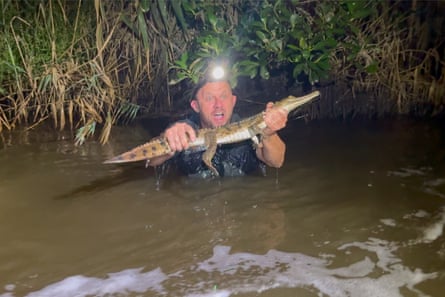 Billy Collett (pictured) and his team found the crocodile near wetlands approximately 3km downstream from where it was first spotted. Photograph: Australian Reptile Park
theguardian.com
Billy Collett (pictured) and his team found the crocodile near wetlands approximately 3km downstream from where it was first spotted. Photograph: Australian Reptile Park
theguardian.com
A juvenile freshwater crocodile was captured in Ironbark Creek in Newcastle, about 100km north of Sydney, after teenagers spotted it on Saturday near Federal Park in the suburb of Wallsend. According to The Guardian, the animal was taken by handlers from the Australian Reptile Park after multiple attempts, including an overnight operation using a small motor boat. Police said it is unknown how long the crocodile had been in the creek or how it arrived there.
The find is striking mainly because it is geographically implausible. Freshwater crocodiles (Crocodylus johnstoni) are native to northern Queensland, the Northern Territory and Western Australia; the reptile park estimated Newcastle is roughly 2,500km from the species’ normal habitat. The park also said the crocodile would be unlikely to survive New South Wales winter temperatures, which narrows the list of explanations: either it was moved by people, or it is part of a chain of unusual events (flood transport, deliberate release, repeated translocation) that still begins with human handling.
That matters because “out-of-range” wildlife incidents are rarely treated as a supply-chain problem. The immediate public response is typically framed around safety and rescue—police cordons, a wildlife hotline, a capture team—while the upstream question is left vague: who transported the animal, and through what channel? Collett, the handler quoted by The Guardian, suggested the crocodile may have been an escaped pet. If so, the incident points to a familiar pattern in exotic animal ownership: the costs of containment and retrieval are borne publicly or by charities, while the owner’s incentives are strongest at the moment of acquisition, not over the animal’s full lifespan.
New South Wales police said there were reports from some residents of multiple reptiles, but later confirmed only one crocodile was involved. The animal—just under a metre long and believed to be a subadult female—was transported to the Australian Reptile Park on the Central Coast and underwent veterinary assessment on Monday.
The crocodile was first mistaken for a log, then for a prank, until a police officer saw it swimming in the creek and the response accelerated.