
Iran strikes UAE airports and Dubai landmarks
Gulf hub model depends on uninterrupted flow, stranded travellers pay hotel rates while the state sells stability
Images
 Iranian strikes hit Dubai and Abu Dhabi, killing one person
euronews.com
Iranian strikes hit Dubai and Abu Dhabi, killing one person
euronews.com
 Rescue workers and military personnel operate at the scene where several people were killed in an Iranian missile strike in Beit Shemesh, Israel Sunday, March 1, 2026. Leo Correa—Associated Press
time.com
Rescue workers and military personnel operate at the scene where several people were killed in an Iranian missile strike in Beit Shemesh, Israel Sunday, March 1, 2026. Leo Correa—Associated Press
time.com
 time.com
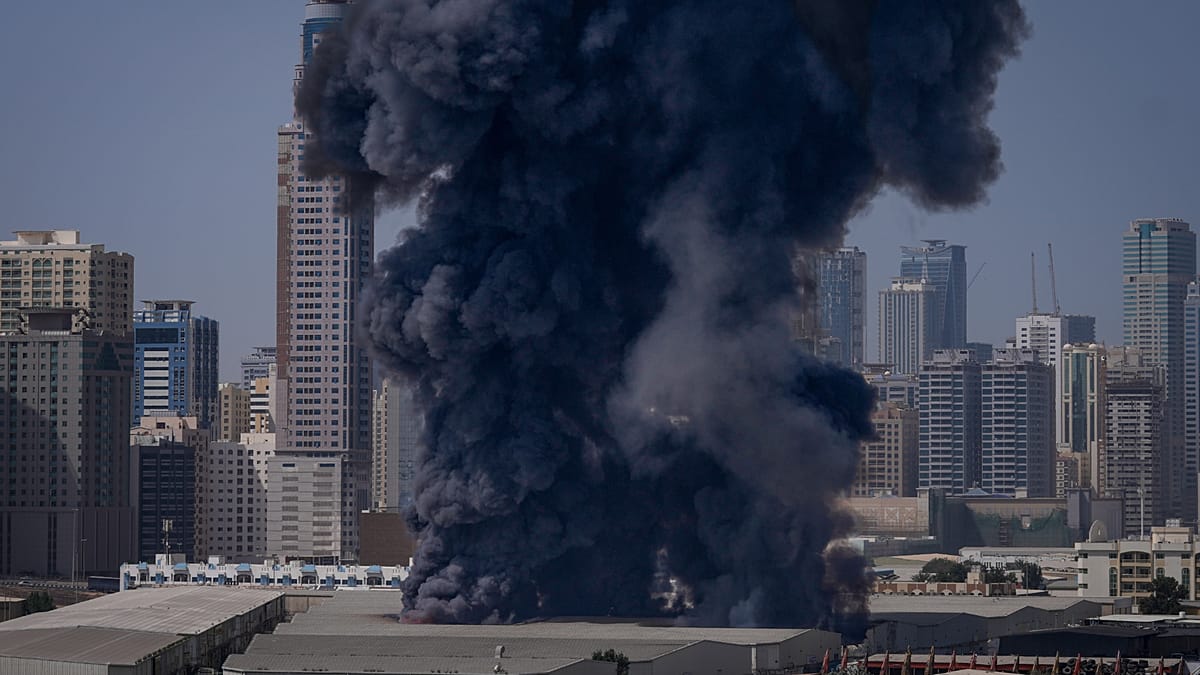
 A yacht sails past a plume of smoke rising from the port of Jebel Ali following a reported Iranian strike in Dubai on March 1, 2026. Fresh blasts were heard across the Gulf cities of Dubai, Doha and Manama on Sunday morning after a day of Iran strikes in the region in retaliation for US and Israeli attacks. Fadel SENNA—AFP via Getty Images
time.com
A yacht sails past a plume of smoke rising from the port of Jebel Ali following a reported Iranian strike in Dubai on March 1, 2026. Fresh blasts were heard across the Gulf cities of Dubai, Doha and Manama on Sunday morning after a day of Iran strikes in the region in retaliation for US and Israeli attacks. Fadel SENNA—AFP via Getty Images
time.com
Iranian drones and missiles struck the United Arab Emirates overnight, damaging parts of Dubai International Airport’s Terminal 3 and Abu Dhabi’s Zayed International Airport and setting fires at the Burj Al Arab and near Jebel Ali port, according to Euronews. The UAE defence ministry said it intercepted 136 ballistic missiles and 209 drones, while reporting one death in Abu Dhabi and several injuries.
The immediate damage was not what made the strikes costly. Dubai and Abu Dhabi sell a particular product: frictionless transit and predictable jurisdiction for people, cargo and capital. That business depends on the assumption that the region’s violence can be kept at arm’s length by diplomacy, deterrence and imported air defence—and that any residual risk is someone else’s problem. When the airspace closes, even briefly, the “hub” model collapses into stranded passengers, missed connections, delayed cargo and emergency hotel bills that compound by the night.
Time noted that the attacks challenge the Gulf monarchies’ cultivated image of stability at the very moment they are competing for global headquarters, financial listings and high-end residents. The UAE’s own interception numbers underline the point: the system can be technically effective and still fail commercially, because a single drone reaching a terminal or a fire at a port is enough to interrupt schedules built on tight turnaround times. In logistics, reliability is the asset; once it is questioned, insurers, airlines and shippers reprice the route before governments announce any new restrictions.
That repricing lands unevenly. Travellers absorb cancellations and surge-priced accommodation; companies pay higher freight and insurance; and the state is pressured to expand security guarantees to preserve the investment story. The private sector can market “safe haven” real estate and tax residency, but it cannot field interceptors, harden airports, or keep sea lanes open. Those costs sit with the public balance sheet, even as the benefits of the model—property sales, financial services fees, and premium tourism—are concentrated.
Business Insider’s account from a stranded British traveller in Dubai put a number on the new reality: roughly $670 a night for a hotel room after a cancellation, with no clear timeline for flights resuming. For a city built around being the world’s most convenient stopover, the price of insecurity shows up first as a receipt.
By Sunday evening, Euronews reported residents and tourists moving mattresses into basement garages between explosions. Dubai’s skyline remained lit, but its airports were evacuating terminals.