
European governments draft Gulf evacuation plans
UK counts 94000 registered nationals as airspace closures strand travellers, consular promises meet hard limits of routes and aircraft
Images
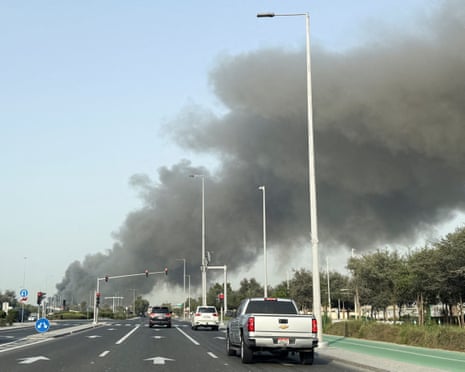 Smoke billows from Zayed port, Abu Dhabi, United Arab Emirates after an Iranian attack on Sunday. At least 50,000 Britons are thought to be in UAE. Photograph: Abdelhadi Ramahi/Reuters
theguardian.com
Smoke billows from Zayed port, Abu Dhabi, United Arab Emirates after an Iranian attack on Sunday. At least 50,000 Britons are thought to be in UAE. Photograph: Abdelhadi Ramahi/Reuters
theguardian.com
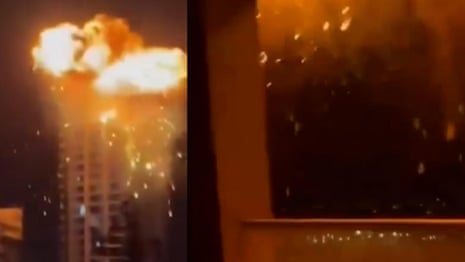 Footage shows moment Iranian strike hits high-rise in Bahrain – video
theguardian.com
Footage shows moment Iranian strike hits high-rise in Bahrain – video
theguardian.com
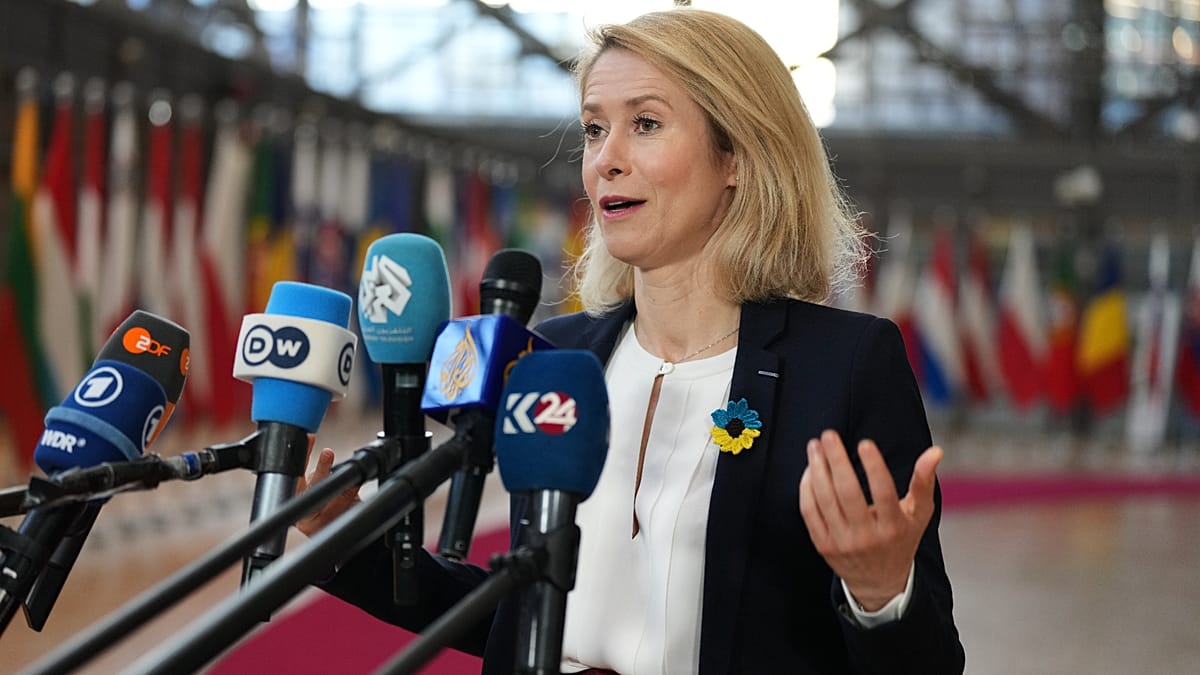 EU foreign ministers wow to protect citizens but refuse to back regime
euronews.com
EU foreign ministers wow to protect citizens but refuse to back regime
euronews.com
Foreign ministries across Europe are preparing evacuation contingencies for a Gulf region that has become, in practice, a single congested departure hall. The UK Foreign Office says 94,000 British nationals have registered their presence across affected countries, with more than 50,000 believed to be in the United Arab Emirates, according to The Guardian. EU foreign ministers, meeting by video, said they were taking “all necessary steps” to protect citizens and could activate the EU Civil Protection Mechanism, Euronews reports.
The immediate constraint is not political will but transport geometry. Dubai’s role as a hub means that when airspace closes, thousands of onward journeys fail at once, and the people stranded are not only residents but tourists and business travellers who expected a commercial flight home. Governments can tell citizens to “follow local instructions” and shelter in place, but that guidance quietly assumes the host state can keep order and keep basic services running while missiles fly.
Evacuation plans, where they exist, look like workarounds: road convoys to neighbouring countries with open airspace, then charter flights onward. That pushes the risk onto a different set of bottlenecks—border crossings, fuel availability, and the ability to secure highways that were not designed as humanitarian corridors. It also creates the familiar triage problem. When tens of thousands register for help, consular desks become rationing points: who is vulnerable, who can self-fund, who has a local support network, and who simply booked a holiday at the wrong time.
The political pressure is built into the promise. Once a state signals that it will “get people out,” the demand becomes unlimited and time-sensitive, while the supply of aircraft, crews, landing slots, and diplomatic permissions is fixed. The EU’s civil protection mechanism can coordinate, but it cannot create air corridors or compel airlines to fly into a war-risk zone. National governments then face a second-order choice: pay for charters and escorts, or accept that the safety net is mostly rhetorical.
The same dynamic is visible in the EU’s wider messaging. Ministers warned of “unpredictable economic consequences” and urged that the Strait of Hormuz remain open, while stopping short of endorsing regime change in Iran, according to Euronews. The statement tries to cover every audience at once—citizens demanding rescue, markets demanding stability, and member states disagreeing about the legitimacy of the strikes—without resolving the operational question of what happens if the region’s airports stay shut.
For now, the numbers are the story. The UK is counting registered nationals and mapping routes; the EU is preparing mechanisms and statements. Meanwhile, Dubai remains a hub with closed airspace and a growing inventory of people who assumed mobility was a service, not a contingency plan.