
Attacks near Strait of Hormuz disrupt tanker traffic
UKMTO logs multiple incidents off Oman, war risk pricing starts before any formal closure
Images
 zerohedge.com
 zerohedge.com
 zerohedge.com
 zerohedge.com
 zerohedge.com
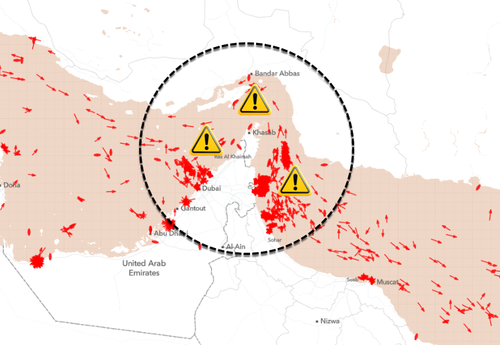
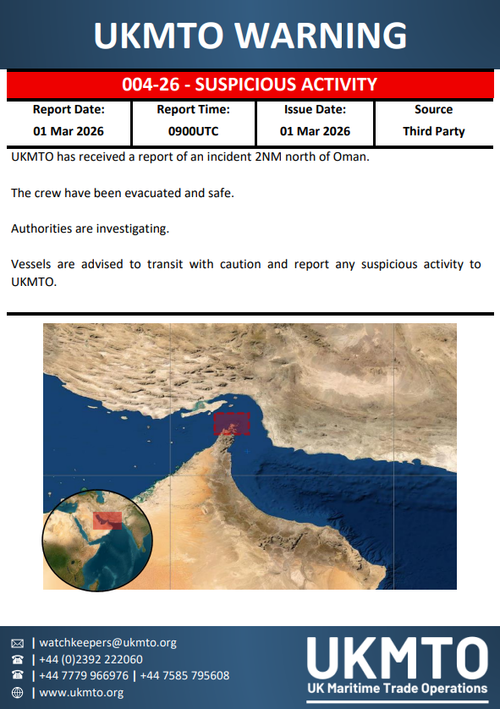
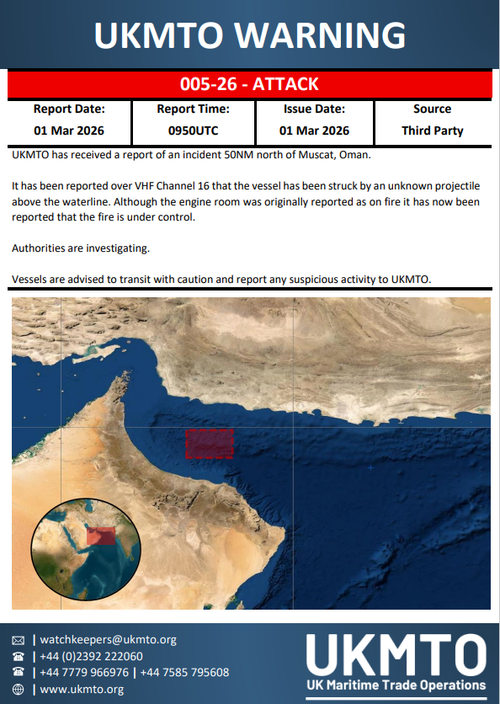
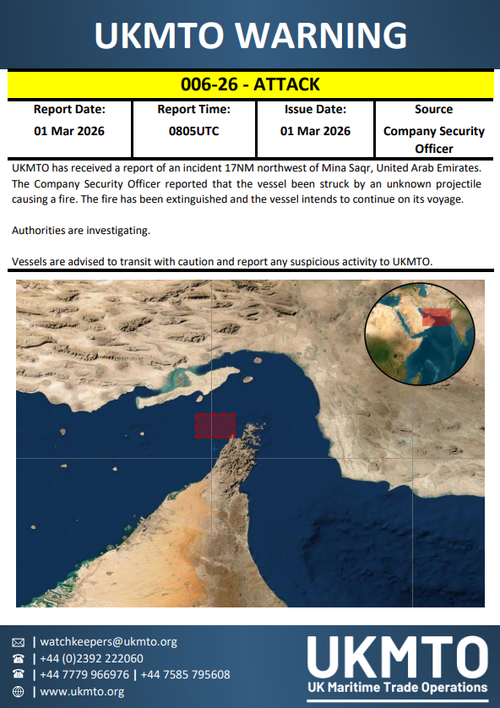
At least three commercial vessels reported attacks or suspicious incidents near the Strait of Hormuz on Sunday, as shipping traffic slowed and some operators paused transits through the waterway. Business Insider reported that the Palau-flagged oil tanker Skylight was targeted off Oman and its 20-person crew evacuated, while the UK Maritime Trade Operations (UKMTO) logged additional incidents involving “unknown projectiles”.
The Strait of Hormuz is not just an oil story; it is an insurance story, a routing story, and a financing story that quickly becomes a consumer-price story. Roughly a fifth of global daily oil consumption moves through this narrow channel, and the shipping market prices disruption long before any formal closure. When UKMTO warns of “military miscalculation and electronic interference,” underwriters respond by repricing war-risk cover, and shipowners respond by repricing the ship itself: higher charter rates, higher crew risk premia, and stricter contractual clauses about where a vessel will sail.
Once a few owners suspend transits “until further notice,” the market’s equilibrium shifts. Tankers bunch up in holding patterns on either side of the strait, tying up capacity that normally smooths global supply. That shortage of available tonnage feeds directly into freight rates; refiners and traders then pay more not only for crude but for the right to move it. The next step is inventory behavior: buyers who can afford it start building buffers, while smaller importers run closer to the edge. The result is that “risk” becomes a line item embedded in diesel, jet fuel, and container shipping even if barrels keep flowing.
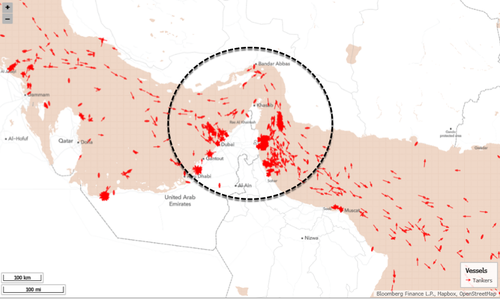
The political temptation is to treat Hormuz as a binary switch—open or closed—because that is easy to communicate. The shipping market does not wait for official announcements. Zero Hedge cited reporting and analysts noting a sharp slowdown in tanker movements and conflicting signals from Iranian officials about whether navigation would be disrupted. Even without a declared blockade, a sufficiently dangerous environment can function as one: fewer ships sail, and those that do demand to be paid.
On Sunday, UKMTO said no formal closure had been communicated through recognized maritime safety channels. But the Skylight’s crew was still lifted off the ship, and tanker tracks still showed vessels hesitating at the chokepoint.