
War bets surge on Kalshi and Polymarket after US strikes on Iran
Prediction markets turn rumours into tradeable contracts, Insider-trading enforcement is left to the platforms themselves
Images
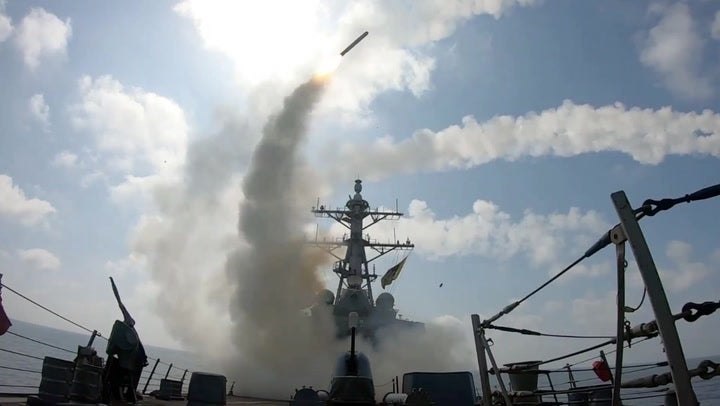 Gamblers have poured millions of dollars into prediction market bets related to President Donald Trump’s military strikes on Iran (US Central Command)
US Central Command
Gamblers have poured millions of dollars into prediction market bets related to President Donald Trump’s military strikes on Iran (US Central Command)
US Central Command
Kalshi and Polymarket drew tens of millions of dollars in wagers within hours of President Donald Trump’s announcement of US-Israeli strikes on Iran, turning battlefield headlines into tradeable contracts. The Independent, citing Axios, reported about $36 million in volume on Kalshi tied to whether Iran will see “regime change,” alongside more than $31 million on Polymarket contracts asking whether Supreme Leader Ayatollah Ali Khamenei would still be in power by the end of March.
The surge matters less as a curiosity than as a map of what traders think they can price faster than the public can verify. These markets offer contracts on ceasefires, invasions, the Strait of Hormuz, and even who might become Iran’s next supreme leader, effectively converting uncertainty into a liquid instrument. When such markets grow, the value of a rumour changes: a claim that moves a probability from 40% to 55% can be monetised immediately, and the cost of pushing that claim can be small compared with the payout.
That is not a theoretical risk. The Independent points to earlier episodes where large bets appeared shortly before major geopolitical events, including a January wager on the ouster of Venezuela’s Nicolás Maduro that paid out after the Trump administration captured him. In the Iran case, CoinDesk and blockchain analyst Bubblemaps flagged a cluster of Polymarket accounts that reportedly profited by predicting a February 28 strike shortly before it occurred, with little prior activity on those accounts. Prediction platforms ban trading on insider information, but enforcement is largely internal: the exchanges write the rules, identify suspicious patterns, and decide what to do with them.
The structure invites a second layer of incentives. If “information” is now an asset class, state actors, campaign operations, and private intermediaries can use the same tools they already use in influence operations—selective leaks, timed statements, coordinated amplification—to move prices. Even when a rumour is false, the trade can settle long before the correction arrives. The market does not require truth; it requires volatility and a counterparty.
Governments have historically tolerated betting on sports and elections while bristling at markets that forecast their own decisions in real time. A contract asking whether a president will strike Iran by a particular date is not just gambling; it is a public, continuously updated estimate of executive intent, intelligence signalling, and institutional capacity. It is also a scoreboard that can embarrass officials when traders consistently anticipate what governments deny.
On Saturday, as missiles and air defences dominated the Gulf’s news cycle, traders were already pricing a post-Khamenei Iran and a possible closure of Hormuz. The platforms were still accepting bets while the official facts were still being written.