
Mobility scooter rider reaches M11 motorway
Essex Police escort man in his 70s home after lane closure, everyday transport rules meet devices that look like vehicles but are not
Images
 Man in his 70s seen using mobility scooter on motorway before police rush in
independent.co.uk
Man in his 70s seen using mobility scooter on motorway before police rush in
independent.co.uk
 standard.co.uk
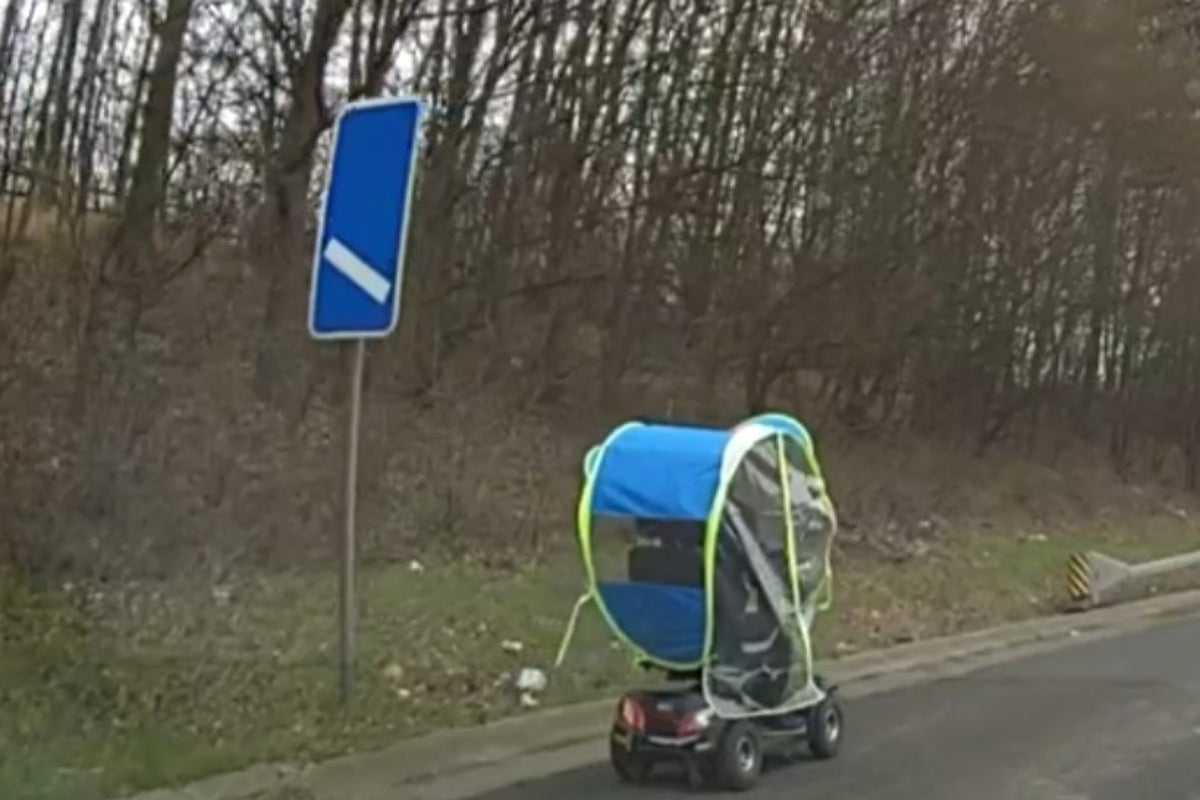
A man in his 70s ended up driving a mobility scooter along the hard shoulder of the M11 near Harlow on Friday lunchtime, prompting Essex Police to close a lane briefly and escort him home. Police said he had “accidentally turned onto” the motorway at around 12:35 p.m., after multiple drivers called in to report the slow-moving vehicle.
The incident is easy to file under the category of British oddities, but it sits on top of a practical problem that is becoming harder to ignore: the transport system is built around a narrow idea of what belongs on the road, while consumer technology keeps producing new things with wheels, batteries and just enough speed to get into trouble. Mobility scooters, e-bikes, e-scooters, microcars and delivery robots all borrow the language of “vehicles” without fitting neatly into the assumptions baked into motorway design—high closing speeds, limited stopping distance, and drivers’ expectation that anything ahead will be travelling at something like traffic pace.
For the person on the scooter, the risk is obvious. For everyone else, the risk is less about the single slow object than about the chain reaction it triggers: sudden braking, lane changes, and distracted driving as motorists decide whether to swerve, stop, or call the police. The response also reveals how safety gets priced. Motorways are engineered for predictable flows; when an out-of-place vehicle appears, the cost is paid in police time, temporary lane closures, and the accumulated delay imposed on thousands of drivers.
What makes these cases recurring rather than rare is that the boundary between “pedestrian aid” and “road vehicle” is now a consumer-choice question. A mobility scooter is sold as independence for older or disabled users; it is not sold with a mental model of slip roads, hard shoulders, and the way a motorway feels from the driver’s seat of a lorry. When something goes wrong, the system defaults to emergency intervention rather than prevention: warning signs, public reminders, and a police escort.
Essex Police posted a photo of the scooter on the motorway with a blue-and-green rain cover and thanked callers who raised the alarm. The man and the scooter were taken home, and the M11 returned to normal traffic.