
Trump call to UAE leader reopens Saudi-Emirati feud over Sudan
New York Times says sanctions message triggered retaliation cycle, Gulf coordination grows costlier for US plans
Images
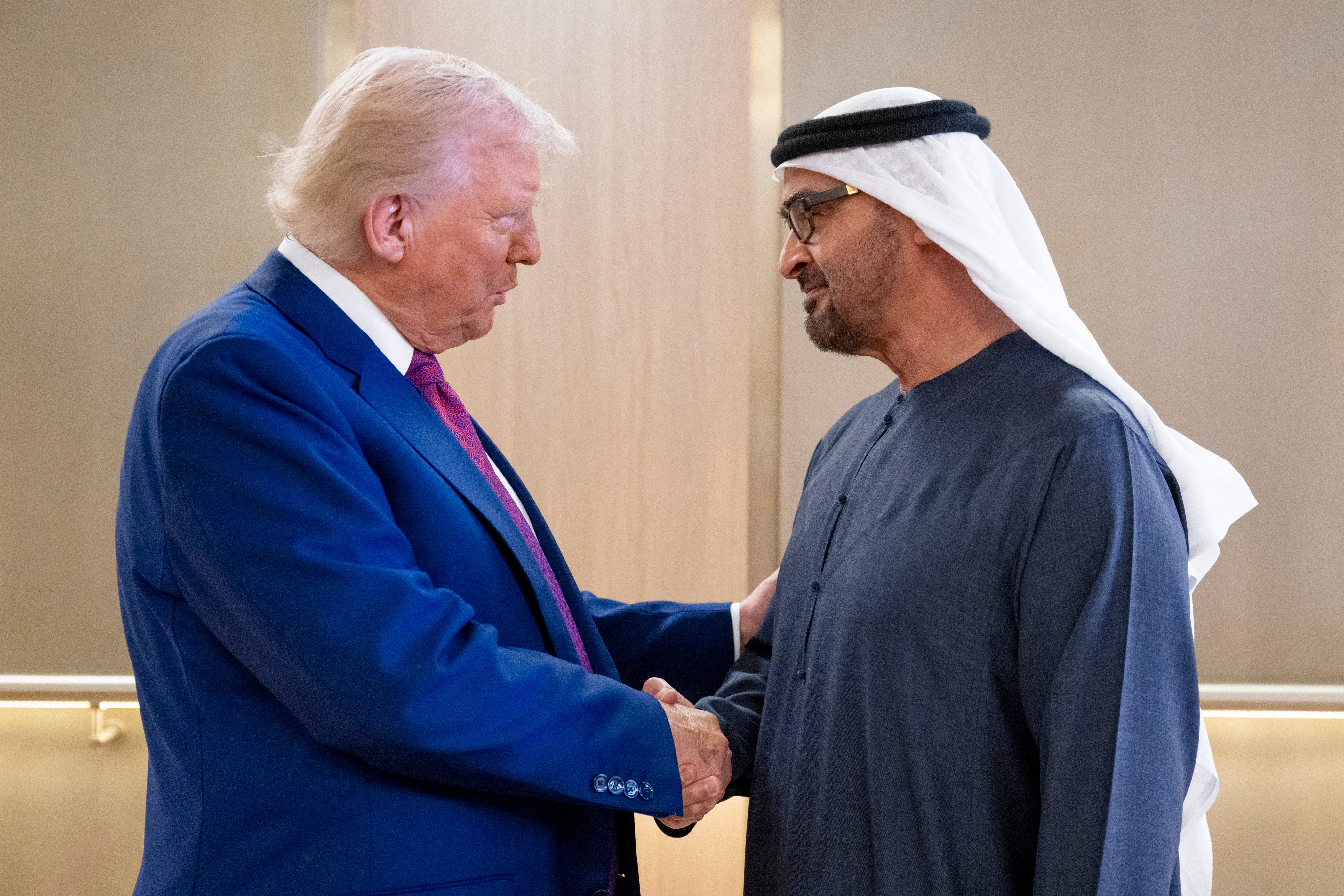 President Donald Trump shakes hands with President Sheikh Mohamed bin Zayed Al Nahyan in Abu Dhabi, UAE, last May during his visit to the Middle East (AFP/Getty)
AFP/Getty
President Donald Trump shakes hands with President Sheikh Mohamed bin Zayed Al Nahyan in Abu Dhabi, UAE, last May during his visit to the Middle East (AFP/Getty)
AFP/Getty
 Trump with Crown Prince Mohammed bin Salman of Saudi Arabia and Nvidia CEO Jensen Huang at the U.S.-Saudi Investment Forum in Washington, D.C., in November (Reuters)
Reuters
Trump with Crown Prince Mohammed bin Salman of Saudi Arabia and Nvidia CEO Jensen Huang at the U.S.-Saudi Investment Forum in Washington, D.C., in November (Reuters)
Reuters
A phone call from Donald Trump to UAE President Sheikh Mohamed bin Zayed last November helped reignite a Saudi-Emirati feud over Sudan, according to The New York Times, as summarised by The Independent. The paper reports that Trump told the Emirati leader he had been asked by Saudi Crown Prince Mohammed bin Salman to impose sanctions connected to the UAE’s alleged support for the Rapid Support Forces (RSF) in Sudan’s civil war. Saudi officials offered a narrower version—saying the request was aimed at sanctioning the RSF rather than the UAE—but the result was the same: a fresh rupture between two US partners.
The dispute matters because Riyadh and Abu Dhabi are not just security players; they are financiers, arms suppliers, and energy exporters whose coordination affects everything from oil policy to regional proxy wars. Sudan has become a low-visibility arena where external backers can shape outcomes at relatively low domestic political cost. When outside support is threatened—by sanctions, interdictions, or diplomatic pressure—the conflict’s internal balance shifts, and neighbouring states recalibrate their bets.
The Independent reports that the flare-up reached a low point in December when Saudi Arabia bombed what it said was a shipment of Emirati weapons destined for Yemen. Even if such incidents remain limited, the pattern is corrosive: Gulf coordination becomes more transactional, and every new US intervention—especially one delivered through personal channels—adds uncertainty about who is being promised what, and at whose expense.
For Washington, the episode creates a practical problem. US strategy on Iran and Gaza relies on cooperation from both Saudi Arabia and the UAE, yet their rivalry makes joint action harder and raises the price of alignment. For Trump personally, the reporting also lands in a region where his family’s commercial ties are extensive: The Independent notes Emirati investment in the Trump-linked crypto venture World Liberty Financial and Saudi backing for Jared Kushner’s private equity activities.
Trump told reporters in February that he was not involved in the rift but could settle it “very easily”. The New York Times account suggests the argument began with a call intended to do exactly that.