
Milan tram derailment kills two
Early reports point to missed switch and overrun, safety systems fail when routine breaks
Images
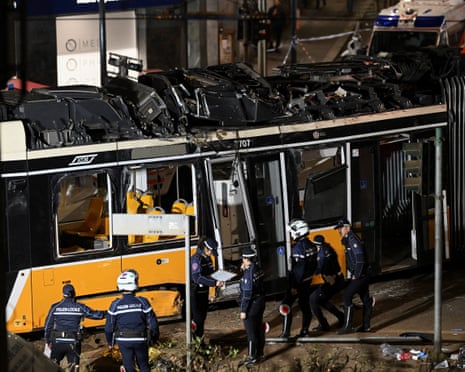 Emergency services at the scene of the deadly tram crash in Milan. Photograph: Daniele Mascolo/Reuters
theguardian.com
Emergency services at the scene of the deadly tram crash in Milan. Photograph: Daniele Mascolo/Reuters
theguardian.com
A tram derailed in Milan on Friday and slammed into a building, killing two people and injuring 38, according to The Guardian.
Mayor Giuseppe Sala said one victim was struck outside the tram as it came off the tracks while the other was a passenger. Prosecutor Marcello Viola described the impact as “devastating,” as firefighters and ambulances worked through the wreckage near the city centre.
Early reporting points away from a mechanical failure and toward a human and procedural one. The Guardian cites initial findings that the driver may not have activated a track switch and may have passed the line’s last stop before the crash. Witnesses described the tram as moving fast, though it was not immediately clear whether it exceeded the 50km/h speed limit.
The details matter because urban rail systems are designed around layered safeguards: signalling, switches, speed limits, and routines that assume compliance. When a single step—such as a switch setting—can turn into a mass-casualty event, the question becomes how error is caught before metal meets concrete. That is partly training and culture, and partly hardware: interlocks that prevent movement under unsafe configurations, monitoring that flags missed stops, and maintenance regimes that keep those systems reliable.
Milan’s crash also lands during a period when the city is under unusually high operational strain. The Guardian notes Milan has just hosted the 2026 Winter Olympics and is preparing for the Paralympics, while staging fashion week. Large events do not cause derailments, but they do raise the cost of disruption and can pressure operators to keep services running at high frequency even when staffing is tight.
Investigators will now have to reconstruct not only what the driver did, but what the system allowed: whether the switch could be left in a dangerous state, how speed was supervised, what alarms existed for an overrun, and how quickly the operator could intervene. Those are design choices that determine whether a mistake becomes an incident report or a funeral.
On Friday afternoon, the tram lay diagonally across the road with part of it embedded in a shopfront.
Two people were dead before the evening commute.