
Brazil floods kill at least 53 in Minas Gerais
Inmet warns of more rain as rescues continue, repeated rebuilding turns hazard maps into political promises
Images
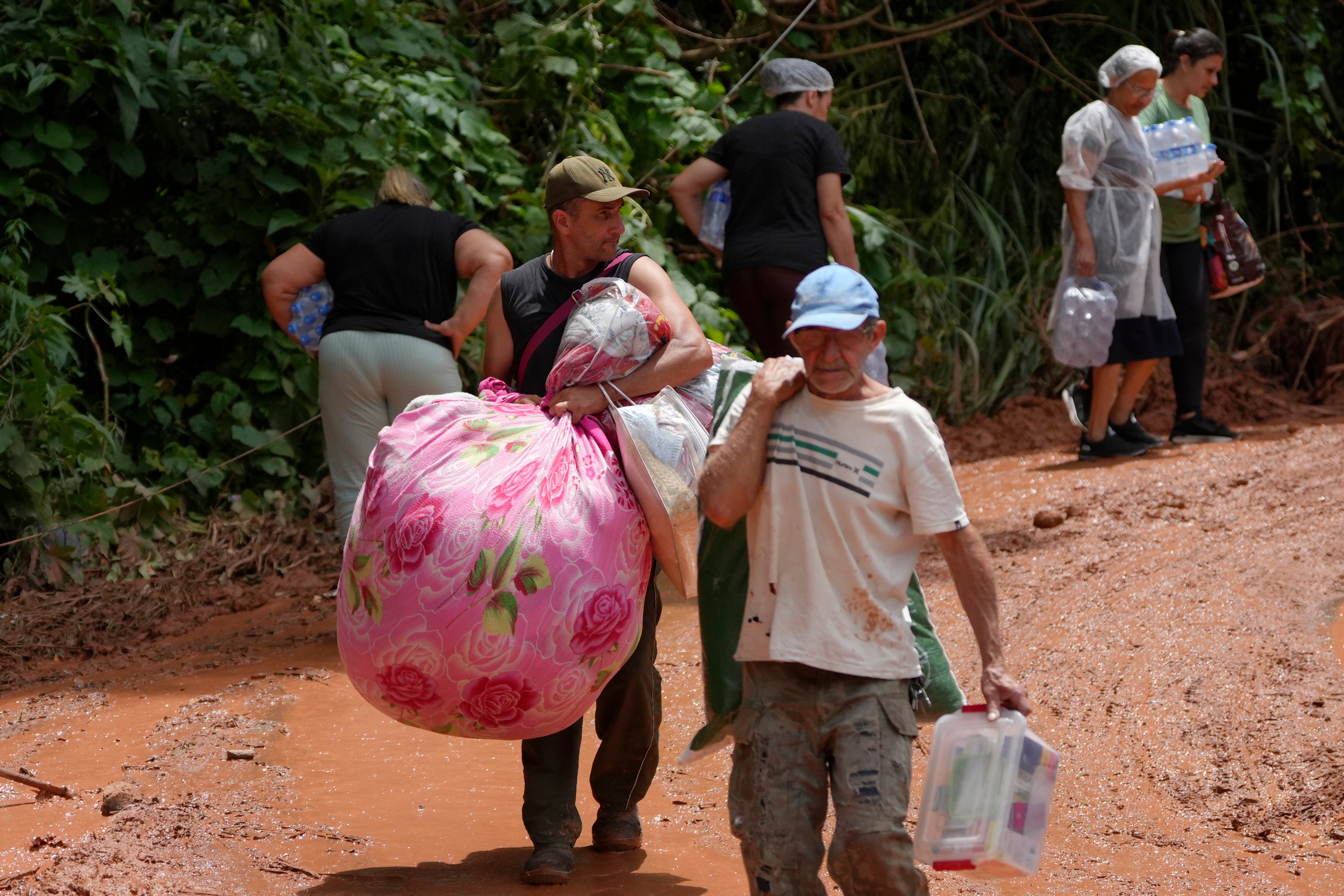 Minas Gerais’s fire department said 15 people are still missing and more than 230 have been rescued (AP Photo/Silvia Izquierdo)
Silvia Izquierdo)
Minas Gerais’s fire department said 15 people are still missing and more than 230 have been rescued (AP Photo/Silvia Izquierdo)
Silvia Izquierdo)
Flooding and landslides in Brazil’s Minas Gerais state have killed at least 53 people, with 15 still missing and more than 230 rescued, according to The Independent. The heaviest damage has been reported in Juiz de Fora and Uba, as renewed overnight rain compounded destruction that began late Monday.
Brazil’s meteorological institute Inmet warned of more rain and strong winds, raising the risk of further flooding, lightning and power outages. Local officials described shuttered roads and disrupted logistics, while residents and volunteers moved between shelters and damaged neighborhoods as conditions changed hour by hour. The state fire department urged people to watch for signs of imminent collapse—cracks in walls, stuck doors and windows, leaning trees and utility poles—an attempt to turn ordinary households into early-warning sensors when formal inspection capacity cannot cover every slope.
President Luiz Inácio Lula da Silva said federal security forces had been deployed for rescue missions and immediate assistance. Brazil has lived through this pattern recently: the May 2024 floods in Rio Grande do Sul killed at least 185 people and produced losses estimated above 10 billion reais, wiping out shops, factories, farms and transport links in a region that underpins national exports.
The immediate story is rainfall, but the bill is shaped by where people live and what happens after each disaster. When rebuilding and emergency aid are expected to arrive regardless of location, the price signal that would normally steer construction away from unstable hillsides and floodplains weakens. Roads, drainage, slope stabilization and enforcement of building rules become political decisions rather than risk-priced services, and the costs of those decisions are paid in the same currency every time the water rises.
Minas Gerais is now facing the familiar second phase: repairing infrastructure while warnings of more rain keep crews from reaching damaged areas. In Juiz de Fora, residents were cleaning the city center again on Thursday morning after a new storm hit before recovery from Monday’s damage had finished.
The death toll reached 53 as emergency teams kept searching through mud and debris, and the weather service issued another round of alerts for the same hillsides.