
Denmark calls early election
Greenland dispute with Trump reshapes domestic politics, crisis mandate sought before costs arrive
Images
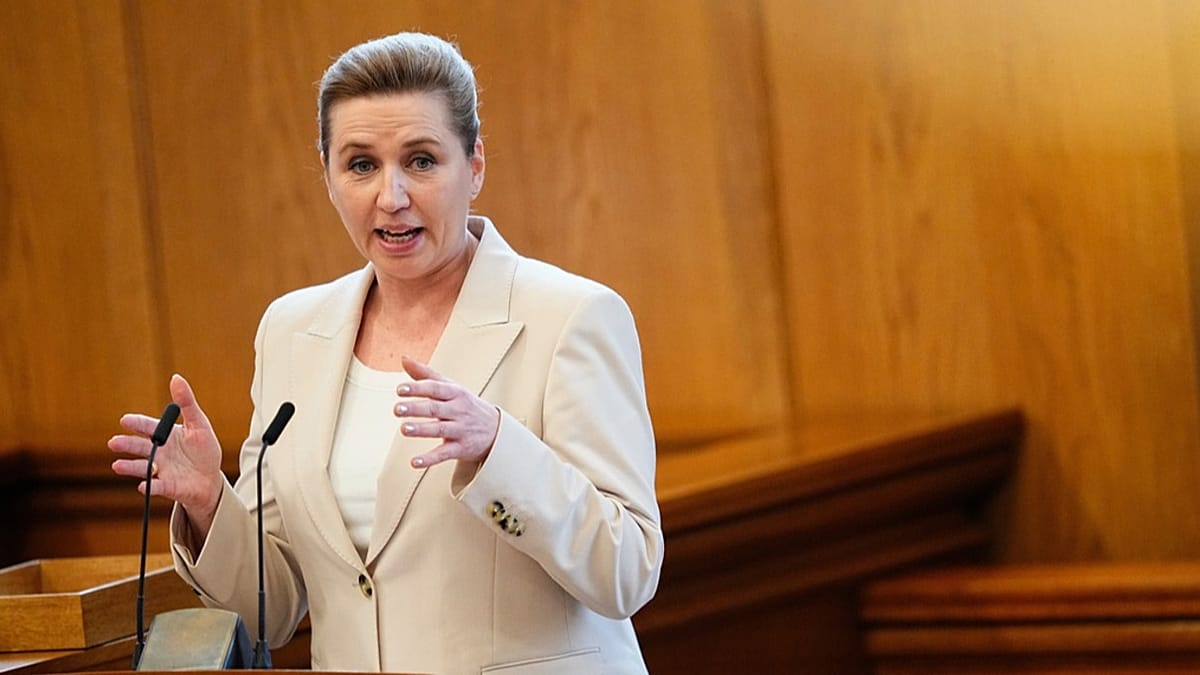 Denmark calls early election in March after Trump-Greenland standoff
euronews.com
Denmark calls early election in March after Trump-Greenland standoff
euronews.com
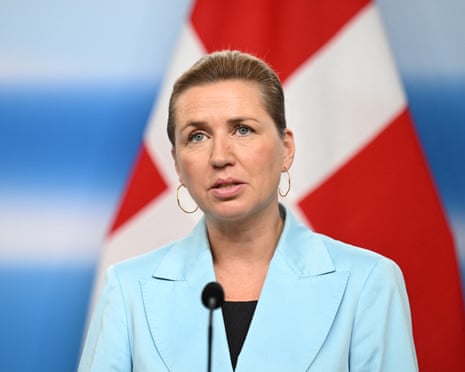 Denmark’s prime minister Mette Frederiksen pictured speaking during a press conference last year. Photograph: Jonathan Nackstrand/AFP/Getty Images
theguardian.com
Denmark’s prime minister Mette Frederiksen pictured speaking during a press conference last year. Photograph: Jonathan Nackstrand/AFP/Getty Images
theguardian.com
Denmark will hold an early general election on 24 March after Prime Minister Mette Frederiksen moved to capitalise on a surge in support linked to last month’s public standoff with the United States over Greenland. Frederiksen announced the vote on Thursday, cutting short a parliamentary term that began after the November 2022 election.
According to Euronews, the election is being called after a tense period in which US President Donald Trump again pressed the idea of Washington acquiring Greenland and threatened new tariffs on Denmark and other EU countries. Trump later said a framework deal to bolster Arctic security had been agreed after talks with Nato secretary general Mark Rutte at the World Economic Forum in Davos, with technical talks then beginning among US, Danish and Greenlandic officials.
The episode has turned a long-running constitutional arrangement into a domestic political test. Denmark’s Folketing has 179 seats, including four reserved for the Kingdom of Denmark’s autonomous territories—Greenland and the Faroe Islands—making the election mechanically relevant to the balance of power in Copenhagen and symbolically relevant to how the realm is held together. Frederiksen’s current coalition spans the left-right divide, with her Social Democrats governing alongside the Liberal Party and the centrist Moderates.
The immediate political incentive is straightforward: a foreign-policy confrontation that rallies voters can be converted into a mandate before the rally effect fades. The Guardian’s live coverage described a “Greenland bounce” in polling for Frederiksen after poor local-election results in which her party lost control of Copenhagen for the first time in decades. A snap election allows the government to ask voters to ratify its handling of the crisis while the opposition is forced to campaign on terrain set by security and sovereignty.
But the longer-term effect is stickier. When a major ally signals interest in territory, even indirectly, the domestic cost of appearing flexible rises sharply. Frederiksen has repeatedly said Denmark’s sovereignty is “non-negotiable” and told the Munich Security Conference this month she does not think the crisis has passed, arguing Washington still wants to annex Greenland. That kind of language narrows room for quiet bargaining later, even if the practical outcome is a package of basing rights, infrastructure access or joint Arctic deployments.
The security agenda also changes who pays and who benefits. Greater Arctic cooperation typically means more defence spending, more procurement, and more permanent institutional links with Washington and Nato—commitments that outlast the news cycle that triggered them. Greenland’s strategic geography makes it central to missile warning, North Atlantic transit and Arctic surveillance; the question for Copenhagen is how much control it retains over the terms.
On 24 March, Danish voters will choose 179 MPs, including four chosen in Greenland and the Faroe Islands. The election was called after a dispute over Greenland that ended with technical talks on implementing a new Arctic security framework.