
Gig Harbor stabbing leaves four dead
Court records show mother sought protection order citing occult rituals, Paper boundaries fail at the moment of violence
Images
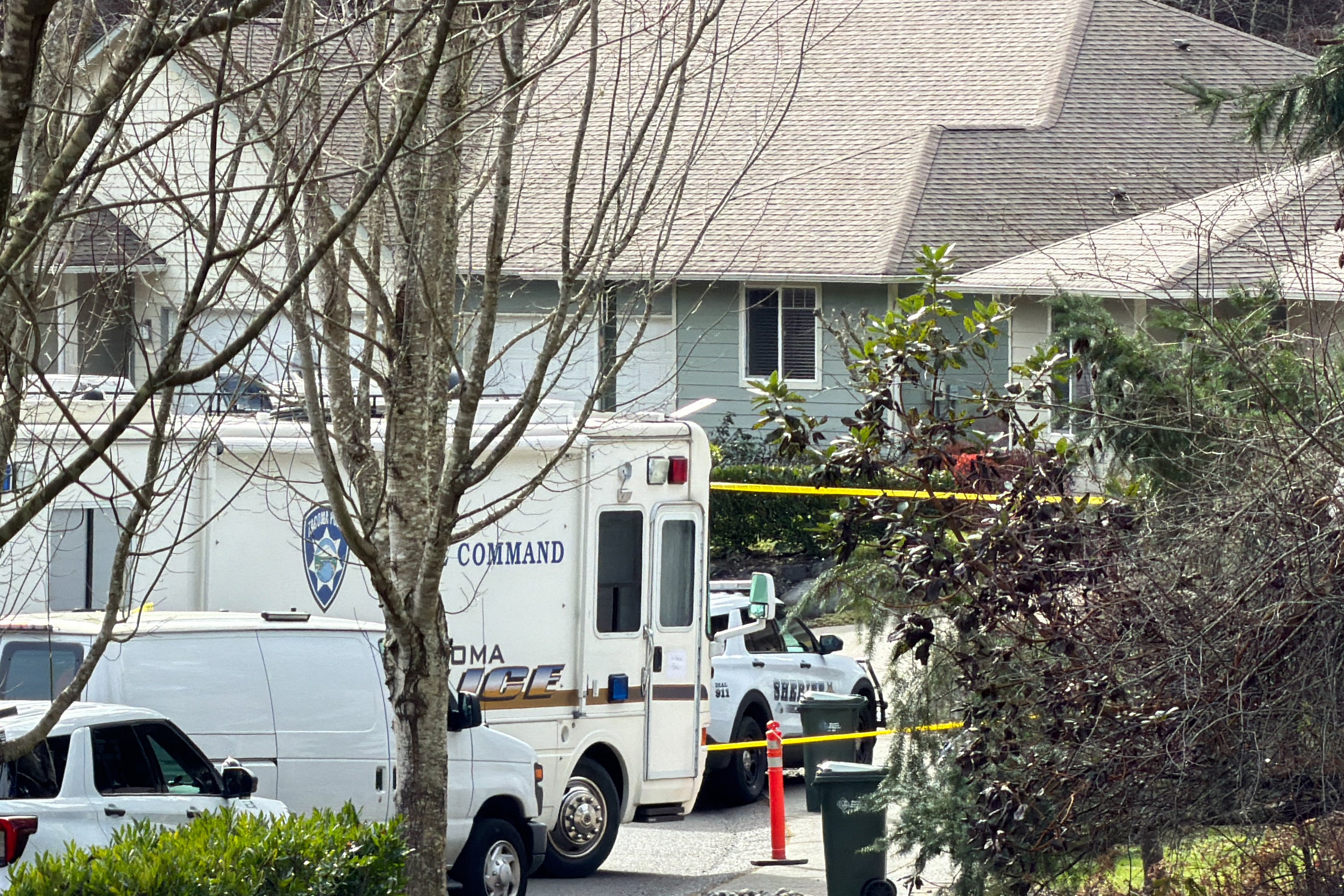 Investigators respond to a Washington home where a man who had reportedly been suffering from mental health problems and who thought he was a god stabbed and killed his mother and three others. (AP)
independent.co.uk
Investigators respond to a Washington home where a man who had reportedly been suffering from mental health problems and who thought he was a god stabbed and killed his mother and three others. (AP)
independent.co.uk
 Authorities investigate the scene after receiving reports that a man stabbed several people to death on Tuesday, February 24, 2026, in Gig Harbor (AP)
independent.co.uk
Authorities investigate the scene after receiving reports that a man stabbed several people to death on Tuesday, February 24, 2026, in Gig Harbor (AP)
independent.co.uk
A 32-year-old man was shot dead by a Pierce County sheriff’s deputy on Tuesday after allegedly stabbing four adults to death inside a home in Gig Harbor, Washington, according to the Associated Press and KOMO News. Court records show the suspect’s mother sought a protection order last year, describing “occult rituals” and “witchcraft” at the property, as well as delusional behaviour and alleged abuse.
The documents, cited by The Independent, read like the script of a moral panic: references to an “Egyptian God”, a “grave already dug”, a “strange smell” in the garage, and a smoke detector going off. But the practical trail is more mundane. A protective order was issued in May 2025 after the mother wrote that her son was acting delusional and that she feared for her safety. On the day of the killings, the sheriff’s office received a tip that he would violate the order; multiple witnesses then called to report an active stabbing.
The “occult” framing matters because it quickly becomes a socially acceptable explanation when motive is unclear. It offers a narrative that requires no diagnosis, no institutional failure, and no uncomfortable questions about how a person described as unstable remained in close proximity to those he allegedly killed. In court paperwork, “witchcraft” can function as a layperson’s vocabulary for psychosis, coercive control, or domestic terror—especially when the writer is trying to persuade a judge with limited space and limited time.
It also reveals how responsibility gets distributed. Families are pushed toward civil remedies such as protective orders—tools designed to create paper boundaries—while police are asked to enforce them in real time, often with minimal context and minutes to act. Mental health care sits in the background as an implied solution, yet the public record in this case is dominated by a legal petition and emergency calls, not by a treatment plan.
Investigators have not released names of the victims or clarified their relationships to one another. What is concrete is that a court order existed, a warning came in, and a deputy arrived to find someone “actively stabbing” a person.
The last documented attempt to stop the situation was a protective order, issued months before four people were killed.