
Ukraine expands anti-drone road nets
4000 kilometres of logistics protection planned as cheap drones shift the war to supply routes
Images
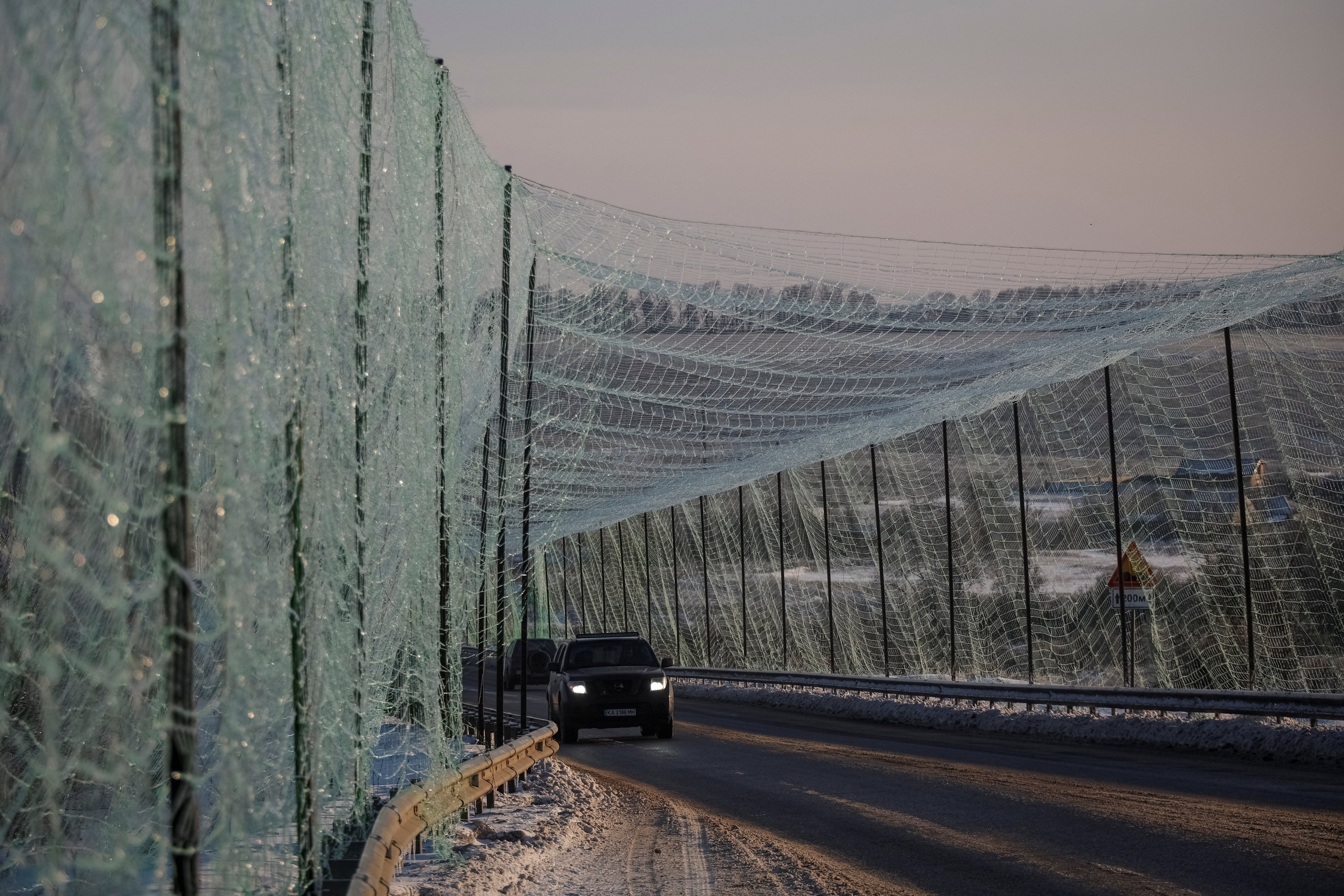 The nets are designed to snag propellers, preventing drones from reaching high-value equipment, soldiers, or civilians (REUTERS/Vyacheslav Madiyevskyy)
REUTERS/Vyacheslav Madiyevskyy
The nets are designed to snag propellers, preventing drones from reaching high-value equipment, soldiers, or civilians (REUTERS/Vyacheslav Madiyevskyy)
REUTERS/Vyacheslav Madiyevskyy
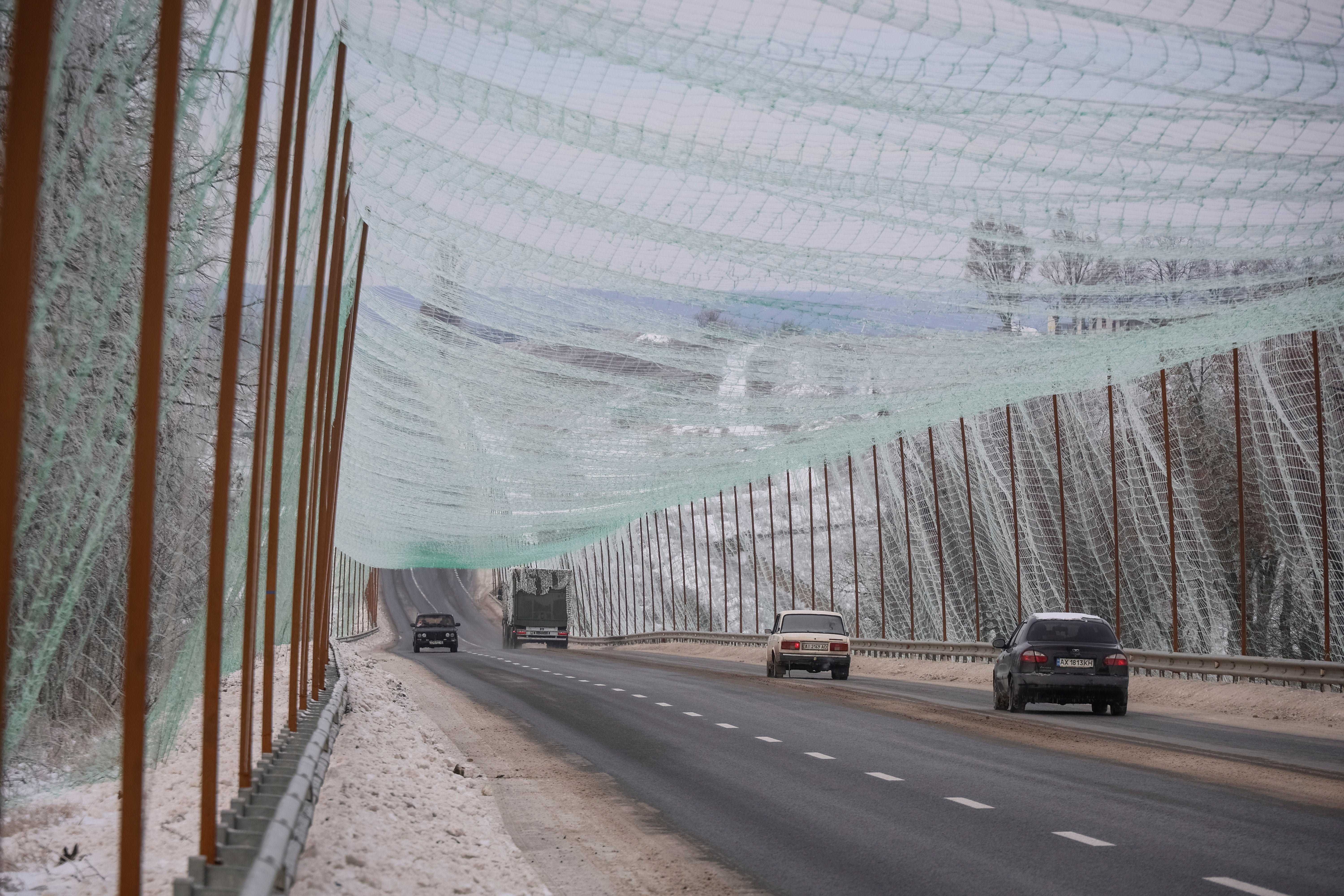 Cars drive along a road covered with an newly installed anti-drone net (REUTERS/Vyacheslav Madiyevskyy)
REUTERS/Vyacheslav Madiyevskyy
Cars drive along a road covered with an newly installed anti-drone net (REUTERS/Vyacheslav Madiyevskyy)
REUTERS/Vyacheslav Madiyevskyy
Ukraine plans to install anti-drone nets along 4,000 kilometres of roads in frontline areas by the end of 2026, expanding a tactic that has spread across the country over the past year. The Independent reports that defence minister Mykhailo Fedorov said an additional 1.6bn hryvnias (about $37m) has been allocated for the nets, which are meant to snag drone propellers and reduce strikes on supply routes, rear bases and civilian traffic.
The detail that matters is not the material—mesh and poles—but the target: logistics. Cheap, remotely piloted aircraft have pushed the war away from trench lines and toward the roads that keep units supplied and towns functioning. Fedorov said Ukraine has increased installation speed from 5 km per day in January to 12 km in February, with a goal of 20 km per day in March, turning what might look like improvised fieldcraft into an industrialised public-works programme.
The move is also a tacit admission about the economics of air defence. Interceptors and electronic warfare are scarce, expensive, and often prioritised for high-value targets. Nets are crude, but they scale: they can be deployed where civilians drive, where ambulances run, and where resupply convoys cannot simply reroute. The same logic explains why Ukraine is also accelerating fortifications in border regions such as Kharkiv, Sumy and Chernihiv, according to the same report.
For Europe, the lesson is uncomfortably transferable. A drone that costs hundreds or thousands can force detours, shut down a road junction, or threaten a transformer yard—then do it again tomorrow. The vulnerability is not limited to battlefields; it extends to ports, rail yards, fuel depots, and power distribution nodes that were built for efficiency, not harassment. European responses tend to arrive as procurement frameworks and compliance rules, which are slow by design and optimised for audit trails.
Ukraine’s approach is closer to civil engineering under fire: build redundancy, accept that some attacks will get through, and make the next one less effective. It is also a reminder that the cheapest defensive measure is often the one that can be installed by the kilometre rather than the unit.
The programme’s headline number is 4,000 kilometres, but its real claim is that a supply route can be defended with netting when missiles are too scarce to spare.